


Every data team eventually hits the same wall: data is everywhere, but getting it to the right place — cleaned, transformed, and on time — is harder than it should be. Legacy ETL scripts break. Scheduled jobs fail silently. Data warehouses fill with stale or duplicate records. And as AI and real-time analytics demand fresh, high-quality data, the tolerance for pipeline failure has dropped to near zero.
The good news is that the data pipeline tooling landscape has never been more capable — or more fragmented. In 2026, you’re choosing between managed ELT platforms, open-source orchestrators, cloud-native ETL services, real-time CDC tools, and end-to-end data platforms that claim to do all of the above. Not all of them are interchangeable, and picking the wrong category is a more costly mistake than picking the wrong tool within the right one.
This guide covers 25 of the best data pipeline tools in 2026 — not as a flat product catalog, but organized around what each tool actually does. Whether you’re a data engineer building production-grade pipelines, a data leader evaluating your first managed ELT platform, or a team migrating away from a legacy system after an acquisition, you’ll find a clear framework here to match your situation to the right solution.
We’ve also included verified pricing tiers, honest trade-offs, and a decision table at the end so you can move from reading to choosing.
Quick context: According to internal surveys across data teams in 2026, 68% are actively migrating away from code-heavy pipelines in favor of managed ELT or hybrid approaches. The shift is driven by AI workloads, real-time analytics requirements, and the high maintenance cost of hand-rolled pipelines.
ETL vs ELT vs Orchestration vs CDC (What Type of Tool Do You Actually Need?)
Understanding Data Pipeline Tool Categories (Don’t Skip This)
One of the most common — and costly — mistakes when selecting a data pipeline tool is choosing from the wrong category. A comparison article that puts Apache Airflow, Fivetran, and dbt in the same numbered list without explanation isn’t actually helping you choose. It’s just generating content that looks like a guide but reads like a catalog.
Before evaluating specific tools, here is a plain-language breakdown of the four core categories:
ETL (Extract → Transform → Load)
Data is extracted from sources, transformed in an intermediate layer, then loaded into the destination. Best for: strict data quality requirements, legacy warehouse architectures, regulated industries where raw data must never touch the destination. Example tools: Informatica, Talend, AWS Glue.
ELT (Extract → Load → Transform)
Raw data is loaded into the warehouse first, then transformed using SQL or dbt inside the destination system. This became practical as cloud warehouses made in-database compute affordable. Best for: modern analytics teams using Snowflake, BigQuery, or Redshift. Example tools: Fivetran, Airbyte, Hevo Data, Matillion.
Orchestration
These tools do not move data themselves. They schedule, monitor, and manage dependencies between tasks — dbt runs, Python scripts, Spark jobs, or calls to pipeline tools. Critical clarification: Apache Airflow is an orchestration tool, not a data ingestion tool. It belongs alongside Fivetran or Estuary in a stack, not instead of them. Example tools: Apache Airflow, Prefect, Dagster.
CDC (Change Data Capture)
CDC tools capture row-level changes from source databases in real time — inserts, updates, and deletes — and stream them to destinations with sub-second latency. Best for: operational analytics, real-time dashboards, feature stores for ML, and any use case where nightly batch jobs introduce unacceptable lag. Example tools: Estuary Flow, Debezium, Striim.
Practical implication
Most mature data stacks use tools from more than one category. A common 2026 production architecture: Fivetran or Estuary for ingestion → Snowflake or BigQuery as warehouse → dbt for transformation → Airflow for orchestration. These are complementary tools, not competitors.
| Tool Type | Moves Data? | Transforms Data? | Real-Time? | Best For |
|---|---|---|---|---|
| ETL | ✅ | ✅ (before load) | Sometimes | Strict quality control |
| ELT | ✅ | ✅ (after load) | Batch-first | Modern cloud warehouses |
| Orchestration | ❌ | ❌ (coordinates others) | N/A | Scheduling & dependencies |
| CDC | ✅ | Sometimes | ✅ | Real-time operational data |
| Reverse ETL | ✅ (back to ops tools) | Sometimes | Sometimes | Closing the analytics loop |
Factors to Consider While Choosing the Data Pipeline Monitoring Tools
As data ecosystems grow more complex, ensuring the reliability and performance of your pipelines becomes mission-critical. Selecting the right monitoring tool is essential to maintain operational efficiency and proactively manage data workflows. Some of the factors to consider while looking for an ideal data pipeline monitoring tool are given below.
- Real-Time Monitoring Capabilities – Ensure the tool offers real-time visibility into pipeline health, latency, and data flow to minimise downtime and delays. This is especially important as pipelines increasingly process high-volume data streams originating from UGC platforms and other external digital data environments.
- Alerting and Incident Management – Look for automated alert systems integrated with incident response tools to streamline issue detection and resolution.
- Scalability Across Pipelines – The tool should scale with your data infrastructure, handling increasing data volumes and complex workflows effortlessly.
- Custom Dashboards and Visualisations – Opt for tools that allow personalised dashboards and metrics tailored to your team’s KPIs and operational focus.
- Support for Multi-Cloud and Hybrid Environments – A good monitoring solution should offer compatibility across cloud platforms and on-premise systems.
- Integration with Existing Stack – Choose tools that seamlessly integrate with your orchestration engines, data warehouses, and ETL/ELT tools.
- Compliance and Audit Readiness – Ensure the platform maintains detailed logs and compliance features to support auditing and regulatory standards.
Top 25 Data Pipeline Tools to Look for in May 2026
As an increasingly flexible and decentralised entity, the data ecosystem requires careful consideration of which pipeline tools to choose to obtain smooth and real-time data flow. The following are the 25 best data pipelining tools to look at in May 2026, each being able to address technical and business demands.
1. Matilliion

Matillion is a contemporary, cloud-native data pipeline platform which is intended to make the integration and transformation of data across the major cloud databases, which include Snowflake, Redshift, BigQuery and Databricks to take place with ease.Matillion is an intuitive and powerful data orchestration tool that enables data teams to construct, automate and scale advanced data pipelines at speed.
It is ETL and ELT compatible, and thus it makes it flexible and performance-oriented to organisations that have an interest in accelerating their data analytics activities. Matillion is frequently adopted by businesses in their big data services to manage their massive data management processes and to derive quicker conclusions. The key services include Data extraction, data transformation, data loading, cloud data integration, data pipeline automation, real-time data sync, and data quality monitoring.
Key Features of Matillion Data Pipeline Tool:
- Integrates seamlessly with top cloud data warehouses for high-performance data processing.
- Offers a visual, low-code job builder to streamline workflow design and deployment.
- Enables robust scheduling, automation, and monitoring of data pipelines at scale.
2. Apache Airflow
Apache Airflow is an open source workflow orchestration system that we can use to programmatically describe, schedule and monitor data pipelines in business-driven applications. Airflow is known to be flexible and extensible, where dynamic pipeline generation is supported through Python, and is thus suitable for teams that need to have full control of their data pipeline tools. As one of the most popular data pipeline tools, it facilitates the smooth handling of dependencies, retries, and task execution, and tops the list of data engineering stacks.
Its scalable design and ability to interact with other data systems have made it the preferred shredder for those institutions that need to perform high-volume, multiple-level data processing activities. The key services include Task scheduling, DAG management, dependency management, dynamic pipeline generation, integration with cloud services, support for Python-based workflows, and extensible plugin architecture.
Key Features of Apache Airflow Data Pipeline Tool:
- Allows dynamic pipeline creation with Python for highly customizable workflows.
- Supports advanced scheduling and dependency management for task orchestration.
- Integrates easily with cloud platforms, databases, and external APIs for seamless data flow.
3. AWS Glue
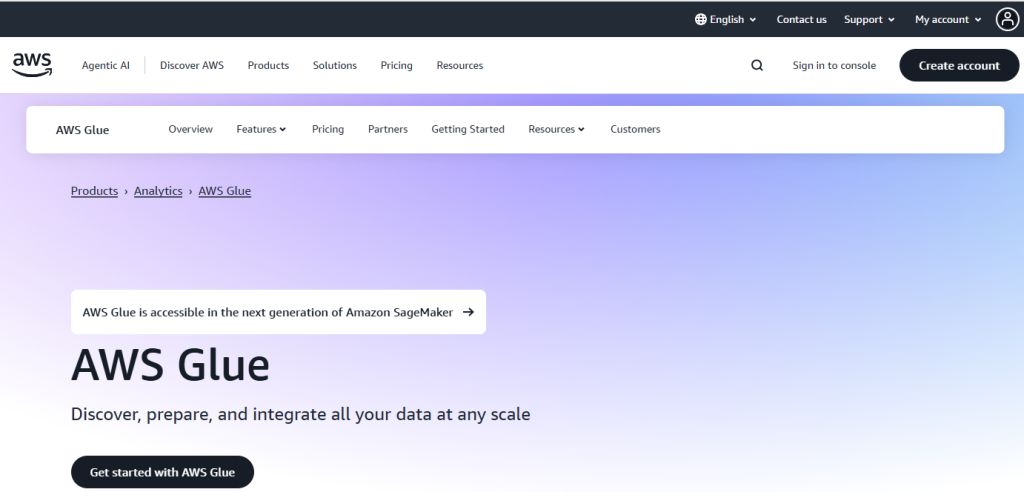
AWS Glue is a scale-at-will data integration service that makes it simple to discover, prep, connect, and combine data at any scale to power analytics, machine learning, and application development. Glue is specifically designed to work in AWS and automates much of the data prep task, namely through its in-built data catalogue and extract-transform-load (ETL) functions.
As one of the leading data lake tools, it provides seamless integration with Amazon S3 and other AWS services to manage, transform, and query vast amounts of structured and unstructured data.
AWS Glue has native support for various AWS services and scalable infrastructure, which allows teams to develop efficient, event-driven data pipelines without having to manage any servers. The key services include Serverless data integration, ETL automation, job scheduling, schema discovery, integration with AWS services, and data cleansing & transformation.
Key Features of AWS Glue Data Pipeline Tool:
- Offers a built-in data catalogue for easy metadata management and data discovery.
- Supports serverless ETL jobs, eliminating infrastructure management overhead.
- Seamlessly integrates with AWS services like S3, Redshift, and Athena for unified workflows.
4. DBT
DBT (Data Build Tool) stands out as a powerful transformation layer in the modern data stack, allowing data teams to write modular SQL-based transformation workflows directly within their data warehouse.
Designed for analytics engineers, Dbt promotes best practices like version control, testing, and documentation, bringing software engineering rigour to data pipeline tools development. It is widely adopted for its simplicity, scalability, and its ability to integrate seamlessly with tools like Snowflake, BigQuery, Redshift, and Databricks.
The key services include SQL-based data modelling, data transformation, version control integration, dependency management, incremental model updates, and collaboration via Git.
Key Features of Dbt Data Pipeline Tool:
- Enables SQL-based data modelling, testing, and documentation within your warehouse.
- Supports version control and CI/CD integration for collaborative, production-ready pipelines.
- Offers detailed lineage graphs for visibility into data flow and dependencies.
5. Snowflake – Best Data Pipeline Tools

Snowflake is a cloud native data platform that enables the creation of data pipelines to be easily constructed through offering scalable storage, an empowered compute environment, and data sharing between organisations.Its design isolates storage and compute so that complex data workloads can be efficiently processed concurrently with no performance bottlenecks.
Snowflake integrates well with a variety of data types and many ETL and analytics software platforms, which, combined with its excellent data governance consulting services such as role-based access control, auditing, and data lineage, make it a natural fit to create modern, agile data pipelines. The key services include Data ingestion, data transformation, data sharing, data warehousing, secure data storage, and time travel & data cloning.
Key Features of Snowflake Data Pipeline Tool:
- Enables automatic scaling of compute resources for optimised performance and cost-efficiency.
- Supports native data sharing and secure collaboration across multiple business units.
- Provides robust support for structured and semi-structured data in a unified platform.
6. Databricks – Best Data Pipeline Tools
Databricks is an integrated data analytics platform based on Apache Spark, to automate the creation of large-scale data pipelines, complex analytics, and machine learning workflows.It unites data engineering, data science and business analytics in one joint working environment, where teams can work super-fast and accurately against large repositories of data.
Databricks allows organisations to create high-performance pipelines that power real-time insights and innovation and integrate seamlessly with modern data warehouse services to achieve end-to-end analytics at scale and with high performance, with its current support of batch and streaming data.
The key services include ETL & ELT workflows, collaborative notebooks, machine learning model training and deployment, Data Lake integration, and automated job scheduling.
Key Features of Databricks Data Pipeline Tool:
- Offers native support for both batch and real-time streaming data processing.
- Provides an interactive workspace for collaborative development across data teams.
- Integrates seamlessly with popular cloud data storage and BI tools for end-to-end pipeline management.
7. Fivetran

Fivetran is a fully managed, no-code data integration platform designed to simplify and automate the process of extracting, loading, and syncing data from diverse sources into centralised destinations like data warehouses or lakes. Known for its reliability and low maintenance overhead, Fivetran supports hundreds of pre-built connectors and automatically adapts to schema changes, making it ideal for teams aiming to maintain up-to-date, analytics-ready data with minimal engineering effort.
As a trusted component in modern data lake consulting services, Fivetran accelerates data readiness while ensuring consistency and scalability across your data infrastructure.
The key services include Pre-built data connectors, automated data extraction, real-time data replication, incremental data updates, data warehouse integration, and managed data pipelines.
Key Features of Fivetran Data Pipeline Tool:
- Offers fully automated connectors with schema drift handling for uninterrupted data flow.
- Delivers near real-time syncing from multiple data sources to leading cloud platforms.
- Ensures enterprise-grade security and compliance with robust data governance controls
8. Google Cloud Dataflow – Best Data Pipeline Tools
Google Cloud Dataflow is a fully managed streaming and batch data processing service that simplifies the development and execution of complex data pipelines. Built on Apache Beam, it enables developers to create unified pipelines that are automatically scaled, optimized, and monitored by Google Cloud’s infrastructure.
Designed for high-performance and fault-tolerant data transformations, Dataflow is ideal for real-time analytics, ETL, and machine learning workflows in cloud-native environments.
The key services include Data ingestion from various sources, real-time and batch data processing, data transformation, orchestration of workflows, integration with BigQuery, and Apache Beam support.
Key Features of Google Cloud Dataflow:
- Supports both real-time and batch data processing using a single programming model.
- Auto-scales resources dynamically to handle variable data loads with cost efficiency.
- Seamlessly integrates with Google Cloud services like BigQuery, Pub/Sub, and AI Platform.
Supercharge Your Data Pipeline Strategy with Algoscale
Ready to transform raw data into real-time insights? Whether you’re building scalable ETL workflows or integrating AI into your data operations, Algoscale’s expert solutions are designed to help you move faster, scale smarter, and stay future-ready. Let’s build a data foundation that drives real business value.
Talk to our Data Expert
9. Azure Data Factory – Best Data Pipeline Tools

Azure Data Factory is a cloud-based data integration service from Microsoft that enables the creation, scheduling, and orchestration of scalable data pipelines. It allows enterprises to move and transform data from a wide range of on-premises and cloud sources into trusted, actionable insights.
With its low-code interface and support for custom code, ADF strikes a balance between ease of use and deep technical control making it well-suited for both ETL developers and data engineers in modern hybrid data environments.
The key services include Serverless data pipeline execution, data monitoring and logging, scalable data processing, event-driven pipeline execution, and end-to-end data lifecycle management.
Key Features of Azure Data Factory:
- Offers over 90 built-in connectors for seamless data ingestion across ecosystems.
- Supports both code-free data transformation and custom logic using Azure Data Flows or Azure Functions.
- Provides robust monitoring, versioning, and CI/CD integration for enterprise-grade pipeline management.
10. Airbyte – Best Data Pipeline Tools
Airbyte is an open-source data integration platform rapidly gaining traction for its modern approach to ELT pipelines and its extensive connector ecosystem. Designed to address the challenges of integrating data from diverse sources, Airbyte enables engineering teams to deploy connectors with ease, automate data flows, and maintain control over their infrastructure.
Its modular, API-first architecture and strong community support make it ideal for organisations seeking a customizable, developer-friendly pipeline solution.
The key services include ELT processing, schema change handling, real-time syncing, incremental data replication, monitoring and logging.
Key Features of Airbyte Data Pipeline Tool:
- Offers 300+ pre-built and customizable connectors for seamless data integration.
- Supports both scheduled and real-time syncing across various sources and destinations.
- Deployable in cloud, hybrid, or on-premise environments for flexible data operations.
Also Read – Top Data Wrangling Tools in 202
11. Talend
Talend is a versatile data integration platform known for its open-source foundation and strong capabilities in ensuring data quality and trust. It empowers organizations to build robust data pipelines that cleanse, transform, and unify data from disparate sources in real-time.
Talend’s unified environment supports both batch and streaming workloads and seamlessly integrates with cloud platforms, making it a powerful choice for enterprises focused on maintaining data integrity while scaling operations efficiently.
The key services include Data integration, data quality management, API services, master data management, data cataloguing, and metadata management.
Key Features of Talend Data Pipeline Tool:
- Ensures high data quality with built-in profiling, cleansing, and validation tools.
- Provides native integration with major cloud ecosystems and on-premise systems.
- Supports real-time and batch data processing for comprehensive pipeline orchestration.
10. Informatica
Informatica is a long-standing leader in enterprise data integration, offering a comprehensive and intelligent data pipeline platform tailored for complex and high-volume data environments. Its cloud-native Intelligent Data Management Cloud (IDMC) provides robust capabilities for ingesting, transforming, and governing data across hybrid and multi-cloud ecosystems.
With AI-powered automation, strong metadata management, and enterprise-grade scalability, Informatica stands out as a preferred solution for organizations looking to streamline data operations with precision and compliance.
The key services include Data integration, data ingestion, data transformation, ETL and ELT support, workflow orchestration, metadata management, and AI-powered data mapping.
Key Features of Informatica Data Pipeline Tool:
- Leverages AI-driven automation for faster mapping, transformation, and orchestration.
- Offers advanced data governance and lineage tracking for enhanced regulatory compliance.
- Supports hybrid and multi-cloud data integration with high throughput and minimal latency.
13. Rivery – Best Data Pipeline Tools

Rivery is a SaaS-based data pipeline platform built to simplify data operations by unifying extraction, transformation, and orchestration in a single, no-code environment. Tailored for both technical and non-technical teams, Rivery streamlines the process of building and managing data workflows across cloud ecosystems.
Its pre-built logic rivers, dynamic schema handling, and automated data mapping make it a reliable choice for businesses looking to accelerate their data initiatives without heavy infrastructure overhead.
The key services include Pre-built data connectors, API-based data integration, cloud-native architecture, no-code pipeline building, multi-source data aggregation, and API based data integration.
Key Features of Rivery Data Pipeline Tool:
- Provides out-of-the-box connectors and logic workflows for faster pipeline deployment.
- Enables data orchestration across multiple environments with real-time syncing capabilities.
- Supports hybrid and multi-cloud setups with centralised monitoring and error handling.
Read Also: Top Data Visualization Companies
14. Apache NiFi
Apache NiFi is an open-source data integration tool designed for automating the movement and transformation of data between systems. Known for its intuitive web-based interface and real-time flow-based programming, NiFi empowers organisations to manage complex data routing, transformation, and system mediation with precision. Its fine-grained data flow control and extensive provenance tracking make it a strong fit for enterprise-grade data environments where visibility, security, and compliance are paramount.
As a core component of big data consulting services, NiFi enables scalable, secure, and efficient data integration across diverse platforms and sources.
The key services include Real-time data streaming, flow-based programming, data transformation, data provenance tracking, and integration with multiple data sources.
Key Features of Apache NiFi Data Pipeline Tool:
- Offers visual flow design with drag-and-drop simplicity for complex data routing.
- Provides built-in data provenance and audit capabilities for full traceability.
- Supports secure, scalable data ingestion from diverse sources with dynamic prioritisation.
15. Singer – Best Data Pipeline Tools
Singer is an open-source standard for writing scripts that move data between databases, web APIs, files, and more using a simple, composable architecture. It utilises a modular structure of “taps” and “targets,” allowing teams to build data pipelines quickly while maintaining flexibility across diverse sources and destinations.
Designed with a developer-first approach, Singer fits seamlessly into modern ELT workflows and is well-suited for teams prioritising customisation and transparency in their data integration efforts.
The key services include an Open-source ETL framework, data replication, support for custom connectors, integration with modern data warehouses, and compatibility with ELT workflows.
Key Features of Singer Data Pipeline Tool:
- Employs reusable “taps” and “targets” to streamline data extraction and loading.
- Offers open-source flexibility with a growing library of community-supported connectors.
- Ideal for ELT pipelines where custom logic and adaptability are key requirements.
16. Astronomer
Astronomer is a modern data orchestration platform built around Apache Airflow, designed to help organisations scale and manage complex data workflows with greater control and observability.
As a trusted data engineering service provider, Astronomer simplifies the deployment, monitoring, and optimisation of data pipelines across cloud and hybrid environments—making it ideal for data engineering teams seeking enterprise-grade workflow management.
With its DevOps-friendly architecture and seamless integration capabilities, Astronomer accelerates the development cycle while ensuring high reliability and performance.
Its key offerings include incremental data sync, extensibility for new data sources, lightweight and scriptable architecture, and full compatibility with ELT workflows.
Key Features of Astronomer Data Pipeline Tool:
- Offers a managed Airflow-as-a-Service platform with enterprise-level scalability.
- Provides robust monitoring and alerting tools for real-time pipeline visibility.
- Supports hybrid and multi-cloud deployments for flexible infrastructure alignment.
Supercharge Your Data Pipeline Strategy with Algoscale
Ready to transform raw data into real-time insights? Whether you’re building scalable ETL workflows or integrating AI into your data operations, Algoscale’s expert solutions are designed to help you move faster, scale smarter, and stay future-ready. Let’s build a data foundation that drives real business value.
Talk to our Data Expert
17. Prefect – Best Data Pipeline Tools
Prefect is a modern workflow orchestration tool designed to handle complex data workflows with speed, reliability, and minimal overhead. It enables data teams to build, run, and monitor pipelines with robust error handling and dynamic scheduling.
Known for its “engineered for humans” philosophy, Prefect eliminates boilerplate code and emphasises a Pythonic interface, making it a favourite among developers seeking both flexibility and control in pipeline execution.
The key services include Workflow orchestration, task scheduling, data pipeline automation, error handling and retries, and integration with cloud platforms.
Key Features of Prefect Data Pipeline Tool:
- Utilises a code-first approach that allows workflows to be defined using pure Python.
- Offers real-time observability and alerting with Prefect Cloud or on-premise deployment.
- Supports parameterised flows and dynamic task mapping for adaptive data operations.
18. Hevo Data
Hevo Data is a fully managed, no-code data pipeline platform tailored for modern businesses aiming to unify data across various sources without manual intervention. With its real-time data replication capabilities, Hevo ensures accurate, consistent data flow into cloud data warehouses, making analytics-ready data accessible at all times.
Its intuitive interface, automated schema mapping, and pre-built connectors minimize engineering dependencies, allowing technical teams to focus on data-driven innovation rather than pipeline maintenance.
The key services include No-code data pipeline creation, real-time data replication, automated data ingestion, data quality checks, and end-to-end data pipeline monitoring.
Key Features of Hevo Data Pipeline Tool:
- Real-time data ingestion from 150+ sources with minimal setup and zero coding.
- Automated schema detection and mapping to ensure seamless data transformation.
- Built-in monitoring and alerting systems for complete pipeline visibility and reliability.
Also Read – Top 25 Data Warehouse Tools in 2026
19. Stitch Data
Stitch Data is a cloud-first, ETL-focused data pipeline solution designed to simplify and accelerate the process of moving data from various sources into a centralized data warehouse. Ideal for agile teams and businesses with growing data needs, Stitch offers a straightforward, developer-friendly interface that supports rapid deployment and reliable scalability.
Its open-source foundation and robust integrations make it a flexible choice for organizations looking to maintain control while automating repetitive data workflows.
The key services include Data replication, data transformation, monitoring and alerting, scalable data pipelines, real-time data syncing, and automated ETL processes.
Key Features of Stitch Data Pipeline Tool:
- Supports over 130 data sources with prebuilt connectors for fast, flexible integration.
- Automated scheduling and batch loading optimize data syncs with minimal manual input.
- End-to-end data encryption ensures secure handling across all pipeline stages.
20. Google Cloud Composer
Google Cloud Composer is a fully managed workflow orchestration service built on Apache Airflow, tailored for complex data pipeline management across hybrid and multi-cloud environments.
It empowers technical teams to programmatically author, schedule, and monitor workflows using Python, all while seamlessly integrating with Google Cloud services and third-party tools.
Designed with scalability and control in mind, Cloud Composer simplifies dependency management and supports robust automation for data engineers and DevOps teams handling dynamic, large-scale operations.
The key services include Workflow orchestration, DAG management, task scheduling, dependency management, integration with Google Cloud Services, and version control support.
Key Features of Google Cloud Composer:
- Native integration with BigQuery, Cloud Storage, and other Google Cloud tools for seamless data flow.
- Scalable architecture supports distributed workflows and dynamic resource allocation.
- Centralised monitoring and logging enhance visibility into pipeline performance and reliability.
21. MapReduce – Best Data Pipeline Tools
MapReduce is a foundational data processing model primarily used for handling and transforming large datasets in distributed computing environments. Originally developed by Google, it breaks down complex data processing tasks into two main operations Map and Reduce, enabling parallel execution across clusters of machines.
Though often associated with Hadoop, MapReduce can be adapted or orchestrated through custom-built or third-party pipeline composers to fit specific data engineering needs in batch-oriented architectures.
The key services include Batch processing of large datasets, data transformation, parallel computation, fault tolerance, integration with Hadoop ecosystem, and support for big data analytics workflows.
Key Features of MapReduce Composer:
- Efficient parallel processing across distributed nodes ensures scalability for big data tasks.
- Customisable workflows allow fine-grained control over data transformations and aggregations.
- Proven reliability for batch data processing in legacy and large-scale enterprise systems.
Also Read – Top Data Migration Tools 2026
22. Azure Stream Analytics
Azure Stream Analytics is a fully-managed real-time analytics service from Microsoft that enables organisations to process and analyse streaming data with minimal infrastructure overhead. It’s ideal for workflows where speed, scale, and reliability matter — from IoT telemetry and click stream processing to live dashboards and real-time alerting.
Key Services of Azure Stream Analytics
- Real-time ingestion and processing of event streams from sources such as Azure Event Hubs, Azure IoT Hub and Blob Storage.
- A SQL-based (plus optional JavaScript/C#) query language for stream analytics, enabling temporal windows, pattern matching, geospatial functions and anomaly detection.
- Hybrid deployment support: run analytics in the cloud or at the edge (via IoT Edge) with the same query semantics.
- Serverless scaling: automatically scale to process millions of events per second while paying only for consumed streaming units—no cluster management required.
- Deep integration with the Azure ecosystem: output to destinations like Azure SQL Database, Azure Cosmos DB, and visualise via Power BI.
- Enterprise-grade reliability and security: support for exactly-once processing semantics, encrypted checkpointing, availability zones and a financially backed 99.9% SLA.
Key Features of Azure Stream Analytics
- Familiar SQL syntax: Allows analytics teams to build streaming jobs without deep new framework expertise.
- No-code/low-code options: Drag-and-drop editors accelerate job creation for teams less focused on writing code.
- Real-time insights with minimal latency: Sub-second processing of streaming data helps organisations act fast.
- Edge-enabled architecture: Process data where it originates, reducing bandwidth and enabling offline capable systems.
- Pay-as-you-go model: Reduces upfront investment and operational complexity, aligning cost with usage.
23. Estuary Flow
Category: Real-time CDC & Hybrid Pipeline Platform
Estuary Flow is a fully managed data pipeline platform purpose-built for teams that need both real-time change data capture (CDC) and traditional batch pipelines in a single system. Unlike most ELT platforms that are batch-first with streaming bolted on, Estuary treats real-time and batch as first-class citizens from the ground up — making it a strong fit for operational analytics, AI feature stores, and any use case where nightly batch jobs introduce unacceptable latency.
Its architecture uses a persistent, versioned data layer called a “collection” that decouples ingestion from delivery. This means you can add new destinations without re-ingesting from the source — a significant operational advantage over connector-based platforms that require separate pipeline instances per destination.
Best for: Teams that need CDC into Snowflake, BigQuery, or Databricks with sub-second latency. Also well suited for organizations unifying real-time and batch workloads under a single platform.
Key Features:
- Real-time CDC from PostgreSQL, MySQL, MongoDB, and major relational databases
- Supports both streaming and batch pipelines from a single configuration
- 500+ connectors with an open-source connector protocol
- Persistent, versioned collections that support multiple simultaneous consumers
- Free tier available (10 GB/month, no credit card required)
Pricing Snapshot:
- Free tier: 10 GB/month, 2 connector instances
- Growth: Usage-based; approximately $0.08 per GB processed
- Enterprise: Custom pricing with private deployment (BYOC) options
Honest Trade-offs: The UI learning curve is steeper than purely no-code tools like Fivetran. Teams unfamiliar with CDC concepts may require ramp-up time. Connector catalog, while growing fast, is still smaller than Fivetran’s mature offering.
24. dbt (Data Build Tool)
Category: SQL-Based Transformation Layer
dbt (data build tool) has become the de facto standard for data transformation inside cloud data warehouses. It is not a pipeline tool in the ingestion sense — it does not move data from sources to destinations. Instead, it operates after data has been loaded and handles the transformation layer: cleaning, joining, aggregating, and modeling data into analytics-ready tables using SQL.
What makes dbt powerful is its software-engineering approach to data transformation: version control via Git, automated testing, documentation generation, and modular SQL models that can be reused across projects. In 2026, dbt is almost universally used alongside ingestion tools like Fivetran, Airbyte, or Estuary in the modern data stack.
Best for: Data teams using Snowflake, BigQuery, Redshift, or Databricks who want to apply software engineering best practices to their SQL transformations. Essential for any team that has outgrown ad-hoc SQL scripts.
Key Features:
- SQL-based transformations with Jinja templating
- Automated data testing (schema tests, custom tests)
- Auto-generated data documentation and lineage graphs
- Git-native workflow for version control and CI/CD
- dbt Cloud (managed) and dbt Core (open-source) options
Pricing Snapshot:
- dbt Core: Free and open-source (self-hosted)
- dbt Cloud Developer: Free (1 seat, limited jobs)
- dbt Cloud Team: ~$100/seat/month
- Enterprise: Custom pricing
Honest Trade-offs: dbt only handles transformation — you still need a separate ingestion tool. The SQL-centric model can feel limiting for teams that need Python-based transformations (though dbt Python models are available in some warehouses). Requires a cloud data warehouse; not applicable to on-premises environments.
25. Hevo Data
Category: No-Code Managed ELT Platform
Hevo Data is a fully managed, no-code ELT platform designed to simplify data movement from 150+ sources into cloud data warehouses and BI tools with minimal engineering overhead. Unlike some competitors that require technical configuration, Hevo is designed so that data analysts and business users can set up and maintain pipelines without developer involvement — making it a strong option for organizations where data engineering resources are limited.
Hevo’s architecture is source-destination focused: pipelines are defined as a source and a destination with optional transformation logic in between. This simplicity is a deliberate design choice, and it accelerates time-to-pipeline for teams that don’t need complex orchestration.
Best for: Small-to-mid-size teams that need fast, reliable ELT from SaaS sources (Salesforce, HubSpot, Stripe, etc.) into Snowflake or BigQuery, without a dedicated data engineering team.
Key Features:
- 150+ pre-built source connectors covering databases, SaaS apps, and event streams
- No-code pipeline setup with a guided source → destination wizard
- Built-in transformation support using Python (drag-and-drop in beta)
- Auto-schema mapping and schema drift handling
- Real-time and scheduled sync modes
Pricing Snapshot:
- Free trial: 14 days with full feature access (requires work email)
- Starter: From ~$239/month (up to 5 million events)
- Business: From ~$799/month (up to 100 million events)
- Enterprise: Custom pricing
Build a Future-Ready Foundation with Algoscale’s Data Lake Services
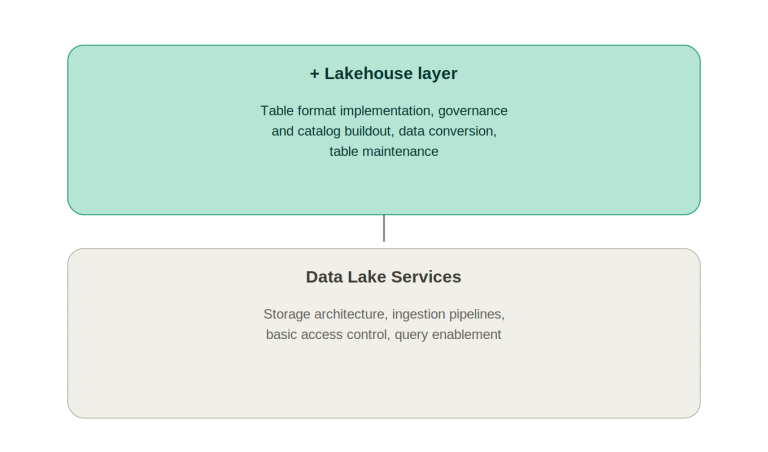
To truly unlock the power of today’s advanced data pipeline tools, businesses need more than just infrastructure—they need a flexible, intelligent foundation capable of handling vast and varied data streams. Algoscale’s Data Lake Services provide exactly that. Engineered to support high-volume, high-velocity data ingestion, the platform effortlessly consolidates structured, semi-structured, and unstructured data from multiple sources.
With built-in scalability, high availability, and fault tolerance, it ensures data integrity and reliability at every stage. Additionally, the platform is optimised for downstream analytics, enabling real-time querying, AI model training, and business intelligence with minimal latency. Whether you’re building predictive systems or enterprise dashboards, Algoscale’s data lake architecture sets the stage for innovation at scale.
How Much Does it Cost to Hire a Data Lake Service Partner?
The cost of hiring a data lake service partner depends on a range of variables like the volume of data, infrastructure demands, security necessities, and the level of AI/ML integrations. A typical cloud-native data lake with core ingestion capabilities, storage configuration, and minor transformation features will cost a startup or a small organisation between $25,000 and $70,000.
In case of mid-sized companies, where data lakes frequently need real-time ingestion capabilities, advanced analytics maturity, governance models, and connections to business intelligence or artificial intelligence systems, the investment could be between $90,000 and $250,000 or more.
Build Smarter, Faster Data Pipelines with Algoscale
Struggling with complex data workflows or outdated ETL systems? Algoscale helps you design and deploy modern, AI-powered data pipelines that scale with your business. From architecture to automation, we take care of your end-to-end data journey—so you can focus on innovation, not infrastructure.
Get Your Custom Data Solution
Conclusion
In May 2026, building a robust and future-ready data infrastructure starts with choosing the right data pipeline tools. From open-source orchestration frameworks to fully managed cloud-native platforms, the landscape is rich with solutions tailored for performance, scalability, and automation.
Each tool comes with its own strengths from real-time processing and seamless integrations to simplified ETL workflows—and selecting the right one hinges on your business’s unique data architecture, use cases, and growth trajectory.
To truly unlock the power of these data pipeline tools, you need a foundation that can handle diverse data streams with agility and intelligence. Algoscale, a leading Data Consulting company, offers Data Lake Services that provide the foundation for large-scale data ingestion, ensuring high availability and enabling advanced analytics across multiple data sources.
Whether you’re modernising legacy systems or launching data-driven initiatives, Algoscale helps streamline your entire data journey with tailored solutions that are scalable, secure, and enterprise-ready. Let Algoscale be your strategic partner in turning raw data into business value.
Must Read: Top Data Science Companies in the USA
FAQ
1. What is the best data pipeline tool?
The best data pipeline tool depends on your specific needs—popular choices include Apache Airflow, Fivetran, and AWS Glue for their scalability, automation, and integration capabilities.
2. Which data pipeline tool is right for me?
The ideal tool aligns with your data volume, complexity, tech stack, and budget—cloud-native options suit modern teams, while open-source tools offer flexibility.
3. What are the key benefits of using a data pipeline tool?
Data pipeline tools automate data flow, reduce manual work, improve data accuracy, and enable real-time insights to support better business decisions.
4. How can I get started with using a data pipeline tool?
Start by defining your data sources, transformation goals, and storage needs, then choose a tool that integrates easily and supports your operational workflows.
5. What are the main differences between open-source and commercial data pipeline tools?
Open-source tools offer customisation and cost control, while commercial tools provide managed services, enterprise support, and faster deployment.
6. What are some emerging trends in data pipeline technology?
Key trends include real-time streaming, AI-driven pipeline orchestration, no-code platforms, and tighter integrations with cloud data warehouses and lakehouses.