

Data Migration is a fundamental aspect of digital transformation, enabling organisations to modernise infrastructure, consolidate systems, and enhance data accessibility. Whether migrating to the cloud, transitioning to new databases, or optimising storage solutions, enterprises must ensure secure, seamless, and efficient data transfers. Selecting the right data migration tool is crucial for minimising downtime, preserving data integrity, and maintaining operational continuity.
According to a report by Gartner, over 83% of data migration projects exceed their timelines or budgets, primarily due to unforeseen complexities. Additionally, the global data migration market is projected to reach $11.49 billion by 2027, reflecting the increasing demand for effective migration solutions.
In this article, we will explore the concept of data migration, the role of migration tools, and a curated list of 12 budget-friendly data migration tools to consider in 2026.
Top 12 Data Migration Tools to Explore in May 2026
- AWS Database Migration Service (AWS DMS)
- Microsoft Azure Data Factory
- Google Cloud Data Transfer Service
- IBM InfoSphere Data Replication
- Dell EMC Data Migration Services
- Oracle Data Integrator
- Talend Data Fabric
- SnapLogic
- FiveTran
- Hevo Data
- Carbonite Migrate
- Stitch Data
Understanding Data Migration
Data migration refers to the process of transferring data from one system, format, or storage medium to another. This transition may involve structured or unstructured data and can include movement between databases, applications, or cloud environments. Businesses undertake data migration to upgrade technology, optimise costs, comply with regulations, or enhance business intelligence capabilities.
There are several types of data migration, some of which are mentioned below.
Store Migration – Store migration refers to moving data from one storage medium to another.
Database Migration – Transferring data from one database to another database is known as database migration.
Cloud Migration – The concept of cloud migration refers to transferring data from on-premise infrastructure to cloud-based environments.
Application Migration – The process of shifting applications alongside their associated data to a new environment is known as application migration.
A well-planned migration strategy ensures data accuracy, security, and performance while mitigating risks such as data loss, corruption, or extended downtime. Studies indicate that around 60% of business organisations experience some form of data loss during migration, highlighting the importance of robust migration tools.
The Role of Data Migration Tools

Data migration tools play a critical role in ensuring smooth, efficient and error-free data transfer across different systems, formats, or storage environments. These tools automate the migration process, reducing manual effort, minimising errors, and mitigating operational risks. By leveraging intelligent automation, they help organisations overcome common mitigation challenges, such as data inconsistency, downtime, and security vulnerabilities.
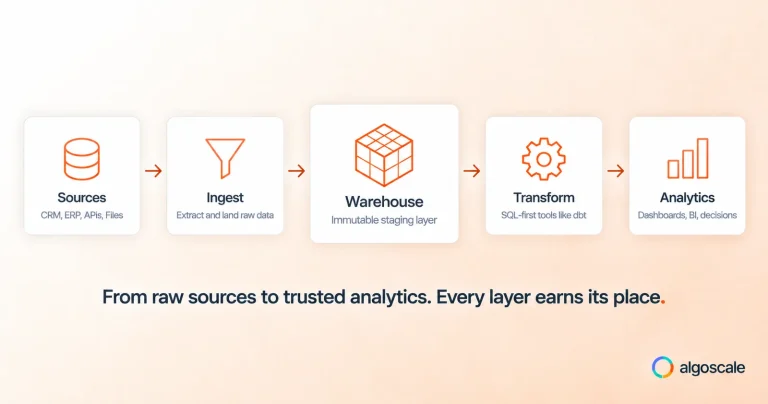
One of the primary functions of these tools is to facilitate the Extract, Transform, Load (ETL) process. They extract data from the source system, transform it into a compatible format, and load it into the target system, ensuring consistency and accuracy across different data structures. This process is crucial for businesses migrating large volumes of data while maintaining integrity and compliance.
Core Features of Data Migration Tools
When selecting the right data migration tool, it’s essential to look beyond just performance and speed. The best data migration tools offer a combination of features that ensure a smooth, secure, and scalable migration process no matter the complexity or data volume. From automation capabilities and real-time processing to robust security protocols and multi-platform compatibility, these core features play a crucial role in minimizing risk and maximizing efficiency during your migration journey.
Data Mapping & Transformation
One of the prominent features of data migration tools is that they convert data structures to match the destination format. This feature is essential when migrating between databases, applications, or cloud platforms. AI consulting services can help design smarter mapping algorithms that improve data accuracy and reduce manual intervention during transformation.
Automation & Scheduling
Data migration decreases human intervention and optimises migration timelines. Organisations can schedule migrations during non-peak hours to ensure seamless transitions without disrupting daily operations.
Additionally, data lake consulting services often help design automated workflows and schedules tailored for large-scale data lakes, enhancing efficiency and minimizing downtime during migrations.
Data Validation & Integration Checks
Data migration ensures completeness and consistency post-migration. These tools conduct integrity checks, identify discrepancies, and verify that migrated data aligns with the source. Integration checks further ensure that the new system can seamlessly interact with existing applications and databases.
Security & Compliance Controls
Since data migration often involves sensitive and critical business information, robust security measures are necessary. These tools employ encryption, role-based access control, and compliance protocols to protect data from unauthorised access, leaks or breaches. Compliance with industry standards such as GDPR, HIPAA, and ISO 27001 is also a key consideration for enterprises handling regulated data.
It should be noted that according to a recent industry survey, over 75% of enterprises are actively investing in automation-driven data migration tools to reduce migration failures and operational disruptions.
12 Data Migration Tools to Explore in May 2026
Now that we have learnt about the meaning of data migration tools in addition to the role it has to offer, let’s have a look over the list of top 12 budget-friendly data migration tools you should consider in 2026.
1. AWS Database Migration Service (AWS DMS)
AWS DMS is a fully managed service designed to simplify and accelerate database migrations to AWS with minimal downtime. It supports homogeneous (same database engine) and heterogeneous (different database engines) migrations, enabling seamless transitions between on-premises, cloud, and hybrid environments.
Some of the key features of AWS DMS are listed below.
- Broad Database Support – AWS DMS supports popular databases like Oracle, and a Microsoft SQL Server Consultant can help with seamless migrations from SQL Server, MySQL, PostgreSQL, MongoDB, and Amazon Aurora.
- Heterogeneous Migrations with AWS SCT – AWS DMS assists in converting database schemas and procedural code when migrating between different database engines.
- Cloud & Hybrid Deployments – Supports migrations to AWS databases, on-premises databases, and cross-region AWS migrations.
2. Microsoft Azure Data Factory
Azure Data Factory is a cloud-based ETL and data integration service supporting complex data migration scenarios. Its advanced workflow automation and built-in connectors enable smooth transitions between on-premises and cloud environments.
Some of the key features of Microsoft Azure Data Factory are listed below.
- Hybrid and Multi-cloud Integration – The platform connects to over 90 on-premises and cloud data sources, including SQL Server, Azure Synapse, AWS S3, and Google BigQuery.
- Code-Free & Code-First Development – Supports both GUI-based pipeline design and custom code via Azure Data Flow, Python, .NET, and REST APIs.
- Seamless Integration with Azure Services – Works natively with Azure Synapse Analytics, Azure Data Lake, Power BI, and AI/ML services for end-to-end data processing.
3. Google Cloud Data Transfer Service
Google Cloud Data Transfer Service is a fully managed solution that enables businesses to securely and efficiently move data into Google Cloud from on-premises storage, other cloud providers, or SaaS applications. It simplifies large-scale data migration for analytics, machine learning, and business intelligence workloads.
Some of the key features of Google Cloud Data Transfer Service are listed below.
- Multi-Source Data Ingestion – This feature supports transfers from on-premises, AWS S3, Azure Blob Storage, Google Drive, and SaaS applications like Salesforce and Marketo.
- High-Speed & Scalable Transfers – Optimised for large-scale data migrations with parallel processing and high bandwidth utilisation.
- Seamless Integration with Google Cloud Services – Works natively with BigQuery, Cloud Storage, and AI/ML solutions for advanced analytics and processing.
4. IBM InfoSphere Data Replication
IBM’s real-time data replication tool supports database, file-based, and cloud migrations. It provides enterprise-grade security, ensuring compliance with regulatory requirements. IBM claims a 99.9% data accuracy rate for migrations performed using InfoSphere.
Some of the key features of IBM InfoSphere Data Replication are listed below.
- Real-Time Data Replication – Captures and replicates changes as they happen, keeping target systems in sync without interrupting source operations.
- Heterogeneous Data Support – Works across multiple databases like IBM Db2, Oracle, SQL Server, and Kafka, allowing seamless cross-platform replication.
- Change Data Capture (CDC) – Efficiently identifies and replicates only modified data, reducing processing overhead and enhancing performance.
5. Dell EMC Data Migration Services
Dell EMC offers comprehensive solutions for large-scale data centre migrations. It supports heterogeneous storage environments and ensures minimal business disruption during transitions. A Principled Technologies study highlights that Dell’s Data Migration Services achieved a 99.5% reduction in downtime compared to manual migration methods.
Some of the key features of Dell EMC Data Migration Services are listed below.
- Heterogeneous Storage Support – Works across Dell EMC, third-party storage systems, cloud platforms, and hybrid environments.
- Non-Disruptive Data Movement – Uses advanced replication and automation to minimise downtime and maintain operational efficiency.
- High-Speed, Scalable Transfers – Supports petabyte-scale migrations with optimised performance and reliability.
6. Oracle Data Integrator
Oracle Data Integrator is a powerful, high-performance ETL (Extract, Transform, Load) and data integration solution designed for modern enterprise data environments. It enables businesses to seamlessly integrate, transform, and govern data across on-premises, cloud, and hybrid architectures, ensuring efficiency, scalability, and security.
Some of the key features of Oracle Data Integrator are listed below.
- ETL-Based Architecture – Unlike traditional ETL tools, ODI leverages ELT (Extract, Load, Transform) for faster data processing by utilising the target database’s processing power.
- Heterogeneous Data Integration – Supports Oracle, SQL Server, PostgreSQL, Big Data, Cloud Storage, and third-party applications, enabling seamless data flow.
- Advanced Automation and Orchestration – Provides drag-and-drop workflow design, scripting, and AI-driven automation for simplified data pipeline management.
7. Talend Data Fabric
Talend’s open-source data migration platform combines ETL, data governance, and security features. It supports real-time data streaming and ensures seamless integration across cloud and on-premise environments. Over 7,000 business organisations worldwide have adopted the platform.
Some of the key features of Talend Data Fabric are listed below.
- Comprehensive Data Integration – Seamlessly connects on-premises, cloud, multi-cloud, and hybrid data sources, supporting structured and unstructured data.
- Data Quality & Governance – Built-in tools for data profiling, cleansing, deduplication, and compliance (GDPR, CCPA, HIPAA) ensure trusted, high-quality data.
- Low-Code & API-Driven Architecture – Simplifies integration with drag-and-drop workflows, REST APIs, and Python/Java-based customisation.
8. SnapLogic
SnapLogic is an AI-driven integration platform that facilitates fast and intuitive data migration. Its low-code, drag-and-drop interface reduces complexity, making it accessible to both technical and non-technical users. SnapLogic reports five times faster integration speeds than traditional methods.
Some of the key features of SnapLogic are listed below.
- Pre-Built Connectors (Snap) – Provides 700+ ready-to-use Snaps for databases, SaaS applications, APIs, and cloud services like AWS, Azure, and Google Cloud.
- Scalable & Secure – Ensures enterprise-grade security with role-based access control (RBAC), encryption, and compliance (GDPR, HIPAA, SOC 2).
- Real-Time & Batch Data Processing – Supports both real-time streaming and batch ETL/ELT workflows for advanced analytics and data synchronisation.
9. FiveTran
Fivetran automates data pipeline creation for cloud-based data warehousing solutions. It supports continuous data syncing, schema updates, and minimal maintenance overhead. It supports over 200 data source connectors, streamlining data migration workflows.
Some of the key features of FiveTran are listed below.
- Ensures Grade Security & Compliance – Ensures data integrity with encryption, role-based access (RBAC), and compliance standards (SOC 2, HIPAA, GDPR).
- Pre-Built Connectors – Supports 300+ connectors for databases, SaaS applications, and cloud storage (e.g., Salesforce, SAP, Snowflake, AWS, Azure).
- ELT Optimisation & Transformation – Works with dbt (Data Build Tool) to transform data after loading for flexible analytics and reporting.
10. Hevo Data
Hevo Data is a fully managed no-code data pipeline platform that enables enterprises to seamlessly integrate, transform, and load (ETL/ELT) data from multiple sources into cloud data warehouses and analytics platforms. With its real-time data replication, automated schema management, and scalability, Hevo simplifies data movement across hybrid and multi-cloud environments.
Some of the key features of Hevo Data are listed below.
- Pre-Built Connectors – Supports 150+ data sources, including databases, SaaS apps (Salesforce, HubSpot), cloud storage, and more.
- Scalability and Cloud-Native Architecture – It works with leading cloud data warehouses such as Snowflake, Google BigQuery, Amazon Redshift, and Databricks.
- Automated Schema Mapping & Change Handling – Adapts to schema changes without breaking pipelines.
11. Carbonite Migrate
Carbonite Migrate is an enterprise-grade migration solution that enables businesses to securely and efficiently move workloads, applications, and data across on-premises, cloud, and hybrid environments with minimal downtime. Designed for business continuity and disaster recovery, it ensures seamless transitions while maintaining data integrity.
Some of the key features of Carbonite Migrate are listed below.
- Broad Platform Support – This service migrates workloads across physical, virtual, and cloud environments, including AWS, Azure, Google Cloud, VMware, and Hyper-V.
- Near-Zero Downtime Migration – Uses continuous replication to keep source and destination environments in sync, minimising disruption.
- Automated & Orchestrated Migration – Enables scripted cutovers for streamlined, repeatable migration processes.
12. Stitch Data
Stitch Data is a cloud-first, fully managed ETL (Extract, Transform, Load) platform that helps enterprises seamlessly move data from multiple sources into cloud data warehouses for analytics and reporting. With its automation, scalability, and security, Stitch simplifies data engineering, enabling businesses to focus on insights rather than pipeline maintenance.
Some of the key features of Sitch Data are listed below.
- Pre-Built Connectors – Supports 130+ sources, including databases (PostgreSQL, MySQL), SaaS apps (Salesforce, HubSpot), and cloud storage (AWS S3, Google Cloud Storage).
- ELT-Optimised Processing – Moves data into warehouses like Snowflake, BigQuery, Redshift, and Databricks, allowing transformation after loading for greater flexibility.
- Scalable & Cloud-Native – Designed for high-volume data movement, adapting to business growth without performance bottlenecks.
Conclusion
Data Migration is an essential process for organisations aiming to modernise infrastructure, enhance data management, and drive digital transformation. Selecting the right data migration depends on data volume, complexity, security requirements, and budget constraints.
With the global data volume expected to reach 181 zettabytes by 2026, business organisations must ensure they have the right tools to manage large-scale data transitions effectively. As a leading data consulting service provider, Algoscale offers world-class solutions and product engineering services for startups and Fortune 100s.
The 12 tools highlighted in this article by Algoscale offer advanced automation, security, and scalability, making them valuable investments for businesses looking to optimize data migration in 2026.