

Most enterprises don’t wake up one day and decide to rebuild their entire data stack. It usually happens gradually. Reports take longer to refresh, engineering teams juggle five different tools just to move data from one place to another, and business leaders start asking why the numbers in one dashboard never quite match the numbers in another. Eventually, someone asks the obvious question: is it time for a data warehouse migration, and if so, where should we actually be migrating to?
For a growing number of organizations already invested in the Microsoft ecosystem, the answer is Microsoft Fabric. It’s a single, unified analytics platform that brings together data engineering, data warehousing, real time analytics, and business intelligence under one roof, built on top of a shared storage layer called OneLake. Instead of stitching together separate services for ingestion, storage, transformation, and reporting, Fabric consolidates most of that work into one workspace.
At Algoscale, we work with US based enterprises that are planning or already in the middle of moving away from legacy warehouses and fragmented cloud setups. In this blog, we’ll walk through what modernizing your data warehouse with Microsoft Fabric actually involves, compare it against the approaches teams typically come from, and share practical guidance on planning a migration that doesn’t spiral into a year long project.
What Does Modernizing a Data Warehouse with Fabric Actually Involve?
Data warehouse migration is the process of moving your data, schemas, ETL or ELT pipelines, and reporting layers from an existing environment into a new one. When the destination is Microsoft Fabric, that process looks a little different than a typical platform to platform move, because Fabric isn’t just a warehouse. It’s an umbrella that includes a Lakehouse, a SQL based Warehouse, Data Factory style pipelines, Power BI, and real time analytics, all reading from and writing to the same underlying data in OneLake.
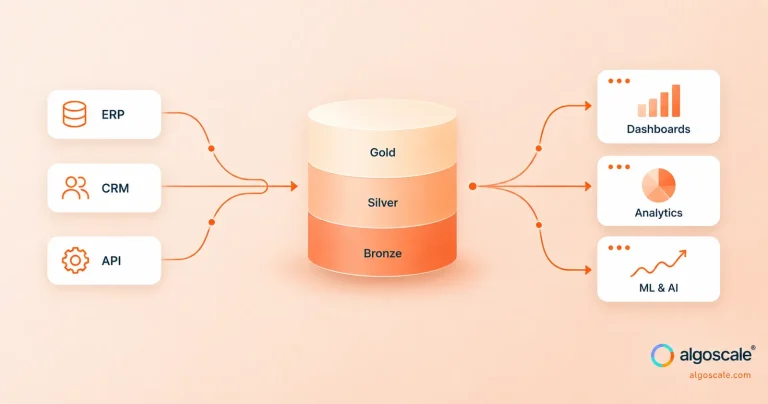
Data migration in data warehouse projects moving into Fabric usually starts with an assessment of where your data currently lives, whether that’s an on premises SQL Server environment, an existing Synapse workspace, a Redshift cluster, or a mix of tools that grew organically over the years. From there, teams map dependencies, decide what belongs in a Fabric Lakehouse versus a Fabric Warehouse, rebuild pipelines using Data Factory activities inside Fabric, and validate that reports built on the new architecture match what the business was seeing before.
Some organizations treat this as a straightforward lift and shift. Others use the migration as a chance to clean up years of technical debt, consolidate duplicate pipelines, and finally standardize on a single semantic model that Power BI, Excel, and other reporting tools can all pull from consistently.
Why Enterprises Are Moving Toward Fabric
The push toward data warehouse cloud migration into Fabric tends to come from a few recurring pressures we see across client engagements.
Too many disconnected tools. Many enterprises end up running a separate data warehouse, a separate data lake, a separate orchestration tool, and a separate BI layer, often from different vendors. Fabric’s biggest selling point is collapsing that sprawl into one platform with one security model and one copy of the data.
Storage and compute costs that keep climbing. Traditional warehouses charge for compute and storage as tightly coupled resources. Fabric, like most modern cloud platforms, separates the two and uses OneLake as a single storage layer so data doesn’t need to be copied and duplicated across every engine that touches it.
Faster reporting without duplicate data movement. Because Power BI can connect directly to data sitting in OneLake through Direct Lake mode, teams avoid the traditional step of importing and refreshing data into a separate BI model, which shortens the path between raw data and a finished report.
Simplified governance. With data engineering, warehousing, and BI all inside one workspace, permissions, lineage, and sensitivity labels can be managed in one place instead of across three or four separate admin consoles.
A natural fit for hybrid strategies. A lot of enterprises are also exploring data warehouse to data lake migration, or a combined lakehouse approach, so they can store structured and unstructured data together while still running fast analytical queries. Fabric’s Lakehouse and Warehouse items are designed to sit side by side and share the same underlying files, which makes this kind of hybrid setup considerably less painful than maintaining two entirely separate systems.
Why This Comparison Matters Before You Start Migrating
Before committing to a data warehouse migration into Fabric, it’s worth understanding that Fabric is not simply “Synapse with a new name,” even though it evolved from that lineage. It changes how computers are billed, how workspaces are organized, and how much of your existing Synapse or Redshift investment can be reused versus rebuilt. Picking an approach without understanding these differences doesn’t just create a mismatch of features, it can mean redesigning pipelines a second time within a year, or paying for capacity units you didn’t actually need.
Data migration in data warehouse projects is expensive to redo, so the architectural decisions inside Fabric deserve just as much scrutiny as the migration plan itself. That’s why we’re comparing Fabric’s own engines against each other, and against the platforms teams are typically migrating from, rather than assuming one path fits every enterprise.
Fabric Lakehouse vs Fabric Warehouse: Choosing the Right Engine

One of the first decisions any team faces when modernizing with Fabric is whether a given workload belongs in a Lakehouse or a Warehouse item.
The Lakehouse is built around Delta tables and is the natural home for data engineers who want to work with Spark notebooks, semi structured data, and large scale transformations before the data is ready for reporting. The Warehouse, on the other hand, is a fully SQL based engine aimed at analysts and BI developers who are more comfortable writing T-SQL than Spark code, and who need strict schema enforcement and transactional consistency.
In practice, most enterprise migrations end up using both. Raw and intermediate data lands in the Lakehouse, gets cleaned and modeled there, and then a curated, business ready layer is exposed through the Warehouse or through Lakehouse SQL endpoints for reporting.
Comparing Fabric Against Where Enterprises Are Migrating From
Comparison Table 1: Core Platform Features
| Feature | Microsoft Fabric | Azure Synapse (legacy) | Amazon Redshift | Google BigQuery |
| Architecture | Unified SaaS (Lakehouse, Warehouse, Real Time, BI) | Hybrid SQL + Spark workspace | Cluster based, AWS native | Serverless |
| Storage layer | OneLake (single copy, Delta format) | ADLS Gen2 (separate per workload) | Managed columnar storage | Managed columnar storage |
| Compute and storage separation | Yes | Partial | Yes (with RA3 nodes) | Yes |
| Pricing model | Capacity units (F SKUs), pay per use or reserved | Pay per DWU or serverless on demand | Per node hour or Redshift Serverless | Pay per query (data scanned) or flat rate |
| Native BI integration | Power BI (Direct Lake, no data duplication) | Power BI (via import or DirectQuery) | QuickSight, third party BI tools | Looker Studio, third party BI tools |
| Best suited for | Microsoft ecosystem, unified analytics and BI | Existing Azure investment, SQL plus Spark needs | AWS ecosystem, existing Redshift workloads | Google Cloud first strategy |
| Ease of setup | Moderate | Moderate to complex | Moderate | Very easy |
Comparison Table 2: Migration Considerations
| Consideration | Migrating to Fabric | Migrating to Redshift | Migrating to BigQuery |
| Migration complexity from on premises | Moderate | Moderate | Moderate |
| Data warehouse to data lake migration support | Strong (Lakehouse and Warehouse share OneLake) | Moderate (via Redshift Spectrum) | Strong (BigLake) |
| Downtime during cutover | Low with proper workspace planning | Low | Low |
| Reuse of existing Synapse investment | High if already on Synapse | Not applicable | Not applicable |
| Third party tool ecosystem | Strong within Microsoft stack, growing elsewhere | Extensive within AWS stack | Extensive |
| Ideal migration scenario | Existing Microsoft or Power BI heavy environment | Existing AWS investment or Redshift upgrades | Google Cloud first strategy |
| Team skill requirement | SQL plus some Spark and Power BI familiarity | SQL, some AWS familiarity | SQL, minimal ops overhead |
As the tables show, there isn’t a single universal winner, and that’s expected. If your organization already leans heavily on Power BI, Azure Data Factory, and Active Directory, Fabric is usually the path of least resistance because the new environment plugs directly into tools your team already uses every day. If your workloads and team skills are anchored in AWS, an aws redshift migration or an upgrade to Redshift Serverless may still make more sense than a wholesale platform change. And if Google Cloud is already central to your infrastructure, BigQuery remains a strong option in its own right.
Matching the Comparison to Your Migration Scenario

Putting these two tables together, a few patterns become clear. Enterprises already running Synapse workspaces tend to have the smoothest path into Fabric, since a good portion of the underlying skills and even some pipeline logic can carry over rather than being rebuilt from scratch. Enterprises coming from an on premises SQL Server or Teradata environment usually need a more deliberate approach, since both the data and the reporting layer are moving at the same time.
For teams that are AWS first, the calculation is different. An aws redshift migration into Fabric is possible, and some organizations do it specifically to consolidate reporting under Power BI, but it typically involves more rework than a same ecosystem move, since data movement, identity, and networking all need to be reconsidered alongside the warehouse itself.
The broader point is that the right modernization path depends on what you’re migrating from, which tools your analysts already know, and whether your roadmap includes a data warehouse to data lake migration or a hybrid lakehouse setup down the line. Fabric’s advantage is that it was designed with that hybrid model in mind from day one, rather than bolting lake and warehouse capabilities together after the fact.
Migration Challenges That Are Specific to Fabric
Even though the general steps of data migration in data warehouse projects look similar on paper, meaning assessment, schema mapping, pipeline rebuilding, and validation, Fabric introduces a few friction points that teams don’t always anticipate.
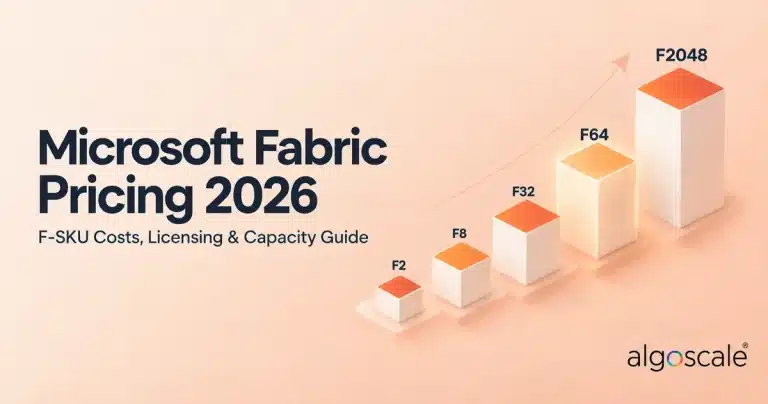
Capacity planning is one of the first surprises. Fabric bills are based on capacity units rather than per query or per node, which means workloads that used to run predictably on a fixed cluster can behave differently once they’re competing for shared capacity across a workspace. Getting this size correctly takes some trial and observation, not just a one time estimate.
Deciding what goes into the Lakehouse versus the Warehouse is another decision most previous migrations didn’t require, and getting it wrong doesn’t break anything immediately, it just means more rework and re-modeling later once teams realize a workload is sitting in the wrong layer.
Security and governance also need a fresh look. Because Fabric centralizes so much under one workspace and one copy of data in OneLake, sensitivity labels, row level security, and workspace permissions need to be planned deliberately from the start rather than patched together after users are already in the system.
This is exactly where experienced data warehouse migration services earn their keep, since these platform specific pitfalls are rarely obvious until a team has run into them on a previous engagement.
How Algoscale Approaches Fabric Migrations for Clients
At Algoscale, every data warehouse migration engagement starts with mapping a client’s existing environment, team skills, and reporting needs against the realistic options, rather than assuming Fabric is automatically the right destination just because it’s the newest name in the market. When a client is already deep into Power BI, Azure Data Factory, and Microsoft identity systems, Fabric usually earns its place quickly. When AWS is the dominant environment, we’ll often recommend an aws redshift migration or a Redshift Serverless upgrade instead, and revisit Fabric later if reporting consolidation becomes the priority.
We also help clients plan for data warehouse to data lake migration where it makes sense, since a growing number of engagements aren’t just about moving from one warehouse to another. They’re about restructuring how structured and unstructured data live together, and making sure the reporting layer on top of that data doesn’t require three different tools to produce one trustworthy number.
Bringing It All Together
Modernizing your enterprise data warehouse with Microsoft Fabric Services can meaningfully reduce the number of tools your team manages day to day, cut down on duplicate data movement, and give analysts a more direct path from raw data to a finished Power BI report. But like any data warehouse migration, the value only shows up when the underlying decisions, what goes in the Lakehouse, what goes in the Warehouse, how capacity is sized, and how governance is structured, are made deliberately rather than as an afterthought.
All of the platforms compared here, Fabric, Synapse, Redshift, and BigQuery, are mature and capable. The right choice depends less on which one is objectively best and more on where your organization’s data already lives, which tools your team knows, and where your reporting strategy is headed over the next few years.
If your organization is evaluating a move to Microsoft Fabric, or weighing it against staying on AWS or Google Cloud, Algoscale’s data warehouse migration services team can help assess your current environment, plan the transition, and execute a migration that sets your data infrastructure up for long term success.