


Introduction to NLP
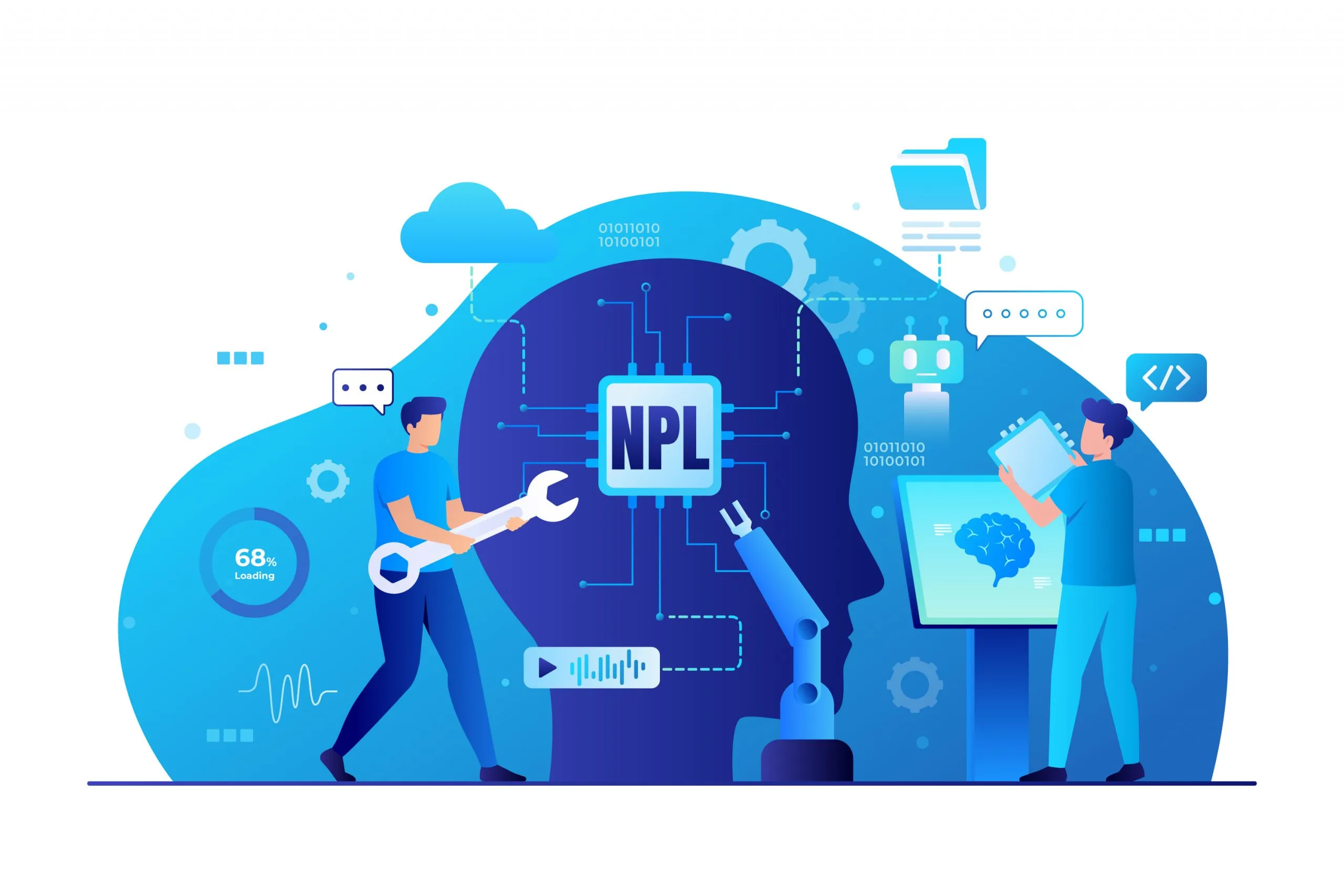
NLP, also known as natural language processing, is a branch of artificial intelligence, or machine learning, with the help of which the system, computer, or apps can recognize texts and speeches by seeking patterns in the text
The other definition for NLP is how the computer can read natural language in written or speech form, and what kind of data can be obtained from the source that has been given to the system
It is a very complex field of computer science, as the rules that have been made are very complex and very difficult for the system or the model to understand. So, a proper programming language is required to make the system intelligent so that it can understand what type of initial input has been provided to it
In the same way, when we want to train a model that can understand natural languages in the form of natural text and speech, a lot of explanations are needed to enter the system so that there is no ambiguity while working on the system
There are different uses of NLP in our daily lives that we have observed. These are email filtering, as by the wording inside the email, the AI agent can tell the user which email is of great importance and which email is a scam
The other important thing that we have used in our daily lives is autocorrect already installed on our mobile phones. With the help of this, the keypad itself predicts the next possible word or sentence, all of which are primarily based on NLP.
Data Mining
While working with artificial intelligence, machine learning, and machine vision. There are a lot of possibilities to have data anomalies, different patterns, and correlations as well. To find these factors in a large data set data mining technique has been used.
In easier definitions of data mining, it is a technique with the help of which we can analyze a data set. The data has been searched, analyzed, and the correlation between the different points of a single data set.
In this way, the model, system, or machine can itself predict the probable outcome and hence make things easy for the system. Data mining is a powerful tool with the help of which useful information from discrete data can be obtained, analyzed, and used for our work to get useful outputs.
There are different advantages of data mining like it predicts the danger, improves consumer satisfaction and reduces cost as well. Market segmentation, customer acquisition, and targeted customers can also be achieved using this technology. Many organizations also rely on a predictive data analytics services to enhance the accuracy of such predictions.
There are two main types of data mining one is predictive data mining and the other one is descriptive data mining. In predictive, the possible future of the model has been defined and it includes regression analysis, prediction analysis, and time series analysis.
In the same way, descriptive analysis is the one that gives the turnout and the real-time information of the data that has already been uploaded as a data set. The descriptive analysis has include clustering, summarization, and association rule analysis.
NLP In Data Mining
While working in data mining, we need some algorithms so that we can make the machine able to read the text, follows the pattern, and interpret the environment which kind of data has been given to the system.
This can be possible by using the NLP technique, as with the help of NLP the system can interpret the situation by following the pattern and reading the text and in the end understanding most of the data that has been available in the raw or natural form.
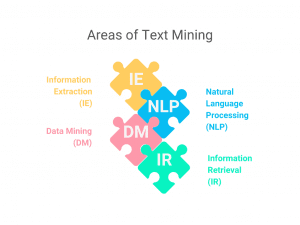
While working with NLP in DATA mining there are basically different steps involved the first one is a statistical analysis of the data in order to find the correlation between the data, to find the pattern. The second step is artificial intelligence which is the core of this scenario.
With the help of AI, the correlation can be observed, data interpolation can be done and finally, machine learning agents are applied to continuously improve the interpretation of the data by giving feedback to the system in various forms.
There are different types of mining as well one is text mining in which only text has been obtained from the raw data or in the form of natural language. In the same way, the other one is data mining. Data mining is more or less the same as text mining but in a large form.
With the help of data mining, we can extract a complete data set. In data mining, the same pattern is followed as intext mining using NLP in order to extract some useful information from the text which is written in the natural form.
Application of NLP In Data Mining
Data mining and NLP are the correlated subfields of machine learning and artificial intelligence. There are various applications in which these are used to get better results and output. Some of the applications are as follows.
- Email filtering is the most common application in NLP.
- Google search results also use NLP and data mining, having a record of the user interests and all that.
- Translation and predictive text also include the algorithms of NLP.
- Even the text analytics and smart assistance features in our smart gadgets use NLP.
Conclusion
In this era of digital transformation and artificial intelligence, more NLP developments will further revolutionise businesses and processes, with surprises around every corner. A trusted Data Consulting Company can leverage the actionable customer insights offered by NLP and the automation of numerous processes, helping businesses make decisions that provide observable outcomes and further increase business efficiency.
Algoscale’s team of AI experts is here to help you navigate the latest advancements and unlock the full potential of AI for your business. Explore our Artificial Intelligence Solutions providers and partner with us to transform your operations with cutting-edge NLP technology.