



Healthcare organizations generate massive volumes of clinical, financial, and operational data every day. From EHR systems and lab reports to billing platforms and medical imaging, this data often remains scattered across multiple systems. A healthcare data warehouse solves this problem by centralizing and organizing data into a single, structured repository that enables advanced analytics, reporting, and better decision-making.
The demand for modern data infrastructure is growing rapidly. The global data warehousing market is projected to surpass $40 billion in the coming years, driven by cloud adoption, AI integration, and the need for real-time insights. In healthcare specifically, organizations are increasingly investing in analytics platforms to improve patient outcomes, optimize costs, and meet strict regulatory requirements such as HIPAA compliance.
However, building a secure and scalable system requires the right strategy, architecture, and governance framework. This is where expert data warehouse consulting services play a critical role—helping healthcare organizations design, implement, and optimize solutions that are compliant, future-ready, and aligned with business goals.
What is a Healthcare Data Warehouse?
A healthcare data warehouse is a centralized system that collects, stores, and organizes healthcare data from multiple sources into a single, structured repository for reporting and analytics. It integrates information from electronic health records (EHRs), laboratory systems, pharmacy systems, billing platforms, insurance claims, and medical devices to provide a unified and accurate view of patient and operational data.
Unlike traditional transactional databases, a healthcare data warehouse is built specifically for analysis. Through ETL (Extract, Transform, Load) processes, it cleans, standardizes, and transforms raw data into consistent formats, enabling accurate reporting and advanced analytics. This helps healthcare organizations improve clinical decision-making, optimize costs, manage population health, and meet regulatory requirements such as HIPAA compliance.
As healthcare analytics leader Ralph Kimball, known as one of the pioneers of modern data warehousing, emphasized, “The goal of a data warehouse is to make data accessible and understandable for better decision-making.” In healthcare, this principle is even more critical, where timely and accurate insights directly impact patient care.
Why Healthcare Organizations Need It
Healthcare today generates vast amounts of fragmented data from electronic health records (EHRs), lab systems, billing platforms, imaging, and patient monitoring devices. Without a centralized analytics layer, this data often remains siloed, inconsistent, and difficult to use. A healthcare data warehouse solves this challenge by unifying disparate datasets into a single, structured repository that supports faster analytics, deeper insights, and more informed decision-making.
Adoption of advanced analytics and data warehousing technologies in healthcare continues to grow as organizations pursue improved outcomes and operational efficiency. For example, 65% of U.S. hospitals now use healthcare analytics to enhance efficiency, up from 50% in 2020. Moreover, 41% of healthcare organizations have integrated analytics into revenue cycle management, with nearly 28% reporting a 20% reduction in claim denials, highlighting the financial impact of structured data platforms.
A centralized data warehouse empowers providers and payers to:
- Generate near-real-time dashboards and clinical insights, speeding up decision cycles by up to 30%.
- Reduce data retrieval and reporting workloads by more than 70%, freeing staff from manual tasks.
- Improve compliance reporting and data governance by standardizing metrics across the enterprise.
- Enable predictive analytics to forecast trends in patient demand, staffing, and costs.
By consolidating data into a robust analytical foundation, healthcare data warehouses help organizations move from reactive to proactive care delivery, improve patient outcomes, and realize measurable operational and financial benefits.
Healthcare Data Warehouse Architecture

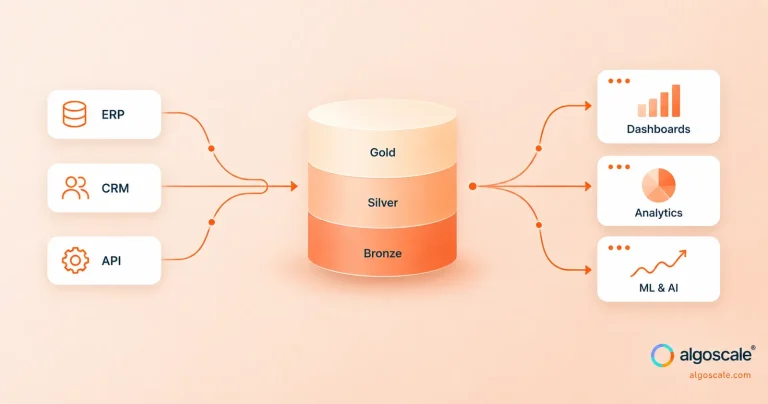
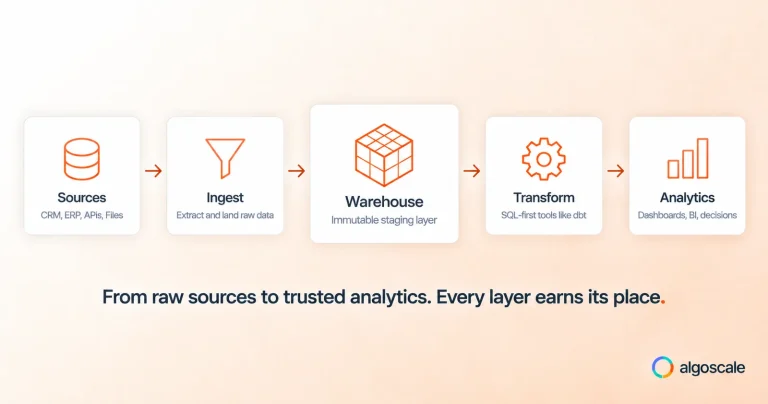
A data warehouse works in layers, with each layer serving a specific purpose. Together, these layers help hospitals manage, clean, store, and analyze data efficiently. This layered approach ensures data remains organized, reliable, and ready for reporting and decision-making.
1. Data Source Layer
This is where all the data comes from. It collects information from EMRs, labs, billing systems, pharmacy tools, healthcare applications and other medical instrumentation devices. This can bring both the structured and unstructured data under the same roof.
2. Staging Layer
This is a temporary holding area. The system checks the data here, fixes errors, and removes the duplicate data. This staging layer makes sure that only clean and correct data is moved to the next step. This step usually helps you get rid of unnecessary data that occupies more storage space.
3. Data Storage Layer
This is the main home for your healthcare data. After cleaning, the information is stored in an organized way. Many hospitals now use cloud native data warehouses for healthcare, because they are easier to scale. Choosing a cloud data warehouse is the easiest way to store huge amounts of data especially when it comes to the healthcare industry.
4. Analytics & BI Layer
This is where people use the data. Doctors, admins, and analysts can build dashboards, run reports, and study trends. This helps to turn raw information into simple insights for care and planning purposes.
5. Metadata Layer
This layer stores ‘data about data”.This keeps details like meaning, format, rules, and the sources. This helps teams understand where the data has come from and how to use it correctly inside the data warehouse healthcare system.
6. Security & Access Layer
This layer protects patient data. It manages who can see what, keeps records safe, and follows healthcare laws. It helps hospitals keep trust and stay compliant.
Together, these layers make the data warehouse for healthcare strong, smooth, and ready for daily use. They help hospitals handle large amounts of information without confusion or risk. Many teams also use data management services for their healthcare data to set up these layers the right way and keep everything running smooth.
Types of Healthcare Data Warehouse Models
Choosing the right healthcare data warehouse model is critical for scalability, performance, and long-term analytics success. Different models are designed to meet specific healthcare data needs, such as clinical reporting, financial analytics, population health management, and compliance tracking.
Below are the most commonly used healthcare data warehouse models:
1. Enterprise Data Warehouse (EDW)
An Enterprise Data Warehouse (EDW) centralizes data from across the entire healthcare organization into a single, unified system. It integrates clinical, financial, operational, and administrative data to provide a comprehensive enterprise-wide view.
Best for: Large hospitals, healthcare networks, and multi-specialty systems
Advantages:
- Single source of truth
- Strong governance and standardization
- Supports advanced analytics and reporting
2. Dimensional Model (Star or Snowflake Schema)
The dimensional model organizes data into fact tables and dimension tables, making it easier to query and analyze. It is commonly used for reporting and dashboarding.
Best for: Performance reporting and BI dashboards
Advantages:
- Faster query performance
- Simple structure for business users
- Ideal for KPI tracking
3. Data Vault Model
The Data Vault model focuses on flexibility and scalability. It separates raw data storage from business logic, making it easier to adapt to changing healthcare regulations and new data sources.
Best for: Complex healthcare ecosystems with evolving data requirements
Advantages:
- Highly scalable
- Audit-friendly
- Supports regulatory compliance
4. Cloud-Based Healthcare Data Warehouse
Modern healthcare organizations increasingly adopt cloud-native data warehouses hosted on platforms like AWS, Azure, or Google Cloud.
Best for: Organizations seeking scalability and cost efficiency
Advantages:
- Elastic storage and computing
- Lower infrastructure costs
- Supports real-time analytics
Key Features to Look for in a Healthcare Data Warehouse

A strong data warehouse healthcare should be able to help hospitals bring all their information into one safe place and make it easy to use. It should handle big data, protect the patient details, and support quick reports. These features matter in every enterprise data warehouse healthcare system because healthcare data is large, fast growing and very sensitive.
1. Structured Data Integration
The warehouse must collect data from ERMs, lab systems, billing tools, pharmacy software and devices. Good data integration helps hospitals avoid silos and build one clear view of patients. This is the core of any data warehouse healthcare industry solution.
2. Data Lineage
Data lineage shows the full path of the data, where it has come from, how it is changed and who touched the data and made the changes. This makes tracking errors, checking quality, and meeting the healthcare guidelines much easier. It builds trust in the system.
3. Data Storage
A good storage layer keeps data safe, organized, and ready for fast use. Many organizations now use cloud native data warehouse for healthcare setups because they grow easily and handle large amounts of data and workloads. Strong storage is the backbone of any data warehouse in healthcare.
4. Security & Compliance
Hospitals do work with very sensitive patient information. The data warehouse must follow strict rules and protect data with encryption, access controls, audits, and alerts. This helps meet healthcare laws and keeps patient trust.
5. Healthcare Data Analytics
The warehouse should always support types of dashboards like real-time insights, clinical trends, financial reports, and operational analytics. Stronger data analytics help teams make smart decisions faster and improve healthcare quality.
6. Metadata Management
Metadata explains where exactly the piece of data means. It records all the definitions, formats, rules, and where the data comes from. This helps your healthcare teams understand the information better and avoid confusion when working across systems.
7. Access Control Management
Not everyone should see or have access to your data, that too which contains confidential information regarding patients health. Access control makes sure that only the right people like doctors, nurses, billing staff can view or change data. This is key for safe and enterprise healthcare data warehouse model setups.
8. Performance & Reliability
A healthcare system should not and cannot slow down. Thousands of people work with that data every day. The warehouse must load data fast, run your reports quickly, stay stable and work smoothly even when the data grows. High reliability keeps hospital operations running without delays.
Many teams also use Data Strategy consulting services to help plan these features the right way and build a system that stays strong in the long run.
Data Warehouse Healthcare Benefits
A centralized data warehouse helps hospitals operate in a smarter and more efficient way. When all data is stored in one clean and reliable location, teams no longer waste time searching, validating, or fixing the same information repeatedly. It supports better clinical decision-making and helps healthcare organizations reduce costs over time. These advantages are critical for any enterprise-level data warehouse implementation in healthcare.
1. Efficient Reporting
It’s simple, when the data comes from one trusted source, reports take less time to build. Teams can check numbers, track patients history, and study patterns faster. When you have the data warehouse setup done right, you can save a lot of reworking hours on the data. This makes reporting simple and reliable.
2. Improved Clinical Decision Making
Doctors get a full view of patient history, their test results, care plans, and ongoing medication all under one profile. No more case sheet files. With clearer data, they can make safer and faster decisions. This improves patient care across the hospital.
3. Advanced Healthcare Analytics
A strong warehouse supports deep analysis, trends, and forecasts. With the right and the best data warehouse tools, hospitals can spot the risks, predict the issues that might occur in future and plan ahead. This is a key benefit of enterprise data warehouse healthcare systems.
4. Faster Healthcare Operations
When departments share the same updated data, work becomes easier and diagnosis moves quickly. Billing, labs, pharmacy, and admin teams complete tasks with fewer mistakes and delays.
5. Optimized Staff Management
Here’s a clear rewrite with “healthcare data warehouse” removed and better flow:
When used correctly, staff data can help reduce team overload. With a strong data platform, healthcare organizations can track how staff time is used, distribute workloads evenly across hospitals, and respond quickly during emergencies. This also makes employee scheduling and recruitment planning smoother and more efficient.
6. Lower Healthcare Operating Costs
Clean and connected data reduces errors, repeated work and slow processes. This also helps hospitals cut daily costs and use resources more wisely.
7. Better Healthcare Asset Management
Hospitals can track machines, tools, and equipment in real time. This avoids loss, reduces downtime, and improves planning for new purchases. Strong storage systems like cloud native data warehouse for healthcare make this even easier.
Many organizations also use Big data consulting services to build these benefits into their system and get more value from their healthcare data.
Implementation Roadmap of Healthcare Data Warehouse
Implementing a healthcare data warehouse requires careful planning, regulatory awareness, and a scalable technical strategy. A structured roadmap ensures that the solution delivers measurable clinical, operational, and financial value.
1. Define Business Goals and Data Strategy
Start by identifying key objectives such as improving patient outcomes, optimizing revenue cycle management, enhancing reporting accuracy, or supporting population health analytics. Align stakeholders from IT, clinical, and administrative teams to define success metrics and KPIs.
2. Identify and Assess Data Sources
Map all relevant data sources including EHR systems, laboratory platforms, billing software, insurance claims, pharmacy systems, and medical devices. Evaluate data quality, consistency, and integration challenges.
3. Choose the Right Architecture and Model
Select the appropriate healthcare data warehouse model (EDW, dimensional, Data Vault, or cloud-based) based on scalability, compliance needs, and reporting requirements.
4. Design ETL/ELT Pipelines
Build secure Extract, Transform, Load (ETL) processes to clean, standardize, and consolidate data. Ensure strong data validation and quality checks.
5. Ensure Compliance and Data Governance
Implement security controls, role-based access, encryption, and audit trails to meet HIPAA and other regulatory standards.
6. Develop Analytics and BI Layer
Create dashboards, reports, and predictive analytics models tailored to clinical and operational use cases.
7. Testing, Deployment, and Optimization
Conduct thorough testing before deployment. Continuously monitor performance, data accuracy, and user adoption.
Healthcare Data Warehouse vs Data Lake
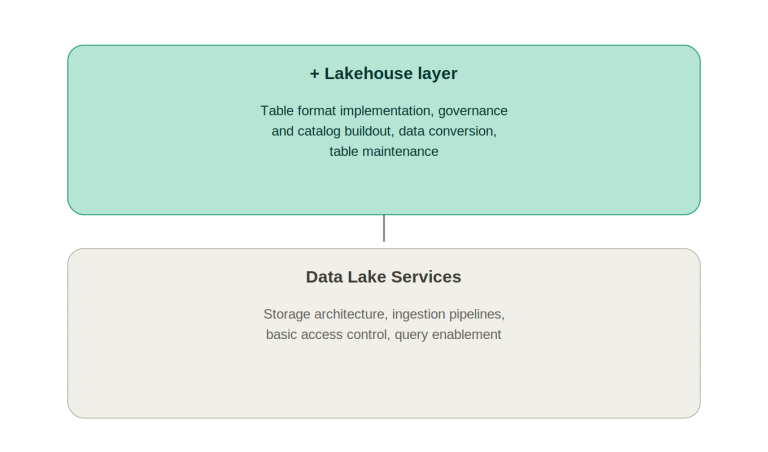
Both a healthcare data warehouse and a data lake help organizations manage large volumes of healthcare data, but they serve different purposes and use different architectures.
| Feature | Healthcare Data Warehouse | Data Lake |
|---|---|---|
| Data Structure | Stores structured and cleaned data | Stores structured, semi-structured, and unstructured raw data |
| Data Processing | Data is processed before storage (ETL) | Data is stored first, processed later (ELT) |
| Primary Purpose | Reporting, dashboards, business intelligence | Advanced analytics, AI, machine learning |
| Performance | Optimized for fast queries and reporting | Optimized for large-scale data storage and exploration |
| Data Quality | High – cleaned, standardized, governed | Variable – raw data may require preparation |
| Users | Business analysts, clinicians, executives | Data scientists, data engineers |
| Compliance & Governance | Strong governance and structured controls | Requires additional governance setup |
| Storage Cost | Higher (optimized, structured storage) | Lower (cost-effective bulk storage) |
| Best For | Operational reporting, KPI tracking, regulatory reporting | Predictive analytics, research, AI models |
Key Challenges & Solutions in Healthcare Data Warehousing
| Challenge | Impact on Organization | Solution |
|---|---|---|
| Data Silos Across Systems | Disconnected data from EHRs, labs, billing, and insurance systems limits visibility and slows decision-making. | Implement centralized ETL/ELT pipelines and standardized data models within a healthcare data warehouse. Use interoperability standards like HL7 and FHIR. |
| Poor Data Quality | Inaccurate, duplicate, or incomplete data leads to unreliable reports and flawed analytics. | Establish strong data governance, automated validation rules, and Master Data Management (MDM) to ensure consistency and accuracy. |
| Regulatory Compliance & Security Risks | Risk of data breaches and non-compliance with regulations such as HIPAA. | Apply encryption (at rest and in transit), role-based access control, audit logs, and continuous monitoring to maintain compliance. |
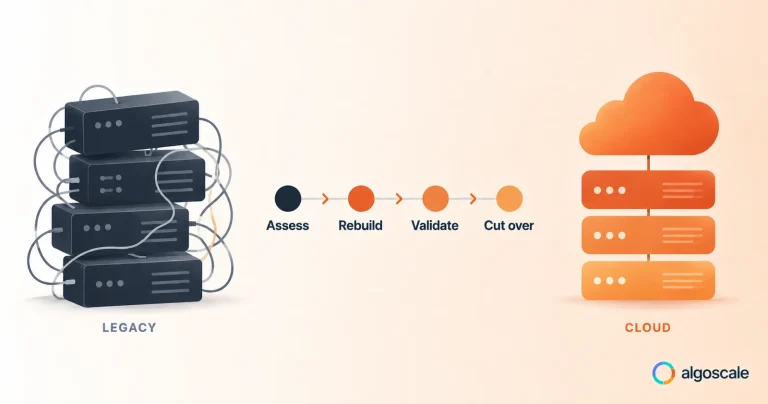
| Scalability Issues | Growing patient and operational data overwhelms legacy systems. | Adopt cloud-based healthcare data warehouse architecture with elastic storage and scalable computing resources. |
| High Implementation Costs | Budget constraints delay modernization efforts. | Use phased implementation strategies and expert data warehouse consulting services to reduce risk and optimize investment. |
| User Adoption & Skill Gaps | Low adoption reduces ROI and limits analytical impact. | Provide staff training, intuitive BI dashboards, and cross-functional collaboration to improve usability and engagement. |
Examples of Data Warehouse in Healthcare
Healthcare organizations across the world use data warehouses in healthcare to store patient information, improve decision-making, and deliver better care. These are some of the data warehouse examples that improve patient care, streamline operations and also support medical research by centralizing data from disparate sources like EHRs, lab reports etc. Large healthcare organizations often build their own enterprise data warehouses tailored to their specific needs. Here are some real World healthcare organization examples:
1. Mayo Clinic-
This healthcare organization leverages data warehousing to integrate clinical, genomic, and imaging data for advanced research and development. This trust acts like a centralized enterprise data warehouse for research and clinical operations. It integrates structured and unstructured medical data making the research process easier.
2. The NHS Spine–
A central, secure database for the English NHS that actually connects 44,000 healthcare IT systems and more than 26,000 organizations. This data warehouse allows secure data sharing, patient identification, electronic prescription and public health reporting.
3. Kaiser Permanente HealthConnect (USA) –
This healthcare organization has one of the world’s largest data warehouse healthcare ecosystems. It brings together electronic health records, lab data, imaging, pharmacy information, and claims data to improve patient care and analytics on population level. This actually is a powerful example of using a cloud native data warehouse for healthcare at scale.
4. Singapore Health Services (SignHealth) Data Warehouse-
SingHealth uses a robust data warehouse for healthcare to centralize hospital records, outpatient data, patient history, and operational metrics. This is a core part of Singhealth’s IT infrastructure, built to support a wide range of functions and used for powerful research such as Asthma real-world databases.
5. National Clinic Data Repository (NCDR)- Edenlab
Edenlab manages this large healthcare data warehouse that stores clinical data from healthcare providers across the regions. It supports interoperability, improves the patient record accuracy and enables the advanced reporting for national healthcare programs.
And why exactly do these examples matter? Because they show how a well designed data warehouse healthcare can support public health decisions, improves the patient outcomes and make daily operations way too smoother, Better healthcare, better place to live. If you are planning to build something similar, you can explore our data warehouse consulting services to understand the best tools, architecture choices, and implementation steps to start with.
Data Security and Compliance in Healthcare Data Warehousing
Security is one of the most important parts of any data warehouse healthcare , because hospitals deal with sensitive information like patient records, lab results, insurance details, and also medical histories. A strong security setup is needed because it protects from data breaches, keeps the healthcare organizations compliant with regulations, and builds trust with patients.
Why Security Matters
A data warehouse healthcare system stores huge volumes of PHI that is protected health information. If the data gets leaked or misplaced it can completely affect the patient’s care, cause financial loss, and lead to legal trouble. That is why choosing the healthcare warehouse model needs strict security rules.
Healthcare organizations must follow strict standards such as HIPAA, GDPR, and regional healthcare laws. These rules explain how the patient data should be stored, accessed and need to be used ethically. Setting this reduces risks and ensures patient information always stays protected.
Data Encryption makes the data unreadable to attackers, adding a strong layer of defense. Data must be encrypted not only when it is stored inside the cloud native data warehouse for healthcare but also when it moves in between systems like EHRs, lab tools or even in mobile applications.
For teams planning to strengthen their security foundation, exploring our data integration consulting services can help ensure your systems stay secured and protected.
Healthcare Data Warehouse Models
Different hospitals use different data warehouse models depending on data volume, reporting speed requirements, and the number of teams accessing the system. Below are some of the most common models used in the healthcare data industry today.
1. Enterprise Data Warehouse Model
This model brings all hospital data into one bog system. Everything like EHR, billing, pharmacy, labs, imaging comes together in a central place. It gives doctors and teams a single “source of truth” so reporting, analytics, and patient insights become easier and more accurate. This is the best choice if hospitals want a fully connected data warehouse healthcare that grows over time.
2. Independent Data Mart Model
Well, some hospitals don’t need one big system. They only need small storage areas for specific departments like radiology, cardiology, insurance or any. Each small data mart is built separately. This model is simple and fast to set up, but systems don’t talk to each other. So it is good for small teams, but definitely not a good choice for full hospital-wide analytics.
3. 3NF
The Third Normal Form model is a highly normalized data structure that focuses only on maintaining data integrity and tries to eliminate the repetition of data. Every data point is stored in a very neat and logical way. The biggest advantage of this is , it reduces the duplicate information so that data is accurate and improves compliance. Many older data warehouses in healthcare use 3NF because it is stable, secure, and very good for transaction heavy systems like EHRs.
4. Dimensional Modeling
Dimensional modeling is built for fast reporting and analytics. It organizes data into facts like number of patient visits, lab tests, claims and dimensions like details like doctors, patients, department and date of visits.
Healthcare teams love this model because dashboards and BI tools run much faster, making it easy to track patient outcomes, hospital performance, and quality scores.
5. Data Vault
The data vault model is great for handling huge and fast changing healthcare data. As connected devices generate increasing volumes of real-time data, healthcare iot plays an important role in feeding accurate inputs into analytics systems and supporting more responsive, data-driven care decisions.
This flexible model works well with modern cloud native data warehouses for healthcare platforms.
Choosing the right model and the best one depends on how much data you have and how fast that data is growing, and how the hospital wants to use analytics. For example if a hospital wants clean, structured data, 3NF works well. If they want faster dashboards, dimensional modeling is better.
For help selecting the best approach, our data architecture services can guide hospitals in choosing the most efficient and scalable data warehouse in healthcare model.
Healthcare Data Warehouse Use Cases

A enterprise healthcare data warehouse helps hospitals turn raw information into real improvements. Here are some practical ways it is used every day.
1. Revenue Management
Hospitals deal with endless claims, payments, and reimbursement rules. With a strong data warehouse for healthcare, teams can track payments, spot delayed claims, and see revenue leaks early. This helps hospitals stay financially healthy and reduces the revenue loss.
2. Billing Optimization
Hospitals deals with lakhs of rupees every hour. Billing team needs to see the full picture which includes patient visits, coding accuracy, insurance rules and most important payment history. A data warehouse healthcare system helps catch coding errors, prevent the claim denials, and speed up the billing cycles.
3. Predictive Analytics
Predictive models work better when they use clean, connected data. With an enterprise data warehouse healthcare setup, hospitals can predict patient admissions, readmissions, equipment needs, and even less disease risks,
This actually makes care safer and planning easier
4. Performance Optimization
Hospitals need to know how well departments, staff, and machines are performing. A data warehouse in healthcare brings real time and historical data together so leaders can track wait times, bed usage, staff workload, and clinical outcomes. It helps them improve service quality without extra cost.
5. Supply Chain Analytics
The healthcare supply chain data warehouse is complex a bit. The medicines, PPE, devices, lab kits, implants, and more. A connected data warehouse in healthcare helps track stock levels, predict shortages, and avoid overbuying or wasting the resources. This leads to smoother operations and safer patient care.
Data warehouse for supply chain optimization becomes even stronger when hospitals use advanced analytics tools. Our data warehouse automation services help hospitals speed up data processing and build faster dashboards for all of these use cases.
Building a Scalable Healthcare Data Warehouse with Algoscale
A enterprise healthcare data warehouse is more than just storage, it is the engine behind the faster decisions, cleaner data, and better patient care. Algoscale have worked with multiple healthcare organizations and developing EHR platforms, and medical device companies, so we understand how complex healthcare data really is. Our approach blends deep technical knowledge with real healthcare needs, making your data warehouse for healthcare both powerful and practical.
Healthcare data grows fast with new patients, new devices, new systems every day. We design the warehouse architecture using proven models like Enterprise Data Warehouse, Dimensional Modeling, and Data Vault, so your systems stays stable, clean, and scalable even at massive data volumes.
Hospitals use EHRs, LIS, RIS, PACS, billing tools, wearables, and legacy apps, None of the them speak the same language. We fix that. Algoscale builds strong integration pipelines that merge
- Structure medical data
- Unstructured notes
- Device logs
- Lab records
- Claims and billing data
- Cloud and on-prem sources
All of this flows into a single, trusted data platform that removes silos and reduces data errors. We build BI layers and AI-ready pipelines so your healthcare data goals translate into real outcomes—faster diagnoses, smoother workflows, and improved patient safety.
We don’t just stop after setting up a data warehouse. We build a system that supports doctors, reduces manual work, and helps hospitals make decisions with confidence. Backed by our services, your healthcare data warehouse stays fast, accurate, and ready for analytics at all times.
Final Words
A good healthcare data warehouse is more than just a tech system. It is the backbone of the better healthcare. Clean, connected data helps hospitals work faster, avoid errors, and give patients the right support at the right time.
Today hospitals have many data warehouse in healthcare vendors to choose from, but not all of them really understand real clinical workflows or the technical depth that needed to handle sensitive healthcare data at scale. That is why choosing the right partner matters.
At Algoscale, we help healthcare organizations build data systems that are simple to use, easy to scale, and safe for all patient information. We combine strong data engineering services with real healthcare experience to create solutions that truly fit your healthcare organizations needs.
FAQs
What is a data warehouse in healthcare ?
A data warehouse in healthcare is a centralized system that collects and stores data from multiple sources such as EHRs, lab systems, billing platforms, and clinical applications. It organizes this data into a consistent format, making it easier to analyze, report on, and use for better clinical decisions, operational efficiency, and cost management.
How Epensive are Integrated Healthcare Enterprise Data Warehouse?
An integrated healthcare enterprise data warehouse can be a significant investment because it involves consolidating and securing large volumes of sensitive health data from many systems. Basic implementations often start around $70,000–$100,000+, while more complex enterprise-level projects can range from $250,000 to $1 million or more depending on factors like data sources, complexity, security requirements, and integration needs.
Is a cloud based healthcare data warehouse safe?
Yes. Modern cloud systems follow strong security and healthcare compliance rules to keep patient data protected.
How is a healthcare data warehouse different from normal hospital software?
Regular systems work alone, but a data warehouse for healthcare connects everything in one place, making data cleaner and easier to use.
How long does it take to set up a healthcare data warehouse?
It depends on the data size, systems, and goals. Small setups take weeks while large enterprise data warehouse healthcare projects may take a few months.