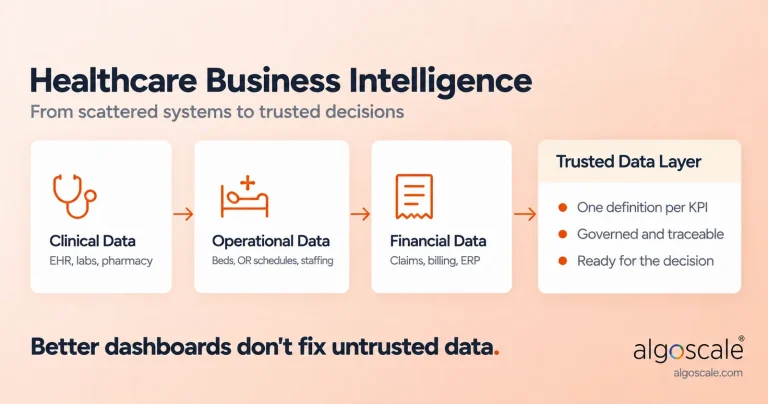


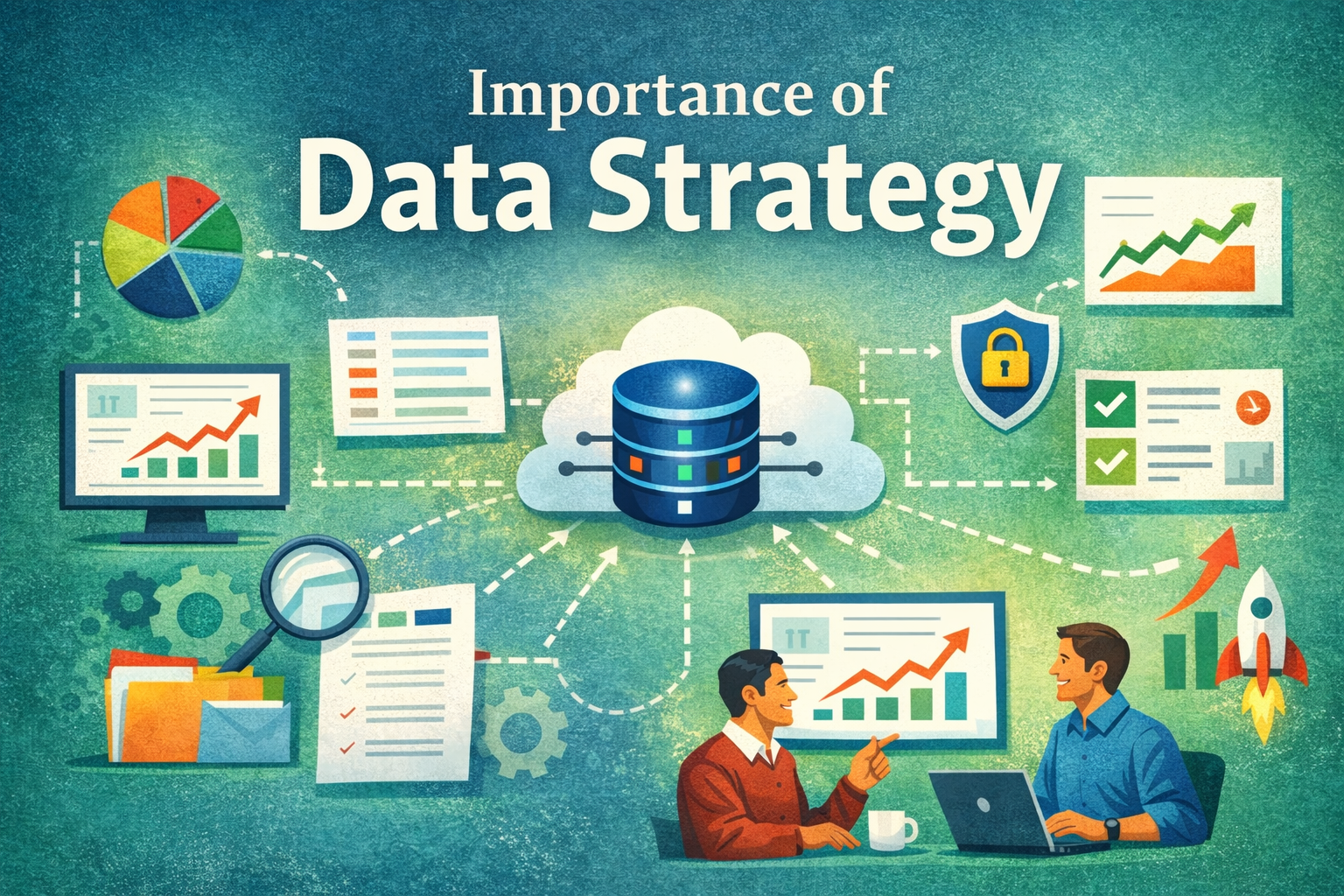

Importance of data strategy becomes clear when businesses struggle to turn data into meaningful decisions. In most modern organizations, data is everywhere—dashboards, reports, analytics tools, CRMs, and spreadsheets. On paper, this abundance should simplify decision-making. However, without a clear strategy, data often creates confusion instead of clarity, making it difficult to rely on insights. In fact, nearly 43% of business leaders identify data quality as their top data challenge, highlighting how widespread this issue is.
Leaders often walk into meetings with multiple reports showing different versions of the same metric. Sales numbers don’t match finance reports. Marketing dashboards show growth, while revenue data tells a different story. Instead of enabling decisions, data becomes something teams debate and question.
This situation is more common than expected, especially in growing organizations where systems evolve faster than processes. Over time, data gets scattered, duplicated, and inconsistently defined across teams.
A well-defined data strategy services brings order to this chaos by creating consistency, reliability, and trust in data—turning it back into a powerful decision-making asset.
Understanding Reporting & Decision Issues in Businesses
Reporting issues are rarely caused by a single mistake or system failure. They are usually the result of accumulated inefficiencies in how data is managed across the organization.
At a surface level, these issues appear as:
- Reports that don’t match across departments
- Metrics that are defined differently by different teams
- Delays in generating reports due to manual dependencies
- Frequent corrections and rework in dashboards
However, these symptoms point to deeper structural problems.
The Real Nature of Misreporting
Misreporting is not just about incorrect numbers—it’s about inconsistent interpretation of data. For example, one team may define “active users” differently than another. Even if both datasets are technically correct, the insights derived from them will conflict.
Key Underlying Causes
- Disconnected Systems
Businesses use multiple tools for different functions, but these systems often operate independently. Without proper integration, data remains fragmented. - Lack of Standard Definitions
There is no universal agreement on key metrics, leading to inconsistent reporting. - Uncontrolled Data Flow
Data is copied, transformed, and shared across teams without clear ownership or validation. - Over-Reliance on Manual Workflows
Spreadsheets and manual data handling introduce errors and reduce scalability.
These factors collectively create an environment where data cannot be trusted, making decision-making increasingly difficult.
Why These Issues Are a Serious Business Risk
Reporting and decision issues are not just operational inconveniences—they directly affect a data strategy consulting firm ability to compete and grow.
Strategic Risk
When leadership lacks reliable data, strategic decisions become uncertain. Businesses may:
- Invest in the wrong initiatives
- Misjudge market trends
- Fail to identify high-performing areas
Over time, this leads to missed opportunities and reduced competitiveness.
Operational Risk
At an operational level, inefficiencies multiply:
- Teams spend excessive time validating data instead of analyzing it
- Decision cycles become longer
- Collaboration between departments weakens due to conflicting data
This slows down the entire organization.
Financial Risk
Inaccurate reporting can have direct financial consequences:
- Incorrect forecasts lead to poor budgeting decisions
- Revenue leakages go unnoticed
- Cost optimization opportunities are missed
Even small inaccuracies, when scaled across operations, can result in significant losses.
Cultural Impact
Perhaps the most damaging effect is the loss of trust in data. When employees consistently encounter unreliable reports:
- They stop relying on data
- Decision-making shifts back to intuition
- Data investments fail to deliver value
This undermines the foundation of a data-driven organization.
What is a Data Strategy? (Quick Context)
A data strategy is not just a technical framework—it is a business-level approach to controlling and utilizing data effectively.
It defines how data should be:
- Collected from various sources
- Standardized and validated
- Stored in a structured manner
- Shared across teams
- Used for decision-making
Key Elements Explained
Together, these elements create a structured environment where data is not just available—but reliable, consistent, and actionable.
- Data Governance
Establishes clear rules, roles, and responsibilities through effective data governance, ensuring accountability, consistency, and control over data across the organization. - Data Quality Management
Focuses on maintaining accurate, complete, and up-to-date data through continuous monitoring and improvement. - Data Integration & Architecture
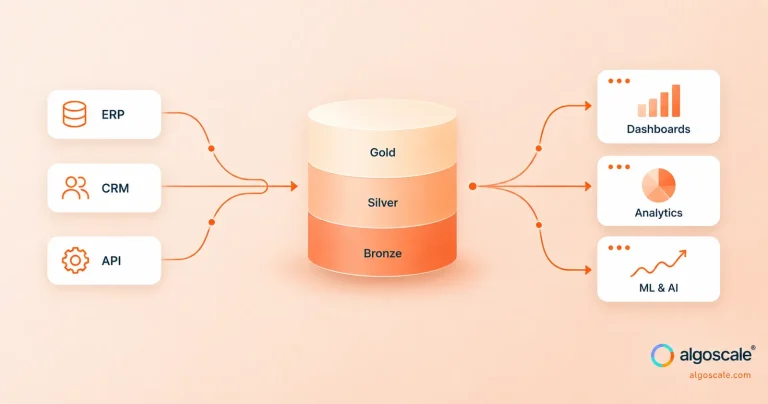
Designs how data flows between systems through effective data integration, ensuring seamless connectivity, unified access, and eliminating data silos across the organization.
Importance of Data Strategy for Misreporting Businesses
For organizations struggling with reporting issues, a data strategy acts as a corrective and preventive system.
1. Establishes a Single Source of Truth
A data strategy roadmap helps businesses create a single, centralized source of truth, where all data is consistent, validated, and accessible across teams. Instead of multiple systems showing different numbers, all departments rely on the same standardized dataset. This eliminates confusion during reporting and ensures that everyone—from analysts to leadership—is working with aligned information. It also reduces time spent reconciling data differences and improves collaboration between teams. With a single source of truth, businesses gain clarity, improve reporting accuracy, and make faster decisions without questioning the reliability of their data.
2. Improves Data Accuracy & Quality
Data accuracy is critical for reliable reporting, and importance of data strategy ensures that data is consistently clean, complete, and up to date. It introduces processes for identifying and removing duplicates, correcting errors, and validating incoming data. This reduces the chances of incorrect insights and misleading reports. High-quality data also improves the performance of analytics tools and dashboards, leading to more precise outcomes. By maintaining strong data quality standards, businesses can trust their reports, reduce rework, and ensure that every decision is based on accurate and dependable information.
3. Enables Faster, Real-Time Decision Making
A well-defined data strategy importance enables businesses to access data in real time, allowing for quicker and more informed decision-making. Instead of waiting for manual reports or delayed data updates, teams can rely on automated systems that continuously update information. This ensures that insights are always current and relevant. Faster access to accurate data allows businesses to respond quickly to market changes, customer behavior, and operational challenges. As a result, decision-making becomes more agile, proactive, and effective, giving organizations a competitive edge in fast-paced environments.
4. Breaks Down Data Silos
Data silos occur when information is stored in separate systems that do not communicate with each other, leading to incomplete and fragmented insights. A data strategy addresses this issue by integrating different data sources into a unified system. This allows data to flow seamlessly across departments such as marketing, sales, and finance. By breaking down silos, businesses gain a holistic view of their operations and customers. It improves collaboration, ensures consistency in reporting, and enables teams to make decisions based on comprehensive and connected data rather than isolated information.
5. Builds Trust in Data Across Teams
Trust in data is essential for building a data-driven organization. When reports are inconsistent or inaccurate, teams lose confidence and rely more on assumptions than insights. A importance of data strategy ensures that data is reliable, consistent, and governed by clear standards. This builds confidence among employees and encourages them to use data in their daily decision-making. Over time, this trust leads to better collaboration, improved efficiency, and a stronger data culture. When teams trust the data they use, they can make decisions faster and with greater confidence, driving overall business success.
6. Enhances Reporting Efficiency
A data strategy importance significantly improves reporting efficiency by automating data collection, processing, and visualization. Instead of manually compiling data from multiple sources, businesses can rely on automated pipelines and dashboards that generate reports instantly. This reduces errors, saves time, and ensures consistency in reporting. Analysts can focus more on interpreting data rather than preparing it, leading to deeper insights and better decision-making. Efficient reporting processes also enable organizations to scale their operations without increasing workload, making it easier to handle growing data volumes while maintaining high performance.
Real-World Scenario (Before vs After)
Before
In a typical organization without a data strategy:
- Sales, marketing, and finance teams maintain separate datasets
- Reports are manually created and frequently corrected
- Meetings are dominated by discussions about data accuracy rather than insights
Decision-making becomes reactive and slow.
After
With a data strategy in place:
- Data is centralized and standardized
- Reports are automated and consistent
- Teams focus on interpreting insights rather than validating data
Decision-making becomes faster, more confident, and aligned with business goals.
Must Read: Data Strategy Templates
How the Right Strategy Transforms Decision-Making
A well-implemented data management strategy fundamentally changes how organizations operate.
Instead of reacting to problems after they occur, businesses gain the ability to anticipate trends and act proactively.
Instead of working in silos, teams collaborate using a shared understanding of data.
Instead of waiting for reports, leaders have access to real-time insights that support immediate action.
This transformation is not just about efficiency—it’s about creating a competitive advantage. Organizations that can trust and act on their data consistently outperform those that cannot.
Still Struggling to Make Sense of Your Data?
Understand the real importance of a data strategy and transform inconsistent reports into clear, actionable insights.
Fix Your Data Strategy With Our Experts
Conclusion
Reporting and decision issues are often treated as isolated problems—something to fix with better tools or more data. However, the real solution lies deeper.
These challenges are symptoms of a missing or weak data strategy.
By investing in a structured approach to managing data, businesses can:
- Eliminate inconsistencies
- Improve accuracy
- Accelerate decision-making
- Build long-term trust in data
In a world where data drives success, having a clear strategy is no longer optional—it is essential.
👉 If your business is struggling with inconsistent reports or delayed decisions, now is the time to rethink how your data is managed and build a foundation that supports growth.