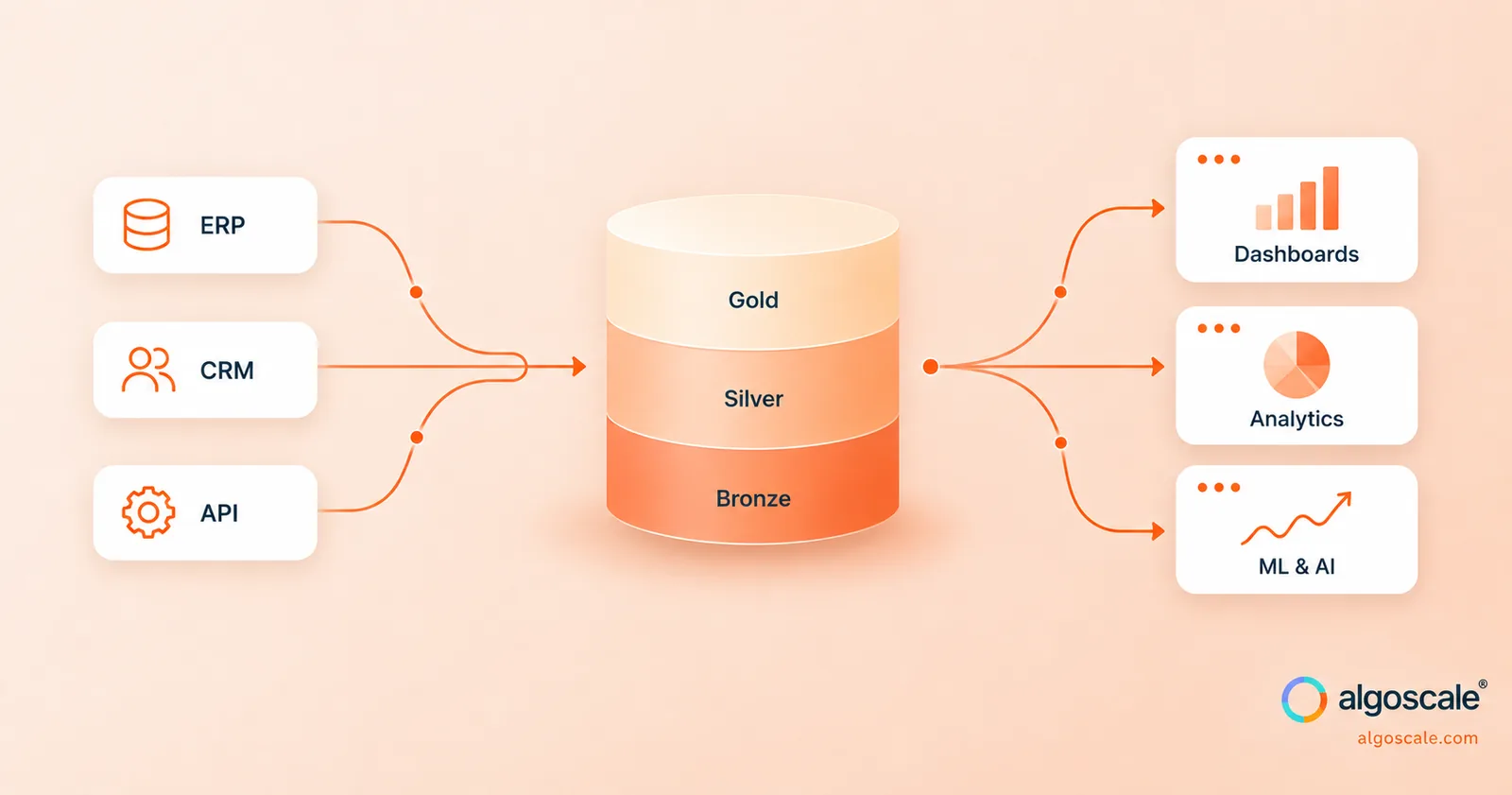


Cloud data integration is the process of pulling data from multiple, scattered sources, on-premise systems, cloud applications, SaaS tools, IoT devices, and bringing it all together in one unified place. The goal is to improve data access and delivery across the business while keeping the data secure, governed, and performant as part of a broader data management strategy.
Your sales team uses Salesforce, your finance team runs on SAP, and your operations data sits in a warehouse somewhere else. Cloud data integration is something that makes all of that talk to each other. The result is a unified data store that enables your teams, customers, and partners to make faster and better decisions.
Types of Cloud Data Integration
- Hybrid Cloud Integration– This type integrates data residing across public cloud, private cloud, and on-premises infrastructure. It is ideal for businesses that want to keep some data local, while still tapping into cloud scale.
- Multi-cloud Integration– This integrates data across cloud services from more than one cloud provider. Many enterprises today run AWS, Azure, and Google Cloud simultaneously, and multi-cloud integration keeps it all sync.
- Manual Integration– The most hands-on approach. IT teams write custom code or try to configure connections themselves. While it offers flexibility and control,it can be a bit time-consuming, prone to errors, and difficult to scale as the cloud infrastructure grows.
- Consolidated Integration- A centralized integration platform uses automation, APIs, and middleware to enable seamless communication and data exchange across different cloud environments. The complexity is less and more efficient.
- Federated Integration– A decentralized approach that enables seamless interoperability between different cloud providers while allowing each system to maintain its own autonomy. Great for large enterprises with strict data rules.
Key Elements of Cloud Data Integration
- Data connectors- This brigdes between your systems. These are pre-built or custom-built links that connect data sources to a central platform without heavy engineering work.
- ELT/ETL pipelines- ELT (Extract, Transform, Load) and ELT (Extract, Load, Transform) are the workhorses of cloud data integration. In cloud environments, ELT is the dominant approach, here data is loaded into the target systems first, then transformed, leveraging the elastic compute power of the cloud.
- Data mapping – Mapping schemas define how your data elements from different systems correspond to each other, helping ensure alignment during integration. Without this, you’d end up with mismatched fields and broken reports.
- APIs– Application Programming Interfaces act as the communication layer between these systems; they allow data to flow in real time without manual intervention.
- Data quality & validation– Automated validation checks are used at scale to maintain consistency across data formats, codes, types and ranges. They catch errors way too before they reach dashboards or decision makers.
- Data Governance & security- Integrating data across systems also increases potential attack vectors; customer data transferred across regions may be subject to varying legal and data residency requirements. Encryption, MFA, and RBAC are non-negotiables here.