

Data platform decisions made by technology leaders today shape their organization’s analytical capabilities, cost structure, and competitive positioning for the next decade. The choice of whether to invest in a traditional cloud data warehouse, a cloud data lake, a modern data lakehouse, or some combination of the above is not primarily a technology decision in isolation. It is a business strategy decision with significant technology implications. Getting it wrong means years of technical debt, escalating licensing costs, and analytical teams constrained by a platform that was never designed for the workloads they need to run.
The data platform landscape has changed dramatically over the past five years. The rise of cloud-native storage, open table formats, and decoupled storage-compute architectures has fundamentally altered the trade-offs between traditional warehouses and modern lakehouse platforms. This guide cuts through vendor marketing to help CIOs and senior technology leaders understand what they are actually choosing between, what questions to ask during evaluation, and how to align their platform decision with the specific workload patterns and business strategy of their organization.
Understanding the Platform Archetypes Available Today
Before comparing specific vendors, it is useful to establish a clear mental model of the fundamental data platform archetypes available today. A traditional on-premises data warehouse such as Teradata or IBM Db2 delivers predictable SQL performance and strong governance but at high cost and with limited scalability for modern data volumes. A cloud data warehouse such as Snowflake, BigQuery, or Amazon Redshift provides better scalability and managed operations but still bundles storage and compute in ways that can drive costs up sharply at petabyte scale. A cloud data lake built on Amazon S3 or Azure Data Lake Storage provides virtually unlimited scalability and extremely low storage cost but historically lacked the governance controls, query performance guarantees, and ACID semantics that business users and compliance teams require.
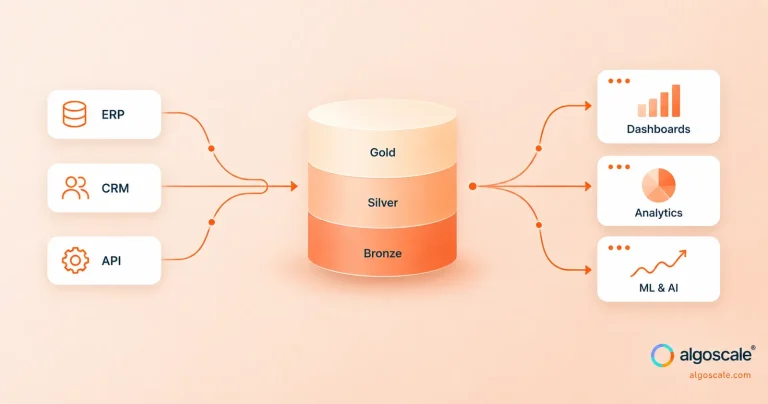
A modern data lakehouse combines the economics of a cloud data lake with the governance and performance characteristics of a warehouse by layering open table formats and a computer serving layer on top of object storage. For most organizations evaluating their data platform strategy today, the practical decision comes down to a cloud data warehouse versus a data lakehouse, or a combination of both serving different workload categories. Understanding the strengths and genuine limitations of each helps you avoid making a platform decision based on benchmarks and feature lists rather than the reality of your own workload patterns.
Total Cost of Ownership: What Vendor Slides Won’t Show You
Vendor pricing models for cloud data platforms are notoriously difficult to compare directly. Snowflake charges by computer credit consumption. BigQuery charges by bytes processed per query. Amazon Redshift charges by cluster capacity or serverless unit consumption. Databricks charges by DBU consumption plus underlying cloud infrastructure costs. Understanding the true total cost of ownership for any of these platforms requires modeling your specific workload patterns against the pricing model, not just running vendor-provided benchmark queries on vendor-managed test datasets tuned for those benchmarks.
A data lakehouse built on open-source components such as Apache Iceberg or Delta Lake running on cloud infrastructure avoids the proprietary compute pricing models of closed warehouse platforms. Storage costs in Amazon S3 or Azure ADLS Gen2 are measured in cents per gigabyte per month and decline predictably over time as cloud providers compete on storage pricing. Compute can be scaled to zero when not in use with serverless query engines like Amazon Athena or Azure Synapse Serverless, which is particularly valuable for organizations with highly variable or unpredictable query workloads. For data volumes exceeding a petabyte, the separation of storage and compute economics in a lakehouse architecture typically results in significantly lower total cost compared to perpetually running provisioned warehouse compute clusters.
Hidden Costs That Rarely Appear in Vendor TCO Calculators
Data egress fees, inter-service network transfer costs, licensing for catalog and governance tools, and the engineering effort required to build and maintain data pipelines are all costs that rarely appear prominently in vendor-provided TCO analyses. A cloud data lake that requires significant custom engineering investment to achieve production-grade governance may cost more in total than a managed warehouse with built-in governance features, especially when personnel costs are included. Evaluate your total cost of ownership including the data engineering team’s time, not just the monthly infrastructure invoices.
Table 1: Data Warehouse vs. Cloud Data Lake vs. Data Lakehouse Decision Matrix for CIOs
| Evaluation Criterion | Cloud Data Warehouse | Cloud Data Lake | Data Lakehouse |
| Storage Cost Model | Medium-high (compute and storage bundled) | Very low (object storage pricing) | Low (decoupled object storage only) |
| Query Performance | Excellent for structured SQL workloads | Variable, requires significant tuning | Excellent with open table formats |
| Horizontal Scalability | Good but can be costly at petabyte scale | Virtually unlimited at low incremental cost | Virtually unlimited at low incremental cost |
| Data Types Supported | Structured, semi-structured with effort | All types: structured, semi, unstructured | All types, optimized for Parquet columnar |
| ACID Transactions | Yes, native to the warehouse engine | No (without adding a table format) | Yes, via Iceberg, Delta Lake, or Hudi |
| ML and AI Workload Support | Limited, typically needs external tools | Good with Spark and Python frameworks | Excellent, native ML framework integration |
| Governance Maturity Out of Box | High, built-in catalog and RBAC | Low to medium, requires tooling overlay | High with Lake Formation, Purview, or Unity |
| Vendor Lock-in Risk | High due to proprietary data formats | Low with open Parquet and ORC formats | Low with open table formats and open catalog |
| Time to First Analytical Value | Fast with managed service setup | Medium, requires pipeline engineering | Medium setup, strong long-term ROI |
Matching Platform Capability to Your Workload Portfolio
No single data platform is optimal for every workload. CIOs who recognize this early will avoid the trap of forcing all workloads onto a single platform that serves none of them particularly well. The most common workloads organizations need to support include SQL analytics for business intelligence, exploratory data science in Python or R, machine learning model training and serving, real-time streaming analytics, and secure data sharing with external partners or regulatory bodies. A data lakehouse handles all of these natively or through well-supported integrations, without requiring separate purpose-built systems for each workload category.
A traditional cloud data warehouse typically requires data to be exported, transformed, or loaded into a separate system to support machine learning or real-time streaming workloads. This creates data copies, introduces latency, and multiplies governance complexity because the same data now lives in multiple systems with potentially diverging definitions. For organizations whose analytical roadmap includes ML, generative AI, streaming analytics, and SQL business intelligence, the data lakehouse’s unified data model provides a meaningful architectural advantage that compounds over time as new use cases are added.
Cloud Provider Alignment and Multi-Cloud Considerations
For most organizations, the data platform decision is closely tied to their primary cloud provider relationship. Organizations with significant AWS investment will naturally evaluate an AWS data lakehouse architecture built on S3, Glue, Lake Formation, Athena, and EMR. Organizations with Azure as their primary cloud will explore an Azure data lakehouse using ADLS Gen2, Synapse Analytics, and Purview. Both ecosystems have reached a high level of maturity for lakehouse workloads and both support Apache Iceberg natively across their core services, which matters because Iceberg interoperability protects you from being trapped in a single provider’s compute ecosystem.
Multi-cloud lakehouse architectures are increasingly viable because open table formats can be queried across cloud boundaries without data movement. An Iceberg table stored in Amazon S3 can be queried by Snowflake, BigQuery, or Azure Synapse without copying the underlying Parquet files. This interoperability is one of the most strategically important characteristics of the lakehouse model from a CIO perspective, because it prevents the data storage layer from becoming captive to any single cloud provider’s proprietary services while still allowing your teams to use the best compute tool from each provider for different workloads.
Build vs. Buy vs. Partner: The Execution Question
Choosing a platform architecture is only one dimension of the decision. CIOs must also decide how much to build in-house, how much to rely on managed vendor services, and whether a specialized partner is needed to accelerate implementation. A data lakehouse built on Apache Iceberg and open-source tools requires more initial engineering investment than deploying a managed cloud data warehouse service, but it offers greater long-term flexibility, lower cost at petabyte scale, and the ability to swap compute engines without migrating data. Most enterprises land on a hybrid approach: use managed cloud services for storage and cataloging, such as AWS Glue Data Catalog with Lake Formation or Microsoft Purview, and run a mix of open-source and managed compute services depending on workload requirements.
Migration from an existing data warehouse or data lake to a lakehouse architecture is almost always a phased process. Business-critical reports and dashboards should continue running on the existing platform while the lakehouse is built, tested, and validated in parallel. Cutting over production workloads should happen incrementally rather than as a big-bang migration. This approach minimizes business risk while giving the data engineering team the time needed to build robust pipelines, validate data quality against the existing system, and tune query performance before each workload migrates.
Table 2: Cloud Data Platform Vendor Comparison for CIO Evaluation
| Platform | Primary Cloud | Core Strengths | Key Limitations | Ideal Organizational Fit |
| AWS Data Lakehouse (S3 + Glue + Athena) | AWS | Broadest service ecosystem, Iceberg native | Requires assembling multiple services | AWS-native orgs, open and flexible architecture |
| Azure Synapse Analytics and ADLS Gen2 | Azure | Unified SQL, Spark, Purview governance | Complex pricing model to optimize | Azure-native orgs, Microsoft ecosystem |
| Databricks Lakehouse Platform | AWS, Azure, GCP | Best ML and data engineering integration | DBU pricing escalates at high scale | ML-heavy teams, Spark-centric organizations |
| Snowflake with Iceberg Tables | Multi-cloud | Easiest SQL experience, strong data sharing | Compute costs high at large scale | Business-user-focused SQL analytics |
| Google BigQuery with ADLS | GCP | Serverless, fast SQL, strong AI integration | Limited open format flexibility | GCP-native and ad-tech workloads |
Governance and Compliance as Platform Selection Criteria
For organizations in regulated industries or with significant data governance obligations, the governance capabilities of your data platform are not secondary considerations. They are primary selection criteria. Lake Formation on AWS and Microsoft Purview on Azure provide native, fine-grained access governance for data lakehouse workloads that satisfies HIPAA, PCI-DSS, SOC 2, and GDPR requirements when configured correctly. These governance services integrate directly with the catalog and query layer, meaning that access policies enforced at the catalog level are automatically enforced regardless of which query engine a user employs to access the data.
Organizations evaluating platforms should specifically ask vendors how they handle column-level and row-level security across multiple query engines, how audit logs are generated and retained, how sensitive data discovery works across the platform, and what compliance certifications the platform holds. Platforms that can answer these questions with native capabilities rather than third-party integrations typically deliver lower governance overhead and more reliable compliance posture in production. The governance layer that initially seems like a procurement checklist item frequently becomes the most operationally significant differentiator after a platform has been running in production for six to twelve months.
Why Choose AlgoScale for Your Data Platform Strategy
Selecting the right data platform is only the first step. Achieving long-term success requires a strategy that aligns with your business objectives, supports evolving data workloads, and provides the flexibility to scale as your organization grows. From platform selection and migration planning to governance and performance optimization, every decision plays a critical role in building a resilient data ecosystem.
At AlgoScale, we help organizations design and implement modern, cloud-native data platforms that deliver measurable business value. Our team works closely with CIOs, data leaders, and engineering teams to assess existing environments, define the right architecture, and build scalable solutions across AWS and Azure. Whether you’re modernizing a legacy data warehouse, implementing a data lakehouse, or developing an enterprise-wide analytics platform, we focus on creating secure, governed, and future-ready data infrastructures.
With deep expertise in data engineering, cloud architecture, governance, and analytics, AlgoScale enables organizations to reduce complexity, optimize costs, and accelerate data-driven innovation. Connect with AlgoScale to develop a data platform strategy that supports your business today while preparing you for tomorrow’s analytics and AI opportunities.