

Regulated industries carry a unique burden when it comes to data management. Whether you run a hospital system handling protected health information, a financial institution managing cardholder data, or an insurance carrier processing personal records, your obligations under HIPAA, PCI-DSS, SOC 2 Type II, and GDPR are not simply checkboxes. They are comprehensive legal frameworks that carry real financial and reputational consequences when violated. A modern data lakehouse offers a compelling foundation for regulated data workloads because it combines the scalability of a cloud data lake with the structured governance controls that compliance teams require. Getting the security model right, however, demands a layered and disciplined approach from day one.
Many organizations approach lakehouse security as an afterthought, building pipelines first and worrying about access control later. In regulated environments, this reactive approach creates vulnerabilities that are difficult and costly to remediate in production. A lakehouse architecture that is designed with security embedded at every layer, from identity management and network isolation to encryption and audit logging, is far easier to defend during a compliance audit and far less likely to become a liability after a breach. This guide walks through the security practices that regulated enterprises must implement across their data lakehouse environments.
Understanding the Threat Landscape in Regulated Data Environments
Regulated industries typically store extremely sensitive data including personal health information, personally identifiable information, cardholder data, and financial records. These datasets are high-value targets for external attackers, insider threats, misconfigured cloud resources, and accidental data exposure through overly permissive storage policies. Understanding what regulators require is the starting point for any security conversation. HIPAA mandates administrative, physical, and technical safeguards for electronic protected health information. PCI-DSS requires encryption of cardholder data, strict access control, and continuous monitoring. SOC 2 Type II audits evaluate the effectiveness of controls over a defined period, not just their existence. GDPR introduces data minimization and mandatory breach notification within 72 hours.
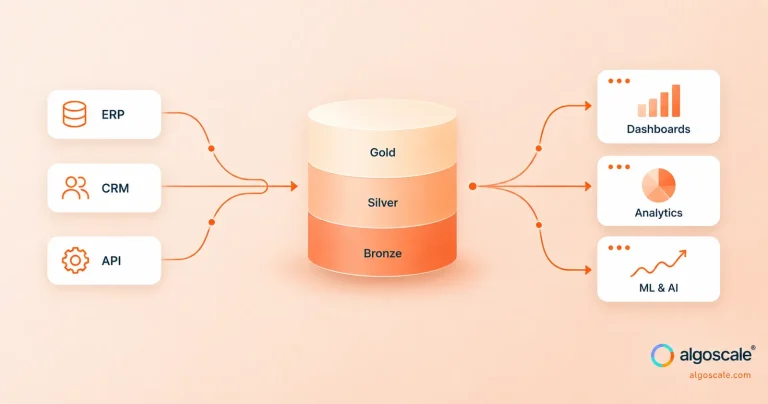
A modern data lakehouse stores data across multiple zones commonly referred to as bronze for raw ingestion, silver for cleaned and enriched records, and gold for curated business datasets. Each zone carries different sensitivity levels and should be secured accordingly. Raw ingestion zones may contain unmasked PII and PHI and should carry the most restrictive access controls. Silver-layer data may have sensitive fields masked or tokenized. Gold-layer datasets serving business intelligence tools should expose only the minimum necessary data for each user role. Treating all zones with the same security posture is a mistake that many organizations make early in their lakehouse journey.
Identity and Access Management: The First Line of Defense
Role-based access control and attribute-based access control form the backbone of any secure data lakehouse. In a regulated lakehouse, access governance must operate at the storage layer, the catalog layer, and the query layer simultaneously. Simply securing the S3 bucket or Azure Data Lake Storage account is not sufficient if your query engine can bypass storage-level controls through IAM role misconfigurations or overly permissive service accounts.
On an AWS data lakehouse, AWS Lake Formation provides fine-grained access control at the table, column, and row level. It integrates natively with AWS IAM, the Glue Data Catalog, and query engines including Athena, Redshift Spectrum, and EMR. Lake Formation permission grants override S3 bucket policies, ensuring that a user who has S3 GetObject permission but lacks a Lake Formation table grant cannot access the underlying data. On an Azure data lakehouse, Microsoft Purview combined with Azure Active Directory and Azure Synapse Analytics RBAC enables centralized access governance across the entire data estate. Column-level security allows you to mask fields such as social security numbers or credit card numbers, while row-level security filters results based on the requesting user’s attributes.
Service Accounts and the Principle of Least Privilege
Service accounts used by ETL pipelines, orchestration tools, and query engines are frequent targets for privilege escalation. Every service account in your lakehouse environment should be scoped to the specific tables, partitions, and operations it requires. Wildcard IAM policies applied to any bucket containing sensitive data represent an immediate compliance risk. Audit your service account permissions quarterly and remove any grants no longer justified by active workloads. Multi-factor authentication should be enforced for all human access to lakehouse administrative consoles, catalog interfaces, and monitoring dashboards, regardless of the user’s role.
Table 1: Security Feature Comparison — AWS Data Lakehouse vs. Azure Data Lakehouse
| Security Capability | AWS Data Lakehouse | Azure Data Lakehouse |
| Centralized Access Control | Lake Formation + IAM + Glue Data Catalog | Microsoft Purview + Azure AD + Synapse RBAC |
| Encryption at Rest | AES-256 via AWS KMS and S3 SSE-KMS | AES-256 via Azure Key Vault and ADLS Gen2 SSE |
| Encryption in Transit | TLS 1.2/1.3 enforced by default across all services | TLS 1.2/1.3 with PrivateLink for all data plane traffic |
| Network Isolation | VPC Endpoints, S3 Gateway Endpoints, PrivateLink, NACLs | Private Endpoints, VNet Integration, Network Security Groups |
| Sensitive Data Discovery | Amazon Macie for ML-based PII and PHI detection | Microsoft Purview DLP and automated classification scans |
| Audit Logging | CloudTrail, S3 Access Logs, GuardDuty threat alerts | Azure Monitor, Defender for Cloud, Purview Audit Logs |
| Column and Row Level Security | Lake Formation column filters and row-level access | Synapse row-level security and column-level masking |
| Compliance Certifications | HIPAA, PCI-DSS, SOC 2, FedRAMP, ISO 27001 | HIPAA, PCI-DSS, SOC 2, FedRAMP, ISO 27001, GDPR ready |
Encryption: At Rest, In Transit, and In Use
Data encryption is non-negotiable in regulated industries. Any data lakehouse handling sensitive information must enforce encryption at every stage of the data lifecycle. At rest, object storage such as Amazon S3 or Azure Data Lake Storage Gen2 supports server-side encryption using platform-managed keys or customer-managed keys stored in AWS KMS or Azure Key Vault. Customer-managed keys provide the highest level of control and are typically required for healthcare and financial sector workloads. With customer-managed keys, your organization can revoke access to all encrypted data instantly by disabling the master key, which is a critical control for HIPAA breach response scenarios.
Encryption in transit should be enforced through TLS 1.2 or higher across all APIs, data transfer mechanisms, and query execution paths. Many regulated organizations also implement application-layer tokenization for fields such as social security numbers and account numbers, replacing them with non-sensitive tokens at ingestion and maintaining a secure mapping table accessible only to authorized decryption services. Envelope encryption patterns, where data encryption keys are themselves encrypted by master keys, are commonly used to satisfy PCI-DSS requirements without compromising data engineering team velocity.
Network Security and Private Connectivity
Public internet exposure of your cloud data lake endpoints is a significant risk in regulated environments. Production lakehouses should be deployed within private network boundaries with public access explicitly disabled on all storage accounts. On AWS, this means configuring VPC endpoints for S3, enforcing bucket policies that deny requests not originating from your VPC, and using security groups and NACLs to restrict traffic between lakehouse components. AWS PrivateLink extends this private connectivity to third-party data services without routing traffic through the public internet.
On Azure, private endpoints for ADLS Gen2 and Azure Synapse Analytics ensure that all data plane traffic stays within the Microsoft backbone network. For hybrid environments where on-premises clinical systems or transactional databases need to push data into your cloud data lake, an AWS Direct Connect or Azure ExpressRoute circuit provides encrypted, dedicated connectivity with predictable latency and no public internet exposure. Network monitoring through GuardDuty or Azure Defender for Cloud adds a real-time threat detection layer that can flag anomalous access patterns before they escalate into reportable incidents.
Table 2: Compliance Framework Requirements Mapped to Lakehouse Security Controls
| Requirement Area | HIPAA | PCI-DSS v4.0 | SOC 2 Type II | GDPR |
| Access Control | RBAC with MFA for ePHI access | Least privilege, MFA required | CC6.1 logical access controls | Right of access and data subject rights |
| Encryption at Rest | Required for all ePHI | AES-256 for cardholder data | Recommended, often contractually required | Pseudonymization required where possible |
| Encryption in Transit | Required across all ePHI paths | TLS 1.2 or higher for transmissions | Required per security criteria | Required for all personal data transfers |
| Audit Logging | 6-year minimum log retention | 12-month retention, 3 months online | Required per availability criteria | Logs support 72-hour breach notification |
| Data Masking | De-identification or expert determination | Tokenization and masking required | Recommended best practice | Data minimization and right to erasure |
| Breach Notification | 60-day window to HHS notification | Immediate notification to card brands | Defined in contractual SLA terms | 72-hour window to supervisory authority |
| Data Residency | US residency commonly required | Merchant-region requirements apply | Per customer contractual agreement | EU data residency requirements enforced |
Audit Logging, Monitoring, and Incident Response
Comprehensive audit logging is a regulatory requirement across virtually every compliance framework. Your data lakehouse should log every data access event, schema change, permission modification, and query execution. AWS CloudTrail combined with S3 access logs and Amazon Macie provides a rich audit trail on the AWS side. Azure Monitor, Microsoft Defender for Cloud, and Purview Activity logs serve the same function on Azure. Centralizing these logs in an immutable log store such as S3 with Object Lock or Azure Blob Storage with immutability policies ensures that logs cannot be tampered with, which is a SOC 2 Type II requirement.
Beyond logging, regulated industries need a formal incident response plan that covers data lake security events. Automated alerting on anomalous patterns, such as large-scale data exports, failed authentication spikes, or access from unexpected IP addresses, can surface threats before they become reportable incidents. AWS Config rules and Azure Policy can detect and correct configuration drift automatically, catching issues like accidentally enabled public bucket access before they become compliance violations. Building these controls into your infrastructure as code templates ensures that every environment is provisioned with the same security baseline and that deviations are surfaced immediately.
Data Classification and Sensitive Data Discovery
You cannot protect data you have not identified. Automated sensitive data discovery should run continuously across every zone of your data lakehouse. Amazon Macie uses machine learning to identify over 75 types of sensitive data including social security numbers, bank account numbers, and passport numbers stored in S3 buckets. Microsoft Purview performs similar discovery across Azure storage and Synapse workspaces, applying sensitivity labels that propagate downstream to access control policies automatically.
Data classification outputs should feed directly into your governance workflows. A newly discovered table containing PHI should automatically trigger a review by your data steward, and access to that table should be locked down until the governance review is complete. A column tagged as containing credit card numbers should automatically trigger column-level masking for non-privileged users. Embedding classification-driven access control into your lakehouse architecture from day one ensures that compliance scales with your data growth rather than continuously playing catch-up as new datasets are onboarded. Organizations that treat sensitive data discovery as a one-time exercise rather than a continuous process consistently find themselves out of compliance as their data footprint grows.
Why Choose AlgoScale for Secure Data Lakehouse Solutions
Building a secure data lakehouse for regulated industries requires more than implementing encryption and access controls. Organizations need a comprehensive security strategy that protects sensitive data, satisfies evolving compliance requirements, and enables secure access to trusted information without impacting business agility. A successful implementation combines governance, identity management, data protection, monitoring, and cloud security best practices into a unified architecture.
At AlgoScale, we help organizations design and implement enterprise-grade data lakehouse security frameworks tailored to highly regulated industries such as healthcare, financial services, insurance, and the public sector. Our experts build secure cloud-native data platforms with fine-grained access controls, end-to-end encryption, automated data classification, continuous monitoring, and compliance-ready governance across AWS and Azure environments. From implementing secure data ingestion pipelines and identity management to audit logging, policy enforcement, and regulatory compliance, we deliver security-first architectures that protect critical data while supporting modern analytics and AI initiatives.
With deep expertise in cloud security, data governance, regulatory compliance, and modern data engineering, AlgoScale enables organizations to build resilient, compliant, and future-ready data lakehouse platforms. Connect with AlgoScale to develop a secure data lakehouse strategy that safeguards sensitive information, simplifies compliance, and empowers your organization to innovate with confidence.