

The field of data and analytics is vast, covering a wide range of concepts, methodologies, and technologies that play a critical role in business decision-making. However, understanding this landscape can be challenging due to the constant influx of buzzwords and technical jargon. This is where data architecture services become essential, helping organizations structure, manage, and utilize their data effectively.
What does machine learning really mean? How is artificial intelligence different from big data? What is the difference between predictive and prescriptive analytics? Gaining clarity on these concepts—and many more—can bring you closer to leveraging data for smarter, faster, and more accurate decision-making. With the support of the right consulting approach, businesses can also ensure that these concepts are implemented within a scalable and efficient data framework.
40 Top Terms in the Data Analytics Architecture
1. Big Data
The term ‘Big Data’ refers to datasets that are large and complex and cannot be managed efficiently by processing tools. Big Data is characterised by 3Vs, namely, Volume (huge amounts of data), Velocity (high speed of data generation and processing), and Variety (different types of data including structured, semi-structured, and unstructured).
2. Artificial Intelligence
The technology of artificial intelligence imitates human intelligence but only through machines. The technology integrates robust data sets and computer science that enables problem-solving through the rapid learning capabilities of machines.
3. Machine Learning
Machine learning is a process of practical application of artificial intelligence. In machine learning, the system makes use of the available data and information to learn and improve the decision-making process through multiple factors, including understanding patterns, trends, and relationships.
4. Data Lake
A Data Lake is a centralized storage system that enables businesses to store vast volumes of structured, semi-structured, and unstructured data in its raw format. Unlike traditional databases, data lakes eliminate the need for pre-processing before storage, offering greater scalability and flexibility. With professional data lake consulting services, organizations can efficiently design, implement, and manage these systems to unlock deeper insights and drive data-driven decision-making.
5. Augmented Intelligence
The collaboration of human intelligence and artificial intelligence with a view of fostering the processes of decision-making, problem-solving, and productivity is known as augmented intelligence. The concept of augmented intelligence emphasises complementing human capabilities by offering insights, recommendations, and automation and thus unlike artificial intelligence, which focuses on decreasing human involvement.
6. Business Intelligence
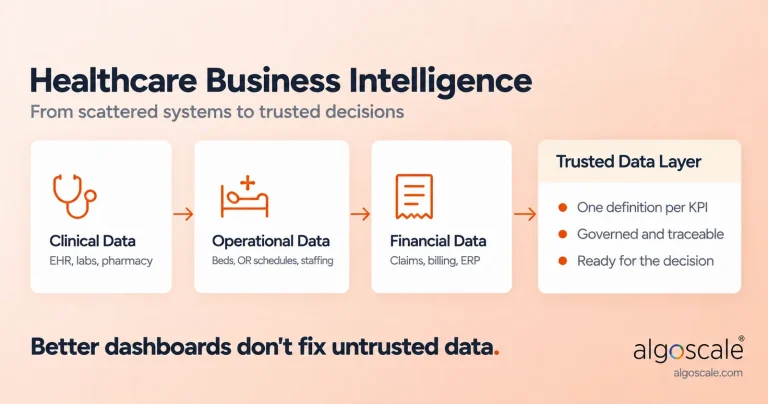
Business intelligence helps businesses make informed decisions as the concept involves the process of collecting, analysing, and visualising data through the means of multiple tools, software, and methodologies that help convert raw data into actionable insights.
7. Cloud Computing
The process of delivering computing services such as databases, storage, processing power, and software over the Internet instead of depending on local servers or personal computers is known as cloud computing. The concept of cloud computing offers businesses and individuals the leverage of accessing on-demand technical resources, decreasing the demand for a physical infrastructure.
8. Data Architecture
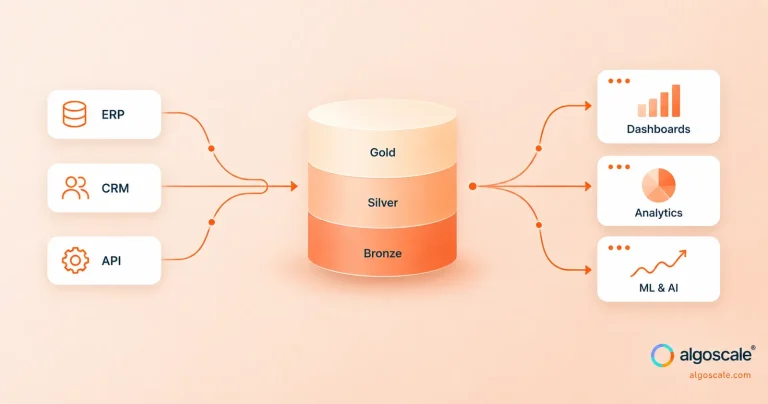
The concept of designing and structuring systems that manage and store data is known as data architecture. It outlines how the data is collected, stored, processed, and accessed at all levels of the business organisation. The concept of data architecture also involves defining data models, storage systems, data integration processes, and tools for analytics and reporting.
9. Predictive Analysis
Predictive analysis refers to the concept of using historical data, statistical algorithms, and machine learning techniques to pretend future outcomes. The concept’s data-driven approach for identifying patterns and trends in data helps businesses make informed predictions regarding customer behaviour, market trends, and opportunities.
10. Prescriptive Analysis
The concept of prescriptive analysis is an advanced stage of data analytics. Prescriptive analysis goes beyond predicting future outcomes as it also recommends the best course of action. To analyse data, evaluate possible scenarios, and suggest data-driven decisions, the concepts make use of multiple techniques, including the techniques of machine learning, AI, and optimisation.
11. Natural Language Processing
Being a branch of Artificial Intelligence (AI), the concept of Natural Language Processing enables computers to understand, interpret, and generate human language. The concept integrates machine learning, linguistic, and deep learning techniques to process text and speech.
12. Deep Learning
Being a subset of machine learning, deep learning imitates neural networks of the human brain to process complex data and make intelligent decisions. The concept of deep learning uses various layers of artificial neurons to extract patterns and features automatically from huge data sets.
13. Data Science
Data science is an interdisciplinary field that makes use of multiple techniques using machine learning, statistics, and data analysis to extract insights and knowledge from structured and unstructured data. To foster the decision-making process, the concept of data science uses data collection, processing, and visualisation techniques.
14. Data Integration
Data integration refers to the concept of integrating data from multiple sources into a unified view that helps in the process of analysis and decision-making. To ensure accuracy, consistency, and accessibility, the concept makes use of techniques like ETL, data warehousing, and real-time data streamlining.
15. Data Governance
To ensure smoother management, quality, security, and compliance of data within a business organisation, the concept of data governance comes into force. It is the framework of policies, processes, and standards. Data Governance defines the rules of data usage and defines the roles and responsibilities to ensure smoother working in an organisation through the means of mitigating risks, maintaining regulatory compliance, and fostering data-driven decision-making.
16. Embedded Analytics
The concept of integration of visualisation capabilities with data analysis directly into business applications, software platforms, or workflows is known as embedded analytics. Embedded analytics plays a major role in day-to-day business processes as it allows organisations access to insights, reports, and dashboards within their everyday tools without needing to switch to separate analytics software.
17. Supervised Learning
Supervised learning refers to a part of machine learning where a model is trained with the help of labelled data, meaning the input data is paired with an accurate output. The predictions regarding the new and unseen data are made with the help of algorithms learning through patterns and relationships.
18. Unsupervised Learning
In the process of unsupervised learning, the algorithms analyse and identify patterns in data without labelled outputs. The concept of unsupervised learning helps uncover hidden structures, group similar data points, and detect anomalies.
19. Data Visualisation
Data visualisation refers to the concept of representation of graphs, charts and dashboards in graphical format to help understand complex information more easily. The concept plays a major role in the enhanced decision-making process as it helps identify patterns, trends, and insights quickly.
20. Data Replication
The process of copying and synchronising data from one location to another location, ensuring consistency, availability, and reliability, is known as data replication. The concept of data replication is useful in cloud storage, databases, and distributed systems as it offers improved performance, enables disaster recovery, and supports real-time data access.
21. Data Quality
Data Quality refers to the accuracy, consistency, completeness, reliability, and timeliness of data to ensure it is fit for analysis and decision-making. Data quality plays an essential role in the process of decision-making as it makes the data error-free, thus resulting in improved operational efficiency.
22. Data Management
Data management is the process of collecting, storing, organising, and maintaining data to ensure accuracy, security, and accessibility. The concept of data management is built up by different processes, including governance, quality control, and security. An effective management of data results in an improved decision-making process.
23. Data Model
A structured framework explaining how data is organised, stored, and related within the system is known as a data model. Data modelling is essential as it offers a roadmap for database design, ensuring data consistency, integrity, and accessibility.
24. Data Warehouse
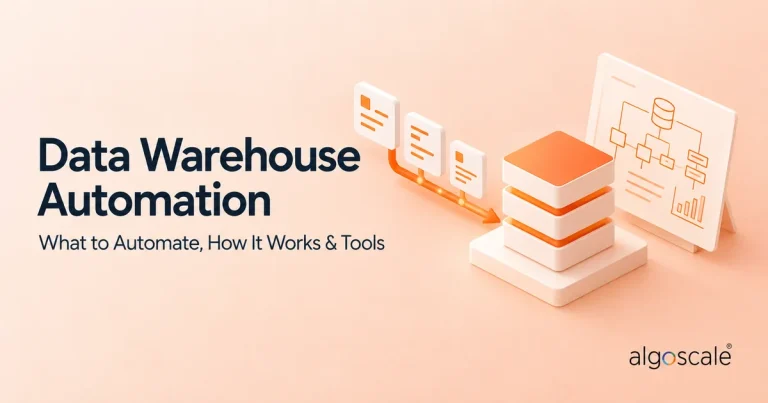
A data warehouse is a centralized repository that stores structured data collected from various sources, which is helpful for analysis and reporting. Data warehouse plays an effective role in the decision-making process by offering a unified, historical view of data.
25. Geospatial Analytics
The concept of geospatial analytics refers to the process of analysing location-based data through the means of maps, GPS, and GIS. The process plays a major role for businesses in the process of identifying patterns, trends, and relationships that prove to be vital in the decision-making process.
26. Diagnostic Analytics
Diagnostic analysis is a type of data analysis that focuses on learning the reasons behind past events by identifying patterns, relationships, and root causes. The concept makes use of techniques including data mining, drill-down, and correlation analysis to uncover insights from historical data.
27. Data Strategy
Data strategy defines the process of how a business organisation collects, manages, and analyses data to accomplish its business goals. Data strategy is equipped with multiple key components such as architecture, data governance, integration, security, and analytics.
28. Data Mining
Data mining refers to extracting valuable insights, trends, and patterns from large datasets through the means of using machine learning, statistical, and analytical techniques. The concept helps businesses discover hidden relationships in data, which will be fruitful in the process of decision-making.
29. Descriptive Analysis
Descriptive analysis is a process that focuses on interpreting historical data to learn about historical business proceedings. It is a type of data analysis which provides effective insights with the help of statistical and data visualisation techniques and different key metrics, including averages, percentages, and trends.
30. Structured Data
Organised and highly formatted data that is stored in a fixed schema, typically in relational databases, is known as structured data. This form of data is ideal for data processing and analysis as it is easily searchable and categorised using rows and columns.
31. Semi-Structured Data
Semi-structured data does not follow a strict tabular format like a structured one, but this form of data still has some organisational elements, such as tags or metadata, which is helpful for easier processing. Semi-structured data owns the characteristics of both structured and unstructured data.
32. Unstructured Data
Unstructured data does not have a predefined format, thus making it difficult to store and analyse using traditional databases. It includes text, images, social media posts, emails, and audio files. As this type of data lacks a clear structure, specialised tools like AI, ML, and big data analytics are used to process and extract insights.
33. Data Pipeline
A data pipeline is a series of processes that automate the movement, transformation, and storage of data from different sources to a destination, such as a data warehouse or analytics platform. It involves various steps like data extraction, cleaning, transformation, and loading.
34. Data Catalog
A data catalogue is a centralised repository that indexes, organises, and provides metadata about the organisation’s assets. Data catalog, through the means of offering information on data sources, lineage, usage, and governance policies, helps users discover, understand, and manage data.
35. Data Security
Data security refers to the practices, policies, and techniques used to protect data from unauthorised access, breaches, or loss. The process of data security includes encryption, access controls, authentication, and compliance with regulations such as HIPAA and GDPR.
36. Data Encryption
The process of converting data into a coded format to prevent it from unauthorized access is known as data encryption. It uses an encryption algorithm and keys to transform plaintext into ciphertext, making it unreadable without an accurate decryption key.
37. Dark Data
Huge amounts of unstructured, unused, or undiscovered data that businesses collect but do not analyse or leverage are known as dark data. This data may include customer logs, emails, sensor data or archived documents.
38. A/B Testing
A/B testing is a method used to compare two web pages, products or marketing campaigns through the means of statistics. The statistics obtained help us understand which page is performing better.
39. Data Mesh
Data mesh is a decentralised approach to data architecture that treats data as a product and distributes ownership across domain teams instead of centralising it in a single data warehouse or lake.
Now that you have gone through this article, we hope that this piece of information by Algoscale a leading data consulting service provider has helped in familiarising you with the aforementioned terms related to the data and analytics domain, as it will help you leverage data across industries effectively. Whether you are working with data directly or using it as a part of the decision-making process, getting familiar with these terms is a step forward towards data literacy and informed decision-making.