

Every day, organizations generate more data than they did in the entire previous decade — and most of it arrives unstructured, untagged, and from dozens of different sources. Spreadsheets, IoT sensors, clickstreams, application logs, social media feeds: the volume is relentless, and traditional data warehouses simply were not built to handle it.
That’s exactly why data lakes have gone from niche infrastructure choice to enterprise standard. A data lake lets you store raw, structured, semi-structured, and unstructured data at virtually any scale — in its native format — until you actually need to process it. No rigid schemas upfront. No forced transformations. Just centralized, cost-efficient storage that keeps pace with modern data volumes.
But here’s where most guides stop short: picking the right data lake tool matters just as much as the architecture itself. The wrong platform means ballooning storage costs, poor query performance, governance nightmares, and pipelines that break the moment your data volumes spike. The right tool, on the other hand, becomes the backbone of everything — your analytics, your machine learning models, your real-time dashboards, and increasingly, your AI initiatives.
In this guide, we’ve done the heavy lifting for you. We’ve evaluated and compared the top data lake tools available in 2026 — covering cloud-native platforms, open-source frameworks, and hybrid solutions — across the dimensions that actually matter: scalability, data format support, integration depth, security controls, pricing transparency, and AI/ML readiness.
Whether you’re a data engineer architecting a greenfield lake, a data leader evaluating vendors, or a developer migrating off a legacy warehouse, this guide gives you the complete picture — not a vendor pitch, and not a recycled list.
Let’s get into it.
What is a Data Lake?
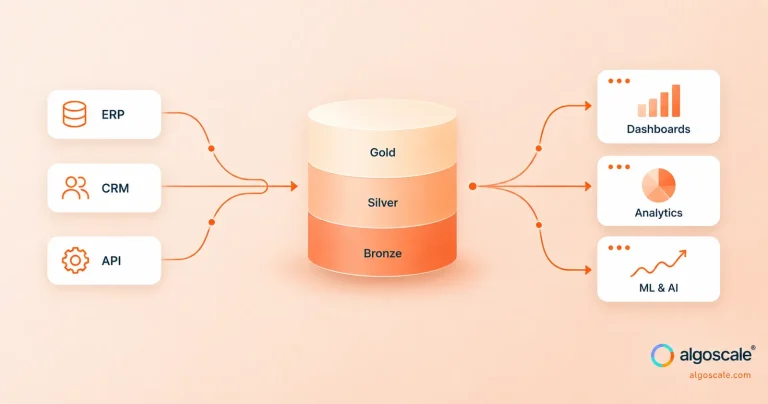
A data lake is a storage platform that houses vast amounts of raw data in its native form until it is required. Unlike traditional data warehouses that require structured data and predefined schemas, data lakes accommodate structured, semi-structured, and unstructured data formats with schema-on-read capabilities. This flexibility makes data like ideal for machine learning, data analytics, and real-time insights.
How We Rank the Best Data Lake Tools
Selecting the best data lake tools is not based on brand popularity alone. We evaluated each platform using a structured scoring framework focused on performance, scalability, cost-efficiency, ecosystem compatibility, and enterprise readiness.
Our ranking methodology considers real-world implementation needs across startups, mid-sized companies, and large enterprises. We analyzed documentation, deployment models, feature depth, integration flexibility, governance capabilities, and cost structure to determine practical value.
Key Ranking Factors
- Scalability & Performance – Ability to handle large-scale structured and unstructured data.
- Cloud & Hybrid Support – Flexibility across AWS, Azure, GCP, and on-prem environments.
- Governance & Security – Data protection, compliance, and access control features.
- Integration Ecosystem – Compatibility with analytics, BI, AI/ML, and ETL tools.
- Cost Efficiency – Transparent pricing, storage tiers, and compute flexibility.
- Ease of Implementation – Setup complexity, automation, and operational overhead.
- Future-Readiness – Support for lakehouse architecture, AI workloads, and open table formats.
Feature Comparison of Top Data Lake Tools
| Tool | Scalability | Governance & Security | Hybrid Support | AI/ML Ready | Lakehouse Support |
|---|---|---|---|---|---|
| Snowflake | High | Strong | Multi-cloud | Yes | Yes |
| Amazon S3 | Very High | Moderate (needs add-ons) | AWS-focused | Yes | With integrations |
| Azure Data Lake Storage | High | Strong | Azure + Hybrid | Yes | With Synapse |
| Databricks | High | Strong | Multi-cloud | Strong | Native |
| Google Cloud (GCS/BigLake) | High | Strong | GCP-focused | Strong | Yes |
| Cloudera | High | Strong | Hybrid | Yes | Yes |
| MinIO | Moderate | Basic | Hybrid | Limited | No |
| Apache Hadoop | High | Basic (manual setup) | On-prem | Yes | Limited |
| IBM Cloud Object Storage | High | Strong | Hybrid | Yes | With integrations |
| Apache Iceberg | Depends on engine | Strong (ACID) | Multi-cloud | Yes | Native format |
List of Top 14 Data Lake Tools in May 2026
With the rapid growth of data, choosing the right data lake vendors is more important than ever. Below, we’ve compiled a list of the top 14 data lake tools to consider in May 2026 each offering unique features to meet diverse business needs, from scalability to AI integration.
1. Snowflake Data Lake – Data Lake Tool

Snowflake, primarily known as a cloud-based data warehousing platform, also delivers robust data lake capabilities and Snowflake development solutions. It supports elastic scalability and a wide range of data formats.
Key Features Offered by Snowflake Data Lake
- Snowflake offers secure data sharing across clouds.
- The platform supports semi-structured data, including JSON and Parquet.
- Snowflake automatically scales up or down, considering the workload and ensuring ideal performance.
- The platform is a serverless architecture and does not need manual infrastructure management.
Why Choose
- Multi-cloud support (AWS, Azure, GCP)
- Separation of storage and compute for flexible scaling
- Strong data sharing and governance capabilities
- Works well for lakehouse architecture
Limitations
- Usage-based pricing can become expensive
- Less control compared to fully open-source storage
2. Amazon SE (Simple Storage Service)
Amazon S3 is one of the leading cloud-based storage solutions majorly used for data lakes owing to its security, scalability and durability. With the help of Amazon S3, businesses can efficiently store, manage and analyse huge volumes of unstructured, semi-structured and structured data efficiently.
Key Features Offered by Amazon S3
- Amazon S3 offers immensely scalable and wide storage at an affordable price range.
- Amazon S3 offers a smoother integration with AWS services including AWS, Athena and Glue.
- Amazon S3 is known for offering a wide range of security features such as encryption, access control and compliance.
- The platform supports different data formats like ORC, CSV and JSON.
Why Choose
- Highly scalable and durable object storage
- Deep AWS ecosystem integration
- Cost-efficient storage tiers
- Ideal foundation for data lake architecture
Limitations
- Requires additional services for governance and query
- Not a complete analytics solution alone
- Vendor lock-in within AWS ecosystem
3. Azure Data Lake Storage (ADLS) – Microsoft’s Best Data Lake Tool

Azure Data Lake Storage (ADLS) is designed for big data storage and best data lake tool for analytics. Azure data lake tool by Microsoft offers a secure, scalable, and high-performance platform and thus is known for storing semi-structured, unstructured, and structured data. ADLS by Microsoft is suitable for businesses that need a scalable big data storage platform while leveraging the power of the Azure ecosystem.
Key Features Offered by Azure Data Lake Storage
- ADLS can manage huge data with fast throughput.
- ADLS optimizes performance as it allows file organisation similar to traditional file systems.
- ADLS is known for offering enterprise-level security and governance.
- The platform is compatible with Spark, Hadoop, and a wide range of machine-learning applications.
Why Choose
- Optimized for big data analytics
- Native integration with Azure Synapse & Power BI
- Enterprise-grade security
Limitations
- Best suited for Microsoft ecosystem
- Complex pricing structure
- Requires Azure expertise
4. HPE Ezmeral Data Fabric – Enterprise-Grade and Scalable Data Lake Tool
HPE Ezmeral Data Fabric offers a scalable, unified and secure foundation for maintaining data, both structured and unstructured. The enterprise-grade data platform is designed to store, maintain and process large volumes of data across hybrid as well as multi-cloud environments.
Key Features Offered by HPE Ezmeral Data Fabric
- HPE Ezmeral Data Fabric offers a unified data management feature to users as it integrates files, tables, event streaming, and objects in a single platform.
- The platform manages petabyte-scale data with the utmost availability and decreased latency.
- The multi-cloud & hybrid deployment feature of the platform is effective as it works across cloud and edge environments.
- Owing to its advanced security feature, HPE Ezmeral Data Fabric supports encryption in addition to role-based access, and compliance.
Why Choose
- Enterprise-grade scalability
- Strong hybrid and on-prem support
- Real-time analytics capabilities
Limitations
- Complex implementation
- Higher enterprise cost
- Requires specialized expertise
5. Databricks Lakehouse Platform – A Unified Data Lake and Warehouse Tool

Databricks Lakehouse Platform combines the best of the features of a data warehouse and data lakes into a unified system. The modern data architecture platform offers scalable storage, and governance that makes it suitable for handling large volumes of data.
Key Features Offered by Databricks Lakehouse Platform
- The platform stores raw data in the form of a data lake enabling structured queries like a data warehouse.
- The platform offers a single source of truth for all data.
- Databricks Lakehouse Platform is suitable for AI, big data, and real-time decision-making.
- The platform decreases the complexity of switching data between the storage systems.
Why Choose
- Unified lakehouse architecture
- Strong AI/ML and Spark integration
- Delta Lake optimization
Limitations
- Can become costly at scale
- Requires engineering expertise
- More focused on analytics than pure storage
Ready to Build a Future-Proof Data Lake?
As a trusted data engineering partner, Algoscale helps organizations design and deploy intelligent, cloud-native data lake solutions using the best tools of 2025. Reduce complexity, improve data accessibility, and drive better decisions with our end-to-end expertise.
Schedule A Free Consultation
6. Google Cloud Platform – Environmentally-Friendly and Cost-Efficient Data Lake Tool
The platform is a managed object storage solution supporting artificial intelligence, machine learning, and analytics-based data lakes. Google Cloud Platform is an effective ecosystem designed for startups, enterprises, and developers who are looking for an innovative and secure cloud solution.
Key Features Offered by Google Cloud Platform
- GCP is highly cost-effective as it offers businesses the option of paying only for what they use.
- The platform offers seamless integration with Google services as it works efficiently with tools including Chrome OS, Android, and Google Workspace.
- The platform offers higher durability and is highly available across multiple regions.
- Google Cloud Platform is highly committed to carbon-neutral and environmentally friendly operations.
Why Choose
- Serverless and highly scalable
- Strong AI/ML integration
- Competitive storage pricing
Limitations
- Best within Google ecosystem
- Limited on-prem support
- Query costs can grow quickly
7. Dremio

Dremio is a unique data lake platform designed with the aim of simplifying and accelerating data analytics directly on data lake storage solution. Dremio acts as a self-service SQL query engine which allows business organisations to perform quick, interactive best data lake tools for analytics without the requirement for complex data movement or the need for transformation processes.
Key Features Offered by Dremio
- Dremio integrates the flexibility of data lakes with the performance of data warehouses.
- The platform works with major data lake storages including Azure Data Lake Storage, Amazon S3, and so on.
- Dremio also works on various BI tools, including Looker, Power BI, and Tableau.
- Dremio is built on open-source technologies and thus the platform ensures flexibility and avoids vendor lock-in.
Why Choose
- Data lake query acceleration
- Strong semantic layer
- Works well with open data formats
Limitations
- Not primary storage (requires S3/ADLS etc.)
- Enterprise features require paid version
- Performance depends on underlying storage
Check out our Microsoft Power BI Consulting Services and learn about the seamless integration process.
8. Apache Hadoop & HDFS
Apache Hadoop is designed to store, process, and analyze massive volumes of data across distributed computing environments. The platform uses HDFS, which enables scalable, fault-tolerant storage for structured as well as unstructured data, making it a foundational technology for building data lakes and powering modern data engineering services.
Key Features Offered by Apache Hadoop & HDFS
- YARN (Yet Another Resource Negotiator) efficiently manages computing resources and schedules tasks, helping data engineering teams streamline complex workloads.
- The Hadoop ecosystem includes various tools for advanced data processing, such as Hive, Pig, and HBase, often used in enterprise data engineering services to design scalable pipelines.
- The platform handles petabytes of data across thousands of nodes with ease, ensuring reliable performance for data-driven operations.
- Flexible Data Storage supports large volumes of structured, semi-structured, and unstructured data — a critical capability for any data engineering service building resilient data infrastructures.
Why Choose
- Open-source flexibility
- Large-scale distributed storage
- Suitable for on-prem big data environments
Limitations
- Complex to manage
- Declining popularity vs cloud-native solutions
- High maintenance overhead
9. Cloudera Data Platform

For business organizations seeking to manage complex, large-scale data workloads, the Cloudera Data Platform enables real-time insights, advanced analytics and AI-driven innovation.
Key Features Offered by Cloudera Data Platform
- Cloudera Data Platform offers AI-driven data indexing and search capabilities.
- The platform is cost-friendly and offers cold storage options.
- The platform offers advanced encryption and compliance features.
- Cloudera Data Platform works effortlessly with IBM Watson for AI analytics.
Read more: Best Tableau Alternatives in 2026
Why Choose
- Hybrid cloud flexibility
- Strong governance & security
- Enterprise-ready big data platform
Limitations
- Expensive enterprise licensing
- Complex setup
- Requires Hadoop/Spark expertise
10. MinIO

MinIO is designed to support modern data lake architectures. Being a high-performance, open-source object storage platform, MinIO is built for scalability, simplicity and speed.
Key Features Offered by MinIO
- The platform delivers quick data access with low latency and is thus suitable for high-speed analytics and ML tasks.
- MinIO is a cloud-native platform designed for deployment in public, private, and hybrid cloud environments and on-premises.
- The platform offers multiple features, including erasure coding, encryption, and replication for data durability and security.
- The platform is optimised for microservices architectures and containerized environments.
Why Choose
- High-performance object storage
- S3-compatible
- Suitable for private cloud deployments
Limitations
- Limited built-in analytics features
- Requires management & scaling expertise
- Smaller ecosystem
11. IBM Cloud Object Storage – Secure and Compliant Data Lake Platform
IBM Cloud Object Storage is a secure, scalable and cost-friendly data lake platform. It is designed to manage huge volumes of data, structured and unstructured. The platform is ideal for modern data lake architectures as it offers highly durable object storage for big data analytics, AI/ML workloads and cloud-native applications.
Key Features Offered by IBM Cloud Object Storage
- The platform offers flexible deployment options and thus is available in on-premises, public cloud, and hybrid configurations for higher deployment facilities.
- The platform offers advanced security by offering end-to-end encryption, access control policies,s and compliance features for data protection.
- IBM Cloud Storage is highly reliable, thus ensuring the data is safe and always accessible.
- IBM Cloud Storage meets stringent security and regulatory requirements for industries including finance, healthcare, and so on.
Explore Algoscale’s end-to-end data analytics consulting services
Why Choose
- Enterprise-grade compliance & security
- Strong hybrid cloud integration
- Good for regulated industries
Limitations
- Less popular than AWS/Azure
- Pricing may be premium
- Smaller developer community
12. OpenLake by Starburst – Federated and Flexible Data Lake Architecture

OpenLake by Starburst is an upcoming solution designed to enable fast, secure, and scalable querying across multiple data sources. OpenLake is built on top of the Starburst Enterprise platform it allows businesses to create an open, flexible, and federated data lake architecture.
Key Features Offered by OpenLake by Starburst
- The platform integrates the flexibility of data lakes with the structured performance of data warehouses.
- Being an open-source friendly platform, OpenLake by Starburst supports platforms like Apache Iceberg, Delta Lake, and Hudi for efficient data management techniques.
- The seamless cloud integration platform works with AWS, Google Cloud, Azure, and on-prem environments.
- OpenLake by Starburst is a scalable architecture and thus holds the capability to scale with the increasing volumes of data and the demands of the user.
Why Choose
- Federated data access
- Strong Trino-based query engine
- Works across multi-cloud storage
Limitations
- Depends on external storage layers
- Enterprise pricing model
- Requires SQL engine expertise
13. Qubole – Autonomous Data Lake Platform for Big Data and ML Workloads
Qubole is a cloud-agnostic data lake platform built to handle large-scale analytics and machine learning workloads. It simplifies data operations through intelligent automation, enabling data teams to process petabyte-scale data efficiently while reducing cloud costs. Its flexibility across AWS, Azure, and Google Cloud makes it a versatile choice for enterprises adopting a multi-cloud strategy.
Key Features Offered by Qubole
- Cloud-native and auto-scaling platform optimized for big data engines like Apache Spark, Hive, Presto, and Airflow. Intelligent workload management with predictive scaling and cost controls to reduce compute waste.
Integrated notebooks such as Jupyter and Zeppelin for interactive data exploration.
Unified governance and security features for compliance across cloud environments.Open-source friendly with support for popular tools and languages including Python, Scala, and R.
Why Choose
- Managed big data platform
- Strong support for ML workloads
- Reduces Hadoop operational complexity
Limitations
- Competes with Databricks in similar space
- Pricing scales with workload
- Less visibility than hyperscalers
14. Apache Iceberg – High-Performance Table Format for Modern Data Lakes

Apache Iceberg is a revolutionary open table format designed to bring SQL-like reliability and performance to data lakes. It enables ACID transactions, time travel, and schema evolution at scale. By decoupling compute and storage, Iceberg allows teams to run analytics and streaming jobs on petabyte-scale datasets using engines like Apache Spark, Flink, Trino, and Hive.
Key Features Offered by Apache Iceberg
ACID-compliant transactions for reliable data lake operations across distributed environments.
Time travel and rollback capabilities for accessing historical data with ease.
Efficient schema evolution without requiring full table rewrites or downtime.
Engine-agnostic compatibility, including support for Spark, Flink, Trino, and Presto.
Optimized metadata handling and partitioning for faster query performance on large datasets.
Why Choose
- Modern table format for large-scale lakes
- ACID transactions support
- Works with multiple compute engines
Limitations
- Not a storage platform (format layer only)
- Requires integration with other engines
- Technical setup complexity
AWS Lake Formation – Simplified and Secure Data Lake Tool
AWS Lake Formation is a fully managed service from Amazon Web Services that simplifies the process of setting up, securing, and managing data lakes. Designed to eliminate the complexity of building data lake infrastructure, AWS Lake Formation helps organizations ingest, clean, catalog, and secure large volumes of data quickly. It allows businesses to break data silos and make data easily accessible for analytics, machine learning, and business intelligence.
With AWS Lake Formation, organizations can build a secure, governed, and centralized repository for all their data in days rather than months. It leverages the scalability and reliability of Amazon S3 and integrates seamlessly with other AWS analytics services such as Athena, Glue, Redshift, and SageMaker.
Key Features Offered by AWS Lake Formation
1. Simplified Data Ingestion and Setup
AWS Lake Formation automates data collection and ingestion from multiple sources including RDS, DynamoDB, on-prem databases, and streaming data. It helps set up a secure data lake on AWS within days, minimizing manual configurations.
2. Centralized Data Catalog and Governance
The platform integrates tightly with AWS Glue Data Catalog, allowing users to discover, classify, and organize datasets. It also provides fine-grained access control and audit trails to ensure compliance and security.
3. Advanced Security and Access Control
AWS Lake Formation provides role-based permissions at table, column, and row levels, ensuring data security across multiple users and teams. It integrates with AWS Identity and Access Management (IAM) for unified security.
4. Seamless Integration with AWS Analytics and ML Tools
Lake Formation connects effortlessly with analytics and AI tools like Amazon Athena, Redshift Spectrum, and SageMaker, enabling end-to-end data workflows—from ingestion to analysis to predictive modeling.
5. Data Lake Optimization and Performance
The platform supports data partitioning, compression, and automatic indexing, which improves query performance and reduces storage costs. It’s optimized for large-scale workloads and a real-time data analytics tool.
6. Cost-Efficient and Scalable Architecture
AWS Lake Formation leverages Amazon S3’s scalable storage, ensuring cost efficiency by allowing users to pay only for the resources they use. It supports both small-scale data projects and enterprise-level deployments.
Algoscale: Your Data Lake Partner
For businesses looking to build and optimize data lake ecosystems, Algoscale offers a suite of data lake consulting services tailored to handle vast, complex data. With a focus on scalability, security, and insight generation, Algoscale helps organizations design data environments that meet evolving demands and deliver value through actionable intelligence.
Whether you’re starting from scratch or looking to enhance an existing architecture, Algoscale brings deep domain expertise and hands-on experience across leading platforms like AWS, Azure, Snowflake, Google Cloud, and Databricks. From data lake strategy and implementation to integration, automation, and ongoing support, our solutions are built to align with your business goals and data maturity level.
We help you build a data-driven future by empowering your teams with seamless access to high-quality, real-time data. We enable faster decision-making, smarter analytics, and scalable innovation.
Looking to turn your data into a competitive advantage? As a leading Data Consulting and AI Services Company, Algoscale can help you build your next-generation data lake with ease. Get in touch with us for a personalized consultation and see how we can help your organization unlock the true potential of its data.
Key Features offered by Algoscale Data Lake Platform
- Scalable Storage Architecture – Algoscale’s data lake platform supports petabyte-scale storage, enabling seamless ingestion and storage of structured, semi-structured, and unstructured data from diverse sources without compromising performance.
- Real-Time Data Ingestion – The platform supports real-time and batch data ingestion pipelines using tools like Apache Kafka, AWS Kinesis, and Apache NiFi, allowing businesses to process streaming data efficiently.
- Advanced Data Governance & Security – Built-in governance features such as access controls, data lineage, and audit trails ensure regulatory compliance and data protection across enterprise-grade deployments.
- Seamless Integration with BI & AI Tools – Algoscale’s platform integrates effortlessly with major analytics, BI, and ML frameworks like Tableau, Power BI, TensorFlow, and PyTorch—enabling end-to-end data workflows.
- Metadata Management & Data Cataloguing – A robust metadata layer and intelligent data cataloguing improve data discoverability, collaboration, and reusability for both technical and non-technical teams.
- Cost Optimisation with Tiered Storage – The platform supports tiered storage across hot, warm, and cold data layers, helping organisations optimise costs while maintaining high performance for critical workloads.
Ready to Build a Future-Proof Data Lake?
As a trusted data engineering partner, Algoscale helps organizations design and deploy intelligent, cloud-native data lake solutions using the best tools of 2025. Reduce complexity, improve data accessibility, and drive better decisions with our end-to-end expertise.
Get a Custom Data Lake Strategy
Conclusion
Choosing the ideal data lake tool depends on your business’s size, goals, budget, and technology stack. The tools mentioned above range from established cloud services to innovative open-source platforms, offering features such as scalability, real-time analytics, and AI integration.
As we step into 2026, business organisations should adopt the best data lake platform to process, store, and analyze massive datasets efficiently, as investing in the right data lake technology will assist in unlocking valuable insights and driving innovations.