


There is an app for every business these days from startups to enterprises, every one is racing to capture user attention through mobile apps which give a smooth user experience. Whether it is business mobile app development for customer engagement or smartphone app development for e-commerce, or enterprise solutions to streamline operations, having the right mobile app development team can make all the difference.
A successful application launch requires designers, developers, testers, and project managers working together as a team. The size, structure, and skill set of your mobile app team will directly impact everything from user experience to market speed and finally the revenue your application generates.
In this guide, we will break down exactly what makes a strong mobile application development team, how these app development teams work, what roles you need to have in your team, and how much it costs. We will try to sort out the confusion of whether you should choose to outsource, or build your own team. By the end of this guide, you will have a clear roadmap to build a high-performing mobile development team that aligns with your business goals.
What is a Mobile App Development Team?
A mobile app development team isn’t a bunch of programmers coding stacks of code. It is the entire team that turns your app idea into reality. From the initial discussion session to the time your app goes live in the App Store or Google Playstore.
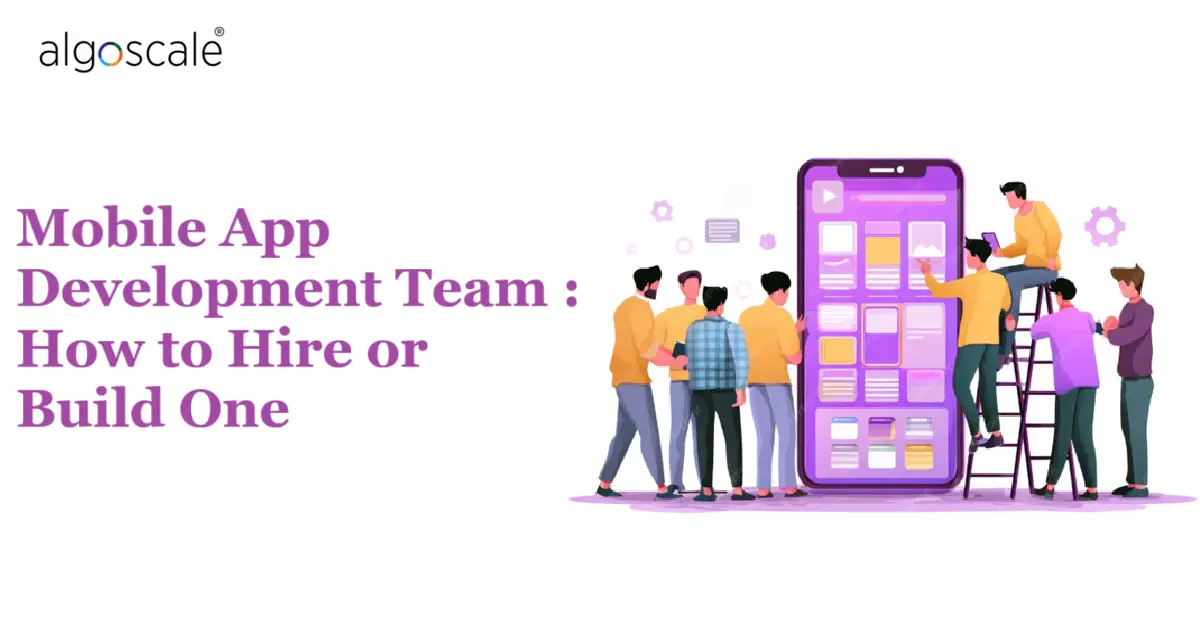
An application development team consists of various specialists, UI/UX designers, frontend and backend developers, testers, and project managers. They all come together to create a mobile application development team that works together to bring your vision to life in the form of an effective, refined product.
For companies, building a team is somewhat difficult. Even though you may be able to find a couple of good app developers, the thing is that to develop mobile applications involves a lot more than simple coding abilities. You need a full mobile apps development team that understands design, performance, user behavior, and MDM solutions for small businesses—especially as teams grow and more employee devices need secure access controls—alongside compliance requirements. Whether you’re looking at business mobile app development, smartphone app development or an enterprise level solution, having the right mobile app development team ensures your project is delivered on time, in minimum budget, and aligned with your business goals.
How Mobile Mobile App Development Team Works
A mobile app development team functions as a mini-environment with each role having a distinct responsibility and working in close coordination with others. The process typically begins with understanding the business and the scope of the app. Then designers, developers, and testers come into the picture.
Solid team work of app developers keeps things moving on projects. Designers and developers work hand-in-hand to get the UI compatible with its functionality. Testers detect the bugs before launch, while the app development project management is done by business analysts and project managers, keeping the team aligned with business goals.
This means that the mobile apps development team employs an application development method like Agile or Scrum, where they can write, test, and experiment with features very quickly. Regular check-ins, open communication, and documented mobile app development project management keep everyone on the same page and reduces the likelihood of delays.
In short, a great mobile development team doesn’t necessarily create apps, they create solutions intended to do, interact with, and generate business.
Mobile App Development Team Structure
As mentioned above, the whole team has members who contribute to making the final product unique before it is launched in the market. They combine to make a full application development team that can do anything from design to launch. This is what a standard apps dev team consists of:
Project Manager
The PM oversees app development project management, and ensures smooth coordination between the business and the mobile development team.
Key Responsibilities:
- Plans and coordinates timelines, sprints, and project milestones.
- Coordinate activities among developers, designers, QA, and other team members.
- Estimating the project cost and remaining within.
- Maintains clear communication between the business and the mobile app team.
Business Analyst (BA)
Establishes clear business goals, writes requirements, and ensure the app delivers real value to the end users,
Key Responsibilities:
- Collect and document app requirements based on business objectives.
- Analyze market trends and competitor apps to recommend features.
- Ensure end users receive true value from the app.
UI/UX Designer
They design the visual structure and user flow, ensuring that app is not only attractive but also easy to navigate. They make the customer experience easier.
Key Responsibilities
- Create wireframes, mockups, and user flows for the app.
- Ensure clean and intuitive user experience across platforms.
- Works with developers to implement the design effectively.
Frontend Developers
They are the good app developers who develop on the client-facing side of the application, ensuring smooth visuals and interactions on the application.
Key Responsibilities
- Design responsive interfaces and interactive features,
- Incorporate designs created by UI/UX designers accurately.
- Improve performance and ensure smooth user interactions.
Backend Developers
These sets of developers handle the behind the screen, APIs, and data processing. A crucial part of any mobile application development team is a backend developer who possess technical expertise in Python, Ruby etc,
Key Responsibilities
- Develop server side logic and data base management
- Builds APIs and third party services for app functionality.
- Ensure scalability, performance and security of the application.
iOS Developer
Expertise in iOS app development for iPhones and iPads using Swift or Objective-C.
Key Responsibilities
- Build and maintain high-performance iOS applications.
- Implement platform-specific features and optimize it for all Apple devices.
- Collaborate with UI/UX designers for seamless functionality.
Android Developer
Specializes in Android app development for smartphones and tables using Kotlin or Java.
Key Responsibilities
- Develop and maintain android applications optimized for multiple devices.
- Implement platform-specific features and follow Android guidelines.
- Work with designers and backend developers for better app performance.
QA/Testers
These people test each and every line of the code making sure that it runs smoothly and is bug free.
Key Responsibilities
- Perform functional, performance, and usability testing.
- Discover and report bugs, and verify the fixes.
- Ensure that they provide bug free applications that meet quality standards and platform requirements.
Stages of Mobile App Development
Every successful app goes through a series of stages before it is ready for users. A skilled mobile app development team follows a clear roadmap that ensures efficiency, quality, and alignment with business goals. Here are the main stages of mobile phone application development:
Stage 1 – Discovery
This is where everything begins. Defining the concept, identifying the target audience, and setting up the app’s purpose. A business mobile app development project begins with brainstorming and market research to ensure the idea has actually a real demand in the market.
Stage 2 – Idea Validation
At this second stage, the application development team defines the scope, features, technology stack, and timeline. Strong mobile app development project management ensures the plan is doable, realistic and is aligned with the business goals.
Stage 3- Design Strategy (UI/UX)
In this stage designers create wireframes, prototypes, and the final visual design. The focus here is on users journey, user experience and ensuring the app development model supports an intuitive flow all over the application and its feasible, easy to use for the users.
Stage 4- Development
The actual core coding begins here. App development teams divide tasks between frontend, backend, and mobile developers, depending on whether it is an iOS application development, Android or cross platform development.
Stage 5 – Testing & QA
The mobile apps development teams run functional, performance, and security tests. Fixing bugs really helps save costs and ensure a stable launch. This step is crucial because here’s where all the issues get resolved and bugs get fixed.
Stage 6 – Deployment
Once approved, the app will be launched on app stores. A dedicated mobile app development team will ensure compliance with Apple and Google play store guidelines.
Stage 7 -Maintenance & Updates
Once the product is launched, the marketing team will promote the product and get the users to the platform. Once the user base is formed, the product would be requiring regular updates, bug fixes, and performance improvements to keep the app competitive and relevant.
Choosing the Size of Your App Development Team
One of the most common questions businesses ask is “How big should my app development team be? Or “How many developers do you need to build an app?” The answer depends on your project’s complexity, timeline, and budget.
Before deciding the number of developers in the team, you need to initially have an idea of a few things that might actually be required. Any business firstly, should have a clear cut idea of the platforms that you launch your app on, second the features you need to develop an app, and the expertise level of developers that you need to choose. Third , availability of funds, how many developers you actually can afford.
For a simple MVP or prototype, a small mobile app team of 3 to 5 people would be sufficient, they include a project manager, designer, developer and testers. This lean setup works well for startups testing ideas or companies entering business app development for the first time. This would take 2-4 months of work to develop the entire application.
For mid-sized projects, such as a fully functional ecommerce or business mobile application development solution, a mobile application development team of 6-10 members is more realistic. This allows you to have dedicated iOS/Android developers, backend specialists, and stronger QA support. To build this app with middling complexity you might require 6-10months.
For enterprise scale apps, you will need a larger apps dev team which should contain around 10-20 professionals. Here, roles expand to include business analysts, DevOps, data engineers, and additional testers. Effective app development project management is crucial at this scale to coordinate workflows across the entire mobile application development team. This application development process might require 8 or more months to complete and launch.
Key Takeaway – There is no one size that fits all solutions. The right app building team should match your goals, timelines, and growth plans, ensuring your app is delivered efficiently and performs well in the market.
App Development Team: Cooperation Models
There is never one solution that fits all, when it comes to building an app development team. The right cooperation model depends on your budget, project scope, timeline, and how much control you want to keep. While most of the guides stop at in house vs outsourcing, the reality is businesses today have more options than ever. Let us break them down for you.
1. In-House Team
Building your own mobile app team means hiring developers, designers, QA engineers, and a project manager under your payroll. You will get full control and alignment with your company culture. But it also means higher upfront costs, longer hiring cycles, and the constant need for mobile app development project management to keep everyone on the same track.
Best for : Enterprises and funded startups looking for long-term business mobile app development.
2. Outsourcing
Here, you partner with an experienced mobile app development company that already possesses the skills, processes, and certified developers, and tools in place. You can focus on the idea where as these custom software development companies handle the execution. It is cost-effective and quick, but you’ll need strong communication to align with their workflows.
Best for : Startups and businesses that need quick market launch without investing extra any in hiring
3. Dedicated Team Model
This cooperation model is like a remote extension of your company. A vendor provides a mobile apps development team that works only on your project. Unlike outsourcing, you will have a lot more to deal with daily priorities, but without worrying about HR, payrolls, or infrastructure.
Best for; Long term projects or large scale projects where consistency is more important.
4. Freelancers
Hiring good app developers, designers, or testers can work for small projects or specialized tasks like UI/UX. It is cheap and flexible, but quality and reliability might vary. And managing multiple freelancers without structured app development project management can be messy.
Best for: Short term projects, Minimum viable product development, or one-off features.
5. Staff Augmentation
If you already have an application development team but lack specific expertise, for example, say, a React Native developer or QA specialist, the staff augmentation model lets you “borrow” the talent. You keep control over app development team collaboration, while filling the skill gaps quickly.
Best for: Scaling an existing team without long-term commitments.
6. Onshore, Offshore, and Nearshore Models
Sometimes, it is not just who is building the app, but where?
- Onshore means working with a local mobile app development company in your country, it is a great option for collaboration but costly as well.
- Offshore taps into global talent at lower rates in locations like India, Eastern Europe, but requires strong communication to manage time zones.
- Nearshore offers a middle ground, working with teams in nearby regions for cultural alignment and moderate costs.
Best for : Businesses balancing cost with collaboration needs.
7. Product Development Partnership
This is a newer model where the apps dev team becomes more than a vendor. They share the risk, sometimes even equity, and act as your long-term app building team. Instead of just delivering code, they help you shape the product strategy, roadmap, and scaling decisions.
Best for: Startups who need both tech and business expertise
How to Choose the Right App Development Team Model for Your Business
Picking the right app development model is much harder than deciding what features your mobile application should have. The reality is, no cooperation model is better than the other if it perfectly matches your business goals, budget, and long-term vision. Here are some practical factors to consider while you select the right model app development team setup
1. Technical Knowledge
Do the team have expertise in the tech stack that your mobile application needs? For example if you are building an iOS mobile application, you will want a team skilled in Swift or Objective-C, while cross platform apps require React, Native or Flutter. A strong mobile development team should always be able to prove their experience with certified developers, previous working demos and case studies.
2. Language Compentencies
Smooth collaboration can break down quickly if the team lacks basic English fluency or clear communication practices. Time zone overlaps, shared communication tools like Slack, Jira, Trello, and a solid mobile app development project management cannot be overlooked when working with offshore or nearshore teams.
3. Domain Knowledge
A generic application development team might deliver code, but a team that understands your industry like fintech, healthcare, or retail, will build features aligned with compliance security, and customer expectations. This can save you months of rework.
4. Project Management Approach
Get to know about their app development model, do they follow Agile, prefer Scrum, or Waterfall? How do they handle change requests, features priorities, and quality assurance? The right methodology can impact both speed and cost of the project.
5. Pricing
Hidden costs are a common pain point. A reliable mobile app development company should give clarity on hourly rates, additional fees for maintenance, licensing costs and whether post launch support is included. If the model feels vague, then it is not a suitable model for your application development.
6. Track Record & Reviews
Don’t just go by a slick proposal. You can check past projects, client testimonials, and reviews in the third-party platforms like Clutch, Upwork, GoodFirms. An experienced app development team will have visible proof of their work and long-term client relationships. This would help you make the right decision and choose the right developer for your mobile app development project.
7. Scalability
If your app grows, can the team grow with it? A small app building team may struggle with scaling to enterprise level needs, while a custom software development company can add specialists like DevOps engineer, AI/ML engineers, QA automation as your project matures and user base grows.
Note: Instead of asking, “which cooperation is best for my mobile app development?”,start thinking about “which team ticks these boxes for my business goals?”. The model is always secondary, what matters is how well the mobile app development team delivers on these evaluation points,
Benefits of a Mobile App Development team
A skilled and experienced mobile app development team offers a wide range of benefits. From planning the most efficiency project delivery to market stability and a better final product it covers all. Combination of specialized roles, a dedicated team can help businesses transform their core idea into a user friendly application. The advantages show up on both sides, how your app is built and how your business is benefited from it.
1. High Technical Knowledge
From frontend designing to backend development and cloud deployment, a complete application development team brings specialized skills that a single freelancer cannot match. This ensures your app development is in safe hands, secure, scalable and future ready.
2. Operational Efficiency
With UI/UX designers, developers, and QA engineers running automated tests, bug detection rates improve by up to 30%. Agile sprints, daily stand ups, and integrated mobile app development project management tools reduce the delays and ensure features are shipped according to the schedule.
3. Advanced Tools Expertise
An experienced and professional app development team stays up to date with the latest tools in the mobile application development, trends in the market and the best practices. This ensures that your mobile application is built with the latest technologies and features.
4. Speed to Market
Launching a mobile application within three months can mean capturing thousands of early users. A focused mobile development team reduces time-to-market while still ensuring stability and performance. Launching quicker in the mobile app industry is crucial to gain a huge user base.
5. User Experience
An app that is visually appealing and polished backed by performance testing reduces customer churn rate. With professional designers included in the mobile apps development team, businesses would be able to deliver seamless experiences that keep customers coming back.
6. Project Management
Through structured project management, business leaders get visibility on velocity, meeting the deadlines, managing the resources and mitigating risks, The team of experienced project managers ensures that projects are staying on track within the planned budget.
7. Easy Data Collection
Mobile applications once live can track user pattern, behaviour and preferences. These insights can help developers understand where exactly the customer pain points exist and how to solve them. These insights also help businesses to make better decisions and plan marketing campaigns.
8. Risk Reduction
In fintech, retail, or healthcare, compliance errors can lead to heavy penalties. An experienced application development team understands standards like HIPAA, PCI DSS, and GDPR, building apps that meet regulations from day one.
Why Do You Need a Mobile App Development Team?
Building a successful mobile app these days requires a team of experienced and certified developers. The team should be able to deliver a product that’s fast, secure, and scalable and loved by users. That’s where a mobile app development team makes all the difference.
1. When Your App Is Core to Business Growth
If the app itself is your revenue channel, downtime or poor user experience directly hurts revenue. A mobile application development team ensures business continuity with specialists across development, QA and infrastructure.
2. When Your App Needs Multi-Platform Consistency
A startup may begin with Android, but soon customers demand iOS, tablets, or even wearables. A full apps dev team can handle parallel builds with React Native, Flutter, or native stacks that keep user experience consistent.
3. When Your App Handles Sensitive Data
Think of healthcare apps storing highly confidential data, or fintech apps managing payments. In these cases, compliance with HIPAA, GDPR, PCI-DSS is not negotiable, Only an experienced application development team can bake in security and compliance from day one.
4. When Speed is a Competitive Advantage
Markets like food delivery, ride hailing, or fantasy sports updates quicker and moves fast in the mobile app market. Being first to market can mean owning the customer base. A coordinated mobile app team with proper project management shortens the release cycles without compromising quality.
5. When Future-Proofing Matters
Apps keep evolving with OS updates, device changes, and user expectations never stop. They need an application that works on their mobile devices, feasible and always working. A dedicated mobile apps development team is not just building for launch, but ensuring that two years later, your app is still reliable, relevant, fast and secure
The mobile app development process will not get done after the launch. A professional mobile app development team offers ongoing support and maintenance to ensure the app is up to date and smoother customer experience. Hiring a mobile app development team helps you handle the bug fixes, performance optimization, security updates so that you can focus on business and marketing the application.
How to build an Effective Mobile App development Team: Step-by-Step Guide
Building a mobile app development team can be challenging, but breaking it down into simple steps makes the process a bit easier. If you are hiring an in-house app building team or working with an experienced mobile app development company, the goal is the same. You have to create a skilled, well-structured team that can turn your app idea into a real product.
1. Define Goals
Start with defining goals. Get an idea of what exactly you want your app to do. Is it a small MVP, a full mobile app for customers, or upgrading an old existing app? Clearly define your goals and how big your app development team should be to achieve those goals and what are the skills they require.
2. Define Roles and Responsibilities
Once you have a clear understanding of your goals, define roles and responsibilities of every individual in the mobile app development team. Designers focus on the look of the app, developers would build the app and testers would be responsible for checking and fixing the bugs. Assigning clear roles in the app development team avoids confusion and saves time.
3. Choose the Right Collaboration Model
As we discussed earlier regarding the types of cooperation models, you can build your own development team by choosing any one of those mentioned above. You can build an in-house app building team, hire freelancers, use staff augmentation or partner with a mobile app development company. The right choice always depends on the budget , timeline and how much control you want over the team.
4. Set Project Timelines
A good application development team always works with the best and clear timelines. Try to set small goals and plan the timelines to achieve those small goals. Break the work into phases like designing, developing, testing and launching of the app. Simple milestones help to keep everyone in the mobile app development team on the same page and keep the process and speed improving.
5. Open Communication
Set clear communication and maintain transparency among the team members. Strong communication makes any mobile apps development team more effective. You can use simple communication tools like Slack, Trello, or Jira for updates. Regular check-ins and good communication skills help avoid misunderstandings and keep the project running smoothly.
How Much Does It Cost to Hire a Mobile App Development Team?
The cost of hiring a mobile app development team is based on many factors. The region where the team is located, the cooperation model that you choose and type of employment that would be chosen. The costs may vary depending on the project scope. The goal should always be developing the mobile app at minimum cost but within the established deadlines and with high quality.
Let us break down the cost of hiring a mobile app development team for you according to MorSoftware, Decode/Adapty and Genuisee data sources.1.
1. Costs by Location (Hourly Rates)
Location plays a big role in app development cost. Hiring a mobile app team in North America is the most expensive, while India and Eastern Europe are popular choices for affordable yet skilled app development teams.
| Role/Region | North America | Western Europe | Easter Europe | India | Latin America |
| iOS Developer | $50-80/hr | $40-75/hr | $30-50/hr | $15-35/hr | $30-60/hr |
| Android Developer | $45-$60 | $35-70/hr | $30-50/hr | $15-35/hr | $30-60/hr |
| Frontend Developer | $50-100/hr | $40-90/hr | $30-60/hr | $20-40/hr | $35-75/hr |
| Backend | $55-120/hr | $45-100/hr | `$35-65/hr | $20-45/hr | $20-45/hr |
| UI/UX Designer | $60-100/hr | $45-85/hr | $25-55/hr | $15-35/hr | $25-65/hr |
| QA Engineer | $50-90/hr | $40-80/hr | $25-50/hr | $12-30/hr | $20-45/hr |
| DevOps | $70-120/hr | $55-90/hr | $40-70/hr | $20-45/hr | $40-80/hr |
| Project Manager | $85-95/hr | $50-80/hr | $25-65/hr | $20-50/hr | $30-70/hr |
2. Costs By Project Complexity and Team Size (Application Type)
The cost also depends on how complex your application is. A small MVP with limited features costs far less than a full-scale enterprise app with multiple integrations.
| Complexity | Team (roles) | Timeline | Typical Cost (USD) |
| Simple/MVP | ~4-5 members (1 mobile, 1 backend, 1 UI, 1 QA, 1 PM) | 2-4 months | $30K-$80K |
| Mid Range | ~6-8 members (2 mobile devs, 2 backend, 1 UI. 2 QA, 1 PM) | 6-9 months | $80k-$250k |
| Enterprise/Advanced | ~8-12+ members (multiple mobile devs, backend, DevOps, UI/UX designers, QA. PM) | 9-18+ months | $250k-$550k+ |
3. Cost by Collaboration Model
The way you hire also changes the budget. In house teams always cost the most, while outsourcing to a mobile app development company or freelancers is much more cost effective. We have gathered detailed hourly rate comparisons across five collaboration models for key mobile app development roles across different locations. Here is the detailed hourly breakdown of the costs:
| Region | In-House | Outsourcing | Dedicated Team | Staff Augmentation |
| North America | $100-200/hr | $74-150/hr | $60-120/hr | $60-100/hr |
| Western Europe | $80-150/hr | $50-100/hr | $45-90/hr | $45-90/hr |
| Easter Europe | $40-80/hr | $30-60/hr | $25-50/hr | $25-50/hr |
| India | $20-50/hr | $20-40/hr | $15-35/hr | $15-35/hr |
| Latin America | $40-80/hr | $30-60/hr | $25-55/hr | $25-50/hr |
4. Cost of Hiring Freelancers by Role & Region (2026)
| Role/Region | North America | Western Europe | Easter Europe | India | Latin America |
| iOS Developer | $60-120/hr | $50-100/hr | $20-50/hr | $10-25/hr | $20-50/hr |
| Android Developer | $60-120/hr | $50-100/hr | $20-50/hr | $10-25/hr | $20-50/hr |
| Frontend Developer | $50-100/hr | $45-95/hr | $20-45/hr | $8-20/hr | $20-50/hr |
| Backend Developer | $70-150/hr | $60-120/hr | `$25-60/hr | $10-30/hr | $30-60/hr |
| UI/UX Designer | $60-100/hr | $45-90/hr | $20-45/hr | $8-25/hr | $20-50/hr |
| QA Engineer | $50-90/hr | $40-80/hr | $25-50/hr | $8-20/hr | $25-50/hr |
| DevOps | $90-160/hr | $80-140/hr | $40-90/hr | $20-55/hr | $40-90/hr |
| Project Manager | $60-100/hr | $50-90/hr | $30-60/hr | $15-30/hr | $30-60/hr |
By understanding these hourly rates by region and model, you can make a smarter decision, balance the cost with expertise, and plan your mobile app development project efficiently to ensure you get a high-quality app without overspending on the project.
Mobile app development team: Where to build it?
Choosing where to build the right mobile app development team is just as important as choosing the team itself. Location would be affecting costs, talent availability, time zones, and even communication efficiency. Here is a detailed look at the key regions for building a perfect mobile app team for your project.
1. North America & Western Europe – Top-Tier Hubs
Cities like San Francisco, New York , London, and Berlin are hotspots for tech talent and innovation. They are home to iOS app development companies, experienced apps dev teams and mobile app development companies that specialize in high-end business mobile app development
Pros
- Access to top talent– These regions attract highly skilled developers across iOS, Android, and full-stack development.
- Strong Ecosystem– Venture capital, tech events, and industry expertise make scaling, and networking easy.
- Collaboration– In-house or local mobile app teams allows face to face interaction and faster decision making.
Cons
- High cost– Salaries and operational costs are among the highest globally.
- Competitive Hiring: Finding and retaining good app developers is a bit challenging.
Best For
Enterprise and startups with substantial budgets aiming for high quality, niche, or complex mobile app development projects.
2. Asia & Eastern Europe – Cost Effective Hubs
Countries like India, Ukraine, Poland, and Philippines offer cost-effective alternatives for mobile apps development teams without compromising quality. Many experienced mobile app development companies in these regions have expertise in business mobile application development.
Pros
- Cost Savings– Hourly rates are significantly lower than in top-tier hubs.
- Large Talent Pool – These regions have many qualified developers skilled in iOS, Android, and full-stack development.
- High-Quality output – Countries like Ukraine and Poland are known for strong technical education and reliable delivery.
Cons
- Communication barriers – English proficiency may vary; cultural differences can affect the team.
- Time Zone differences : Rea; time collaboration may require flexible schedules.
Best For
Startups and businesses with moderate budgets seeking mobile app development teams for scalable and high-quality projects.
3. Latin America – Growing Tech Markets
Countries such as Argentina, Mexico, and Brazil are a tech hub of ReactJS development companies and are emerging as strong contenders for mobile app development for business. The region provides a blend of skilled developers, moderate costs, and nearshore proximity for North American companies.
Pros
- Time zone alignment – Overlaps with US working hours make communication easier.
- Skilled developers– Increasing expertise in ReactJS, iOS, Android, and backend development.
- Cultural Alignment -Easier collaboration with North American teams due to similar business practices.
Cons
- Economic volatility- Costs and stability may fluctuate with local conditions.
- Smaller Talent pools : Fewer senior developers compared to India or Eastern Europe
Best For
North American companies seeking mobile app teams that balance cost, talent, and time zone compatibility.
4. Worldwide: Remote Teams
Building a remote mobile app development team allows you to hire freelancers or dedicated developers from all over the world. This model is ideal for businesses looking for flexibility and access to top talent anywhere in the world.
Pros
- Flexibility – Quickly scale up or down based on project needs.
- Global Talent Pool– Access the best developers regardless of location.
- Reduced Overhead – Save on office operational costs.
Cons
- Management Challenges – Requires strong project management for app development practices to coordinate teams across time zones.
- Communication Hurdles : Clear documentation and regular updates are needed.
Best For
Businesses that prioritize expertise, flexibility and mobile app team collaboration over physical locations, only if they have strong remote management practices.
Why Should You Choose Algoscale as Your Mobile App Development Team?
Choosing the right mobile app development team is important for a successful application. At Algoscale, we offer end-to-end mobile app development for businesses, covering iOS and Android application development. We believe that there is a difference between a good app and a great one and our team is skilled in modern frameworks ensuring your app is smooth, scalable and reliable.
We focus on creating apps that users enjoy and help your business grow. Our team takes care of everything, from designing the interface to ensuring that the app works seamlessly on all the devices. With clear project management for app development, we keep you updated at every stage, so you need not worry about the development stages instead focus on the business progress.
Algoscale has successfully delivered over 250+ projects and holds a 4.5 star rating on Clutch since a decade, showing our commitment to quality and client satisfaction. Whether you need a new app, update your existing application or require a full mobile app development team to handle your project, we are here to help. We have dedicated, experienced and certified developers who focus on both technical quality and business impact.
By choosing Algoscale, you get a trusted partner that builds apps which are not only functional but also enjoyable to use. We help your business reach more users and achieve better results.
Conclusion
Building a successful app starts with the right mobile app development team. The location, expertise, and collaboration model of your team can highly influence your project quality, cost and timeline.
If you are looking for top tier talent anywhere from North America to Asia choosing the right mobile app development teams make all the difference. Start building your dream mobile app today by partnering with a team that combines experience, technical excellence, and business insights.
At Algoscale, we combine deep industry experience, advanced technology expertise, and a strong focus on business-driven mobile app development to deliver applications that are seamless, scalable, and user-friendly. As a data consulting and AI services provider, we bring added intelligence into every solution we build. With dedicated development teams and modern frameworks, we ensure your app not only reaches the market efficiently but also delivers measurable business impact.
Choosing the right team for your mobile application development is not just about building an app, it’s about creating a product that users genuinely enjoy and find easy to use. That’s where your business creates real value. Today’s customers expect intuitive, reliable, and engaging mobile experiences for communication and interaction. With Algoscale as your mobile app development services partner, you gain a trusted team that transforms your vision into a powerful, reality-driven solution.