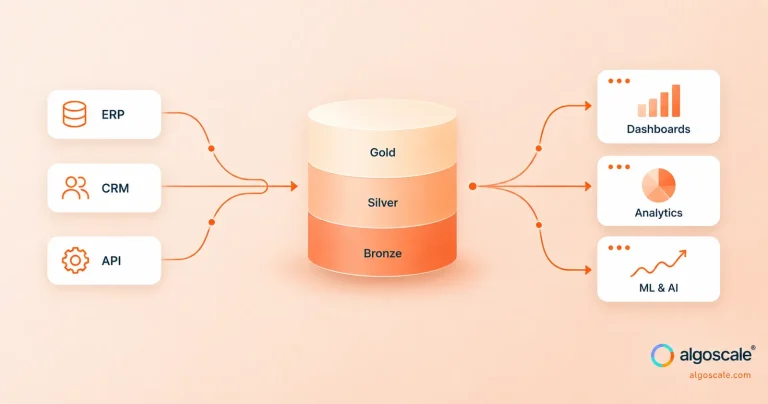


Handling data is a major challenge for many businesses. Information comes in from multiple sources—databases, SaaS applications, and cloud platforms—and it can quickly become overwhelming. That’s where data engineering and ETL tools come in, often supported by data engineering services. They help move, clean, and organize data so teams can get reliable insights without wasting time on manual processes.
Choosing the right ETL software for data engineering, cloud ETL solutions, or tools for automating data pipelines can make a real difference. Some tools, like Apache Hive, are ideal for large-scale batch processing, while platforms such as Hevo Data, Fivetran, and Matillion make real-time data integration simpler and faster.
In this article, we cover the top 22 ETL tools for February 2026, including their features, benefits, and limitations, to help you pick the right solutions for your organization’s data needs.
Data Engineering and ETL
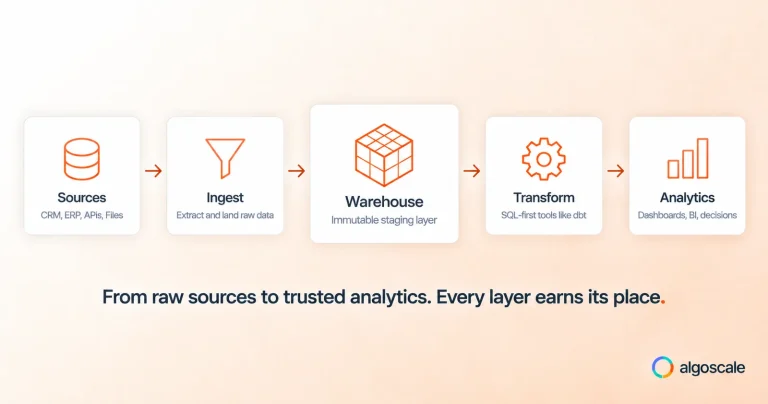
ETL stands for extract, transform, and load. It is a process responsible for moving data from one database to another, multiple databases, or a data warehouse. It enables data analysts to provide functional business information and prepare data effectively for analysis and business intelligence.
Data engineering in corporates ETL to prepare data by using multiple systems. It involves assimilating, converting, delivering, and sharing data for analysis. For the purpose of process automation, it uses data pipelines (a set of elements to process data, move data from one source to another, and from one format to another).
Top 22 ETL Tools for Data Engineering in March 2026

Data engineering tools are the specified applications to build data pipelines and design easy and efficient algorithms. These tools make the daily tasks of a data engineer easy. The top 21 ETL tools for data engineering in March 2026 are described below:
1. Apache Spark
Apache Spark is a data analytics tool to process data on a large scale. It is an open-source engine that includes Apple, IBM, Microsoft, etc. as a customer base.
Core Features of Apache Spark
- A fast platform for stream processing and data management
- Efficient for big data engineering
- It can handle data in real time with stream processing
- It allows processing 100 times faster
- It uses RDD to make data processing faster
Pros of Apache Spark
- It supports computational design and graph processing
- It fits best in iterative calculations
- It is more flexible because it can access unstructured and structured data from different sources
Cons of Apache Spark
- It does not contain a file management system
- It takes up a lot of RAM, and memory usage is high
- It is costly, as it needs additional memory for execution
2. AWS Glue
AWS Glue enables the transfer of streaming data to the data warehouse, clean, verified, and organize. It is best for companies that are using SQL databases.

Core Features of AWS Glue
- It processes semi-structured data and also
- Works best with a SQL database
- ETL jobs are easily schedulable with it
- It scales the required storage resources automatically
Pros of AWS Glue
- Free for the first million objects’ storage
- It has third-party APIs also
- Allows faster integration of data
Cons of AWS Glue
- A serverless application
- Some aspects are not friendly to non-technical users
- Supports Python and Scala only
3. Oracle Data Integrator
ODI is a powerful platform for large businesses. It is responsible for transferring data from one point to the entire business function of the company.
Key Features of ODI
- Supports integrated workflows
- Process requests for data integration
- Supports parallel execution of tasks
- Process both unstructured and structured data
Pros of ODI
- Supports RDBMS (relational database management system)
- It has third-party APIs
- Supports Sqoop, Spark Streaming, HBase, and Hive
Cons of ODI
- Requires expertise in Java programming
- It does not support real-time integration of data
4. Snowflake Data Warehouse
Snowflake is a cloud-based data analytics service provider. With it, customers can shift to cloud-based solutions, often supported by end-to-end data analytics consulting services that guide them through the entire process.
Main Features of SDW
- It is possible to establish as many virtual warehouses as customers want
- Provides high scalability
- Integrates semi-structured and structured data without getting help from other tools
Pros of SDW
- Highly secure
- Compatible with HIPAA, SOC 1 and 2, GDPR, and PCI DSS
- Query optimization is automatic
Cons of SDW
- No restrictions on data, but a user can incur huge expenses if excessive data is consumed
- Not a product of Google, Amazon, or Microsoft, so it lacks some features
5. Tableau
Tableau is a popular ETL tool in the industry of big data industry. It collects data from various sources and helps data engineers to generate visualizations and data reports.
Core Features of Tableau
- Large datasets are easily manageable
- Data visualization is possible without performance and speed issues
- Supports multiple scripting languages
Pros of Tableau
- Most efficient
- Data visualization takes less time to generate
- Provides a good user experience
- Any non-technical person can also use it
Cons on Tableau
- Automatic scheduling is not possible
- Highly expensive tool
Let’s discuss how our Tableau Consulting Services can achieve your goals. Schedule a consultation today.
6. Power BI
Power BI is a leading ETL tool in data engineering. It processes data, generates a visualization on the dashboard, and provides insights for analysis.

Main features of Power BI
- It is affordable and cost-effective
- A basic and free desktop version is available
- Simple to use with user-friendly tools
Pros of Power BI
- Connect with multiple sources of data like Excel, XML, JSON, etc.
- Collect data from BI tools
- More flexible
- Users can access it in offline mode also
Cons of Power BI
- Provides a limited number of options
- Restrictions on data handling
Also, you can check our Microsoft Power BI Consulting Services offerings if you are looking to create interactive dashboards.
7. Pentaho
Pentaho provides data reports, data mining, and information dashboards. It is an open-source ETL software tool. It has two editions: a community edition and an enterprise edition.
Key features of Pentaho
- It can handle both unstructured or structured data
- It can only be hosted on Apple and Intel servers
- Offers self-paced and online learning
- The community edition is free of cost
Pros of Pentaho
- Business users can also use it
- Suitable for small and medium-sized enterprises
- Users do not need IT knowledge
Cons of Pentaho
- No unified design interfaces
- Provides limited components
- Poor support from the community
8. Amazon Redshift
Amazon Redshift is famous for generating insights and collecting datasets. It can process a large amount of data in different warehouses and allows parallel processing.

Core Features of Amazon Redshift
- Supports massive workloads of data
- Parallel processing
- Faster due to column-based databases
Pros of Amazon Redshift
- Deployment is easy
- A simple ETL tool
- Automation in administrative queries
- It can integrate with third-party tools
Cons of Amazon Redshift
- Supports parallel processing only
- Indexing is not unique
9. Azure Data Factory
ADF manages the integration of data at scale. It is a fully-managed and serverless tool. It is used in operational data integration, data analytics, and workflows of data engineering.

Key Features of ADF
- Highly efficient due to the quick transfer of a large amount of data
- Highly scalable due to time-slicing and parallelism
- Easy cloud migration
Pros of Azure Data Factory
- Easily understandable
- Cost-effectiveness
Cons of Azure Data Factory
- Integration has some limitations
- Not ideal in multi-cloud scenarios
- The pricing plan is complex
10. Azure Databricks
Azure Databricks is popular in data engineering and Spark-based analytics. It supports data engineers, data scientists, and data analysts in the modern analysis of data.
Main Features of Azure Databricks
- Provides a shared and interactive workplace
- Supports data engineers to collaborate in real-time programming
- Provides many built-in functionalities like autoscaling options.
Pros of AD
- Cost-effectiveness
- Performance effectiveness
- Interactive and simple
Cons of AD
- Inadequate documentation
- Graphs and dashboards are not as per the standard
- Visualization needs to be upgraded
11. Venngage
Venngage is a popular design and data visualization platform that helps teams turn complex information into easy-to-understand visuals. Instead of outsourcing everyday design work, businesses can use Venngage to create professional infographics, reports, charts, timelines, and presentations in-house. It’s built for people who work with data, content, and communication but don’t necessarily come from a design background.
What makes Venngage stand out is its focus on practicality. The platform combines AI design tools, ready-made templates, and visual editing features so users can create graphics quickly without starting from a blank canvas. It also includes a Brand Kit feature that automatically applies brand colors, fonts, and logos, making it easier to produce consistent, on-brand designs across all marketing and internal materials.
Venngage also takes data accessibility and inclusive design seriously. With built-in tools like the Color Contrast Checker, Accessibility Checker, Visual Simulator, and AI-generated alt text, users can design with a wider audience in mind. Whether it’s for marketing performance dashboards, internal business reports, or educational visuals, Venngage supports both clarity and accuracy in data storytelling.
Services Offered
Data visualization & infographic design tools, Customizable professional templates, AI design generators for layouts and visuals, Brand Kit & auto-branding features, Accessibility tools for inclusive communication.
12. Talend
Talend is a powerful, cloud-ready ETL tool used widely in enterprise-level data engineering services and integration tasks. It offers both open-source and commercial versions, making it accessible for startups as well as large organizations. Talend simplifies complex data pipelines with a user-friendly interface and robust connectors to databases, cloud platforms, and big data frameworks.
Key Features of Talend
Intuitive drag-and-drop interface for designing data workflows
Built-in support for data cleansing, transformation, and governance
Real-time and batch processing capabilities
Native integration with AWS, Azure, Snowflake, and Google Cloud
Open-source version available (Talend Open Studio)
Pros of Talend
Ideal for complex ETL and data integration projects
Scalable for both on-premise and cloud data workloads
Offers advanced features like data quality, MDM, and data cataloging
Active user community and regular updates
Cons of Talend
Steep learning curve for non-technical users
High licensing costs for enterprise versions
Performance tuning may be required for large-scale data
13. Apache NiFi
Apache NiFi is an open-source data integration tool designed for real-time streaming and batch data flows. With its flow-based programming model and intuitive user interface, NiFi enables data engineers to automate complex data movement, transformation, and routing with ease.
Main Features of Apache NiFi
Visual interface for designing data flow pipelines
Real-time stream processing and event-driven architecture
Secure and scalable data ingestion from multiple sources
Supports various formats including JSON, XML, CSV, and Avro
Built-in versioning and rollback features
Pros of Apache NiFi
Ideal for IoT, log processing, and real-time data streaming
Supports custom scripting and processors for advanced use cases
Strong monitoring and data lineage tracking
Backed by the Apache Software Foundation with active development
Cons of Apache NiFi
Can become resource-intensive for high-volume data flows
UI may feel complex for beginners
Lacks some advanced analytics features out-of-the-box
14. Hevo Data
Hevo Data is a fully-managed ETL platform that allows organizations to integrate data from multiple sources into a data warehouse in real time without coding. It is widely used for cloud-based data integration and pipeline automation.
Core Features of Hevo Data
- Real-time data replication from 150+ sources including databases, SaaS apps, and cloud storage
- Automated schema mapping and transformation
- No-code interface for data pipeline creation
- Supports both batch and streaming data pipelines
Pros of Hevo Data
- Quick setup with minimal technical expertise
- Enables automated ETL workflows for analytics teams
- Highly scalable for enterprises handling big data
- Offers robust error handling and monitoring
Cons of Hevo Data
- Pricing can be high for smaller businesses
- Advanced transformations may require technical configuration
15. Matillion
Matillion is a cloud-native ETL tool designed for data integration and analytics in platforms like Snowflake, Redshift, and BigQuery. It is optimized for big data processing and scalable enterprise analytics.
Core Features of Matillion
- Cloud ETL solution for data warehousing
- Drag-and-drop interface for building data pipelines
- Native connectors for SaaS and on-premise applications
- Scheduled and automated data transformation jobs
Pros of Matillion
- Easy integration with modern data warehouses
- Supports both batch and incremental loading
- Reduces time-to-insight for data analytics teams
Cons of Matillion
- Limited on-premise support
- Can be complex for small datasets or beginners
16. Portable
Portable is a versatile ETL and data integration platform for real-time analytics and reporting. It helps enterprises automate data flows across multiple systems efficiently.
Core Features of Portable
- Real-time ETL pipelines and data streaming
- Supports structured and semi-structured data formats
- Automated data cleansing and transformation
- Easy integration with business intelligence tools
Pros of Portable
- Simplifies data pipeline automation for enterprises
- Reduces manual data engineering efforts
- Supports multi-cloud deployment
Cons of Portable
- Limited third-party integrations compared to competitors
- Documentation could be more detailed for advanced features
17. Upsolver
Upsolver is a modern ETL platform for streaming and batch data processing. It allows teams to build, manage, and deploy big data pipelines on cloud warehouses and lakehouses.
Core Features of Upsolver
- No-code interface for designing ETL pipelines
- Real-time and batch data processing support
- Integration with Amazon S3, Redshift, Snowflake, and more
- Optimized for large-scale data analytics
Pros of Upsolver
- Enables high-speed data ingestion and transformation
- Reduces engineering overhead with automated pipelines
- Scalable for enterprises managing massive data
Cons of Upsolver
- May require initial setup expertise for complex pipelines
- Cost can rise with very large datasets
18. Apache Hive
Apache Hive is an open-source data warehousing solution built on Hadoop. It is widely used for querying and managing large datasets in distributed storage.
Core Features of Apache Hive
- SQL-like interface for big data querying
- Batch processing of structured and semi-structured data
- Supports ETL workflows on Hadoop clusters
- Integration with Hadoop ecosystem tools like HDFS, Spark, and MapReduce
Must Read: What is Performance Analytics?
Pros of Apache Hive
- Handles very large datasets efficiently
- Open-source and highly customizable
- Strong support for batch ETL and analytics
Cons of Apache Hive
- Not optimized for real-time streaming data
- Requires knowledge of Hadoop ecosystem
19. Blendo
Blendo is a cloud ETL platform for integrating data from multiple SaaS applications into data warehouses. It is designed for analytics and reporting automation.
Core Features of Blendo
- Connectors for popular SaaS apps and databases
- Automated data extraction and transformation
- Real-time and scheduled ETL pipelines
- Data normalization and cleansing tools
Pros of Blendo
- Quick setup and easy-to-use interface
- Reduces manual ETL tasks for analytics teams
- Supports multiple cloud data warehouses
Cons of Blendo
- Advanced transformations may be limited
- Pricing may scale quickly with larger data volumes
20. Stitch
Stitch is a cloud-first ETL tool that helps businesses replicate data from various sources to data warehouses. It is optimized for automated data pipelines and business analytics.
Core Features of Stitch
- Cloud ETL for SaaS, databases, and APIs
- Supports both batch and incremental replication
- Data normalization and schema mapping
- Simple dashboard for pipeline monitoring
Pros of Stitch
- Minimal coding required
- Scalable for growing data pipelines
- Affordable for startups and mid-size businesses
Cons of Stitch
- Limited transformation capabilities
- Not ideal for highly complex ETL workflows
21. Fivetran
Fivetran is a fully-managed data integration platform that automates ETL pipelines and ensures reliable, up-to-date data in cloud warehouses.
Core Features of Fivetran
- Pre-built connectors for databases, SaaS apps, and cloud storage
- Automated schema management and syncing
- Real-time incremental data replication
- Enterprise-grade security and compliance
Pros of Fivetran
- Minimal maintenance required for data pipelines
- Scales easily with business growth
- Reduces time to actionable analytics
Cons of Fivetran
- Less flexibility for custom transformations
- Cost may be high for very large datasets
22. Integrate.io
Integrate.io is an ETL and ELT platform for building, deploying, and managing data pipelines in the cloud. It supports real-time and batch data integration for analytics.
Core Features of Integrate.io
- Cloud ETL and ELT for big data analytics
- Drag-and-drop data pipeline builder
- Real-time data streaming and batch processing
- Supports multiple data warehouses and BI tools
Pros of Integrate.io
- Enables quick deployment of data pipelines
- Simplifies complex data integration tasks
- Flexible pricing for small and large enterprises
Cons of Integrate.io
- Learning curve for non-technical users
- Advanced features may require an enterprise plan
Conclusion
In information technology, data engineering is facing preservation challenges. ETL tools are the best way to transfer data from one system to another or from one data repository to another.
There are various forms of ETL tools that an enterprise can use in system and data integration. Based on the requirements, size of the enterprise, and specific budget, an enterprise can choose the best platform as per its needs. Selecting the right ETL solution is vital for successful data integration.
Algoscale’s expertise in Big Data Consulting Services empowers enterprises to navigate these complexities. We offer tailored strategies and solutions to identify and implement the optimal ETL tools, aligned with your specific requirements, enterprise size, and budget. Partner with a expert Data Consultant like Algoscale to ensure seamless data integration and unlock the full potential of your data assets.