



In today’s data-driven world, businesses generate massive volumes of data every day. But raw data alone doesn’t, create value, it’s how organizations manage, analyze, and use that data that truly matters. This is where data strategy consulting services become invaluable.
A well-defined framework helps businesses make informed decisions, optimize operations, and enhance customer experiences, ultimately driving growth.
Understanding the elements of a data strategy is key to building an efficient approach that acts as a blueprint for collecting, managing, and leveraging data across the organization. In this blog, we’ll explore these seven critical elements, their importance, and how they work together to create a truly data-driven business.
What is a Data Strategy?
Before we dive into the topic, it is important to understand what a data strategy means. A data strategy is a process that a business organisation adopts by collecting, managing, storing and utiliziing the data efficiently to achieve the set business goals. The process is stitched in a way that it efficiently integrates with the objectives of the organisation ensuring that the data is treated as a valuable asset.
Importance of an Effective Data Strategy
Business organisations often face multiple issues including poor data quality, missed business opportunities, and data silos when they do not have a clear data strategy. Let us further understand in detail the importance of effective data strategies for businesses.

1. Informed Decision-Making
A well-structured data strategy helps decision-makers form accurate, reliant, and timely strategies that help them make efficient decisions. It eradicates the need for depending on assumptions or guesswork and thus improves businesses across all levels.
2. Improved Consistency and Data Quality
An effective data strategy helps improve data quality as it involves the process of data collection, management and governance. Improved and quality data eradicates the room for errors eliminating data silos and thus ensuring consistency across departments making analytics more dependable.
3. Competitive Advantage
Business organisations, through the means of analysing market trends, studying customer behaviour, and predicting future operations help businesses leverage data effectively. This agility offers businesses an opportunity to stay ahead of their competitors by remaining innovative and responding proactively to customers.
4. Fosters a Data-Driven Culture
An effective data strategy fosters data literacy across the business organisation thus encouraging employees to use data regularly. This tradition helps improve data-driven thinking resulting in improved collaboration, accountability, and strategic alignment.
7 Key Elements of a Data Strategy
Now that we have understood the meaning and importance of forming an effective data strategy, let us explore the 7 key elements of a data strategy that are essential for building a successful, data-driven organization.
1. Business Objectives

A data strategy is truly effective if it aligns with the business goals of the organisation. Thus, it is important to have a clear understanding of how data will be leveraged to drive objectives and to develop a well-defined action plan for collecting, processing, storing, utilising, and securing data.
The alignment between data and business strategy demands effective collaboration and communication across multiple departments. The different departments must have effective coordination on how the data is used with respect to how key metrics are tracked, how insights are extracted, and how reports are structured to support business decisions.
Ways to Align Data Strategy with Business Objectives
- Define Clear Business Goals – Be it for increasing revenue improving customer experience or be it fostering operational efficiency, it is always important to understand the objectives of the organisation before developing a data strategy.
- Increase Cross – Department Collaboration – Multiple departments such as finance, IT and marketing should work in collaboration to determine what data is required, and how should it be used and shared in a secured manner.
- Establish KPIs – Businesses need to define measurable indicators to track progress towards business goals.
2. Data Accuracy

Data accuracy is one of the most crucial elements during the formation of an effective data strategy. Data accuracy is the foundation of an effective data strategy as it helps businesses in eradicating poor decision-making, operational inefficiencies, and compliance issues.
Maintaining high data accuracy helps businesses foster growth, increase efficiency, and find a competitive edge compared to their competitors. Data accuracy also helps organisations in finding effective analytics and reliable analytics.
How Data Accuracy has a Role to Play in Forming an Effective Data Strategy
- In taking Informed Decisions – Data with higher accuracy assists businesses in tracking their progress towards their goals thus helping organisations in taking informed decisions.
- Effective Data Management – Accuracy ensures that the data is valid, up-to-date, and consistent hence eradicating the errors that could distort analysis..
- In gaining Precise Analytics – Clean and accurate data increases the efficiency of analytical models, reporting, and forecasting thus preventing misleading insights.
3. Data Quality

Quality data ensures that the data received is reliable, complete, consistent and highly accurate. A high quality data leads to higher quality outcomes thus impacting positively for business in the longer run.
Quality data is an essential part of effective data strategy from governance to analytics and decision-making. Often lacks of quality data leads to inefficient decision making which hampers the quality of the outcome. Thus, investing in high quality data is important for businnesses as it fetches higher trust, greater accuracy and long-term success.
Role of Data Quality in Building an Effective Data Strategy
- Improves Decision Making – High quality data often reduces the risk of making inadequate decisions owing to accurate insights and unavailability of flawed or misleading information.
- Improves Operational Efficiency – Accurate data improves operational efficiency as it decreases time and costs spent on cleaning, correcting, reconciling bad data.
- Accurate data assures that teams across departments are working with consistent and standardized information.
4. Data Architecture

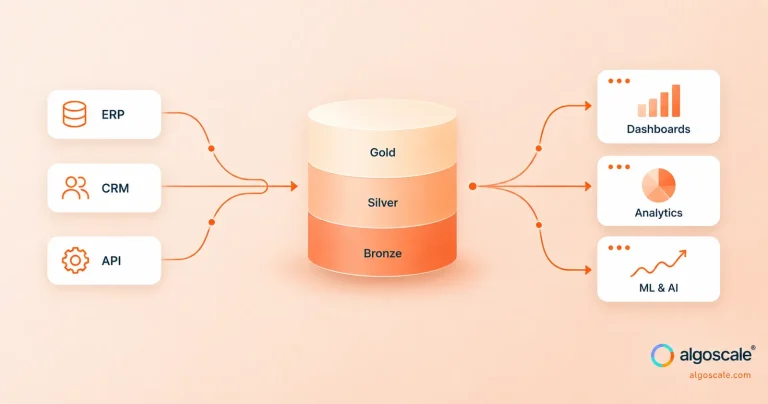
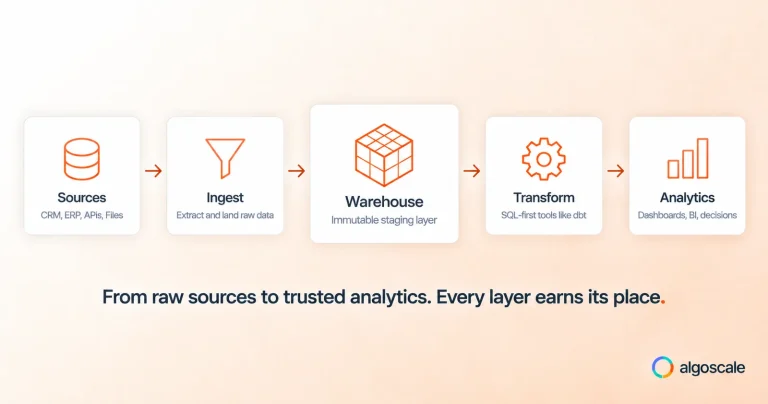
A strong data architecture acts as the foundation of your entire data strategy. It defines how data is collected, stored, integrated, and utilized across the organization. It also ensures that the data flows efficiently between systems and supports future scalability.
To design and manage scalable, efficient data systems, many organizations also turn to data lake consulting services. These services help in building centralized repositories that support both structured and unstructured data at scale, enabling better analytics and decision-making.
Role of Data Architecture in Forming an Effective Data Strategy
- Ensures Seamless Data Integration – An effective data infrastructure ensures seamless flow of data between multiple systems data scraping services departments, and applications.
- Accessibility for Analytics – Seamless data integration from multiple sources, ensuring consistency and accessibility for analytics and reporting.
- Improves Data Accessibility & Usability – Data architecture ensures self-service analytics by ensuring data is available in a format that is suitable for decision-making.
5. Data Analytics & Business Intelligence

Data Analytics and Business Intelligence play a vital role in shaping a strong data strategy by converting raw data into actionable insights. These processes often rely on a robust data warehouse solution that consolidates data from multiple sources, ensuring that the information used for analysis is accurate, consistent, and readily accessible.
Using efficient and accurate data stored in a centralized data warehouse solution enables organizations to identify trends, generate insights, and support better decision-making through descriptive, predictive, and prescriptive analytics.
Role of Data Analytics and Business Intelligence in Effective Data Strategy
- Aligns Data Strategy with Business Goals – Data analytics plays a major role in identifying trends, risks, and opportunities thus ensuring that the data strategy inclines with prime business objectives.
- Offer Meaningful Insights BI tools offer real-time dashboards thus enabling the top-management to make accurate decisions based on effective and meaningful insights.
- Improves Data-based Decision-Making – Through the means of prescriptive and predictive analytics, business organisations can predict upcoming trends and optimize strategies accordingly.
6. Data Governance

Data Governance refers to the formation of policies, procedures, and standards that ensure data is accurate, consistent, secure, and used efficiently within the organisation. Data governance is known as the backbone of an effective data strategy as it ensures that data is accurate, secure, and well-structured. Without efficient data governance, it can lead to a chaotic situation, further leading to compliance risks and poor decision-making.
How Data Governance Helps in Forming an Effective Data Strategy
- Ensures Data Quality – Governance of data ensures that it establishes rules and policies to maintain data consistency and accuracy.
- Reduces Errors – Effective data governance ensures that there are to no-errors, thus eradicating the space for errors and outdated information.
- Improves Accessibility and Usability – Data governance fosters cross-department collaboration by ensuring standardized data formats.
- Supports Data Integration – Data Governance forms a unified framework for data storage, processing, and sharing across multiple systems.
- Drives Effective Decision Making – By reducing the risk of poor data quality, the component helps build high-quality data, leading to more accurate insights.
7. Data Culture & Literacy

Data culture refers to the use of data by the organisation. It also refers to the literacy of the ability of the employees to read, analyze, and work with data effectively.
A strong data culture and high data literacy are essential for successfully implementing an effective data strategy. It ensures that employees at all levels understand, trust, and use data to drive business decisions.
Role of Data Culture and Literacy in Forming an Effective Data Strategy
- Reduces Data Silos – Employees who understand how to access and analyze data spend less time searching for information.
- Leadership Support – Leadership includes the practice of data-driven decision-making from the top down.
- Cross-Department Collaboration – This includes breaking down data silos and promoting data sharing across teams.
- Increased Adoption of AI Culture – When employees are comfortable working with data, they are more likely to adapt technologies like AI and ML and predictive analysis.
- Help Businesses Stay Competitive – Using advanced technologies helps businesses remain competitive and leverage emerging technologies for deeper insights.
Also Read: Data Strategy Templates
Conclusion
As businesses continue to navigate the complexities of a data-driven world, having a clear and actionable data strategy becomes essential. For any modern software development company, understanding and implementing the key elements in data strategy—from aligning with business objectives to building a strong data culture—can significantly enhance decision-making, boost efficiency, and fuel innovation.
By focusing on these critical components, organizations can move beyond simply managing data to fully leveraging it as a strategic asset. Whether you’re establishing your strategy or optimizing an existing one, prioritizing the right elements in data strategy will position your business for long-term success and a competitive edge.
Partnering with the right Data Consulting company ensures your data strategy is not only well-designed but also practical, scalable, and aligned with your evolving business goals. Algoscale brings the expertise, frameworks, and hands-on experience needed to help you turn data strategy into measurable business outcomes — get in touch today to take the next step.