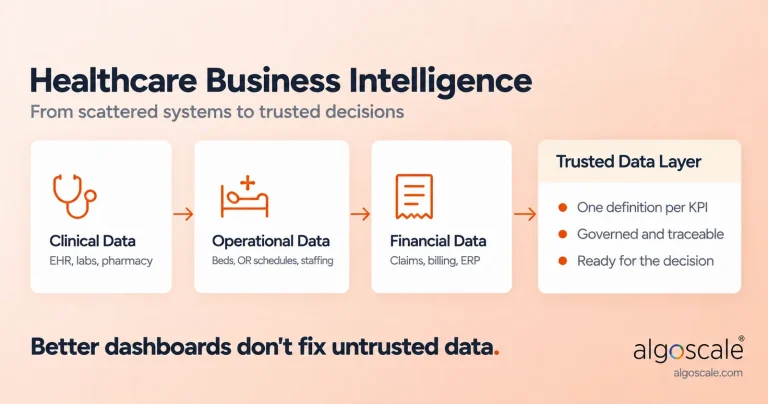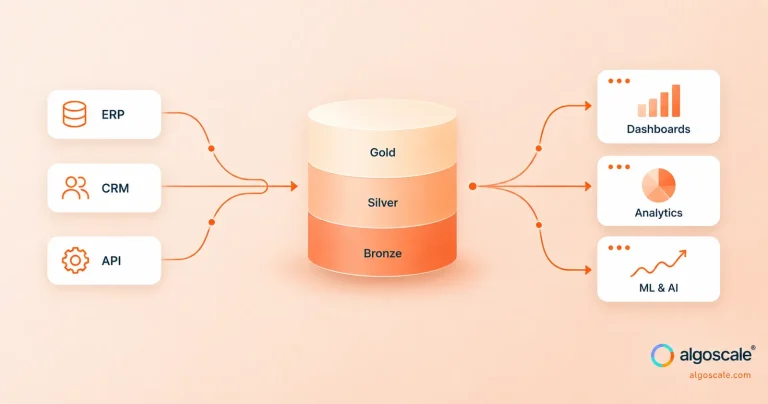




Every digital activity today runs on data. The ads you see before you make purchases, your social media interactions and feed recommendations, everywhere there is data at work to deliver the relevance that will help your business stand out from competitors. But raw data, in itself, cannot serve this purpose. That is where data engineering comes in.
Data engineering services help organizations cut through scattered raw data by collecting, organizing, and processing it into reliable, usable datasets. By structuring data for accessibility and analysis, data engineering services enable businesses to extract meaningful insights and make smarter, faster decisions.
If data were a library, data engineers would be responsible for cataloging books, maintaining shelves, and ensuring that every book is properly labeled and easy to find. This way, when researchers (data analysts) come to the library, they can straightway locate books they need and gain knowledge from them, rather than endlessly looking for them amidst a sea of jumbled books without author or genre categorization.
With that said, let’s understand data engineering in greater detail.
What is Data Engineering?
Data engineering is a critical principle in data management that enables organizations to design, construct, and maintain systems that collect, store, and analyse large amounts of data. As more and more organizations rely on data to make their most critical decisions, data engineering becomes their core priority as it allows them to leverage robust architectures designed to facilitate seamless data flow, high quality, and accessible data across all platforms. The professionals who design these architectures are data engineers.
The Data Engineering Services Market
A report by Statista says that the global business analytics market is expected to reach USD 150 billion by 2025. Within the market, data engineering services form the fastest growing sub segment. Another report by Allied Market Research indicates that the data engineering market is expected to reach USD 30 billion by 2026.
This growth can be attributed to the increasing reliance on data, growing data complexity, and the need of every organization to understand, interpret, and use their data to make meaningful decisions. It goes without saying that as organizations continue to generate large amounts of data and leave large trails of digital footprints through each of their activities, the demand for data engineering, integration, and preparation will only soar higher.
What is a Data Engineer and What Are Their Core Responsibilities?
A data engineer is an architect who is responsible for building, maintaining, and organizing the infrastructure that helps you collect, manage, and use data for analysis. Their expertise enables them to transform raw data into meaningful and actionable insights. The core responsibilities of data engineers are listed below:
- Data collection and integration: Collecting data from multiple sources (streaming sources, APIs, databases, and external storage providers), designing, and implementing data pipelines that ensure smooth data flow into the warehouse.
- Data storage and management: Choosing the right database systems, maintaining data quality and integrity, and optimizing data schemas for scalability and performance.
- ETL Processes: The Extract, Transform, and Load pipelines convert raw data into a format from which it can be analysed. Data engineers clean, enrich, and aggregate the data for data scientists and analysts.
- Data processing: A big data engineer works with big data technologies like Hadoop and Spark to process and analyze large datasets and obtain actionable information from them.
- Designing for scale: Data engineers use cloud platforms like AWS, GCP, and Azure to build cost-effective and scalable solutions for your business.
- Handling NOSQL Databases: To manage unstructured and semi-structured data, data engineers work with traditional relational and NOSQL databases.
- Data streaming: Real-time data processing for industries that require data to be analyzed the very instant it flows in.
- Distributed systems architecture: Data engineers ensure fault tolerance and manage large volumes of data with distributed systems architecture.
What are the Core Elements of Data Engineering?

The core elements of data engineering services help you understand which building blocks for the data pipeline or engineering system that makes data available to your organization in a ready-to-use format for decision-making. These are as follows:
1. Data Collection
Data collection or extraction is the process of retrieving data from multiple sources and converting it into a format that enables processing. Data engineers automate collection for consolidating large datasets and implement the necessary strategies for maintaining data validity and accuracy. They convert unstructured data into a structured format by identifying relevant data points with pattern recognition and regular expressions. This stage is key to establishing a reliable data foundation for analytics and decision making.
Data engineering expertise avoid the following pitfalls while collecting data:
- Preventing inaccurate or messy data by reliably pulling data from every source (APIs, logs, databases) by automating ingestion pipelines.
- Preventing incorrect insights by validating data at entry points.
2. Data Ingestion
Data from multiple sources needs to be moved to a storage medium that is favourable for processing it further. This process is known as data ingestion. Businesses usually hire data engineers to develop pipelines that schedule, transport, and manage data in real-time systematically and reduce latency. This is important for scalable data integration on time by using tools like Apache Kafka. Proper data ingestion ensures that the data aligns with your organization’s operational context, and is highly available for accurate and real-time analytics for decision making.
Data engineers help you:
- Avoid data loss or duplication with resilient pipelines that capture data once and preserve them forever.
- Prevent integration failures at scale by aligning ingestion flows with business logic and organizing data for real-time analytics.
3. Data Storage
Your organization’s collected data needs to be stored in database solutions securely. Data storage is the stage where engineers choose the appropriate storage systems after evaluating the volume and type of data. Other factors that determine the selection of the storage system are the speed of data retrieval and scalability. Typically, SQL databases or data warehouses are selected for structured data, whereas NOSQL databases and datalakes are selected for unstructured data.
Data engineering expertise is required for optimizing storage solutions for high accessibility and cost-efficiency and avoiding data redundancy. Appropriate storage solutions guarantee data integrity, structured data organization, and reliable analytics and reporting, helping you:
- Prevent hefty storage costs by aligning the combination of data lakes, databases, and warehouses with growth and retrieval needs.
- Avoid data corruption and redundancy through schemas, partitioning, and versioning.
4. Data Modeling,Scaling, and Performance
Your data structures should cater to the unique requirements for various applications. Data modeling is the process that ensures this. Efficient data modeling is the basis for high-performance and scalability, ensuring your data systems grow with your business. Data engineers ensure high responsiveness under heavy traffic, efficient querying and retrieval by creating schemas, and use techniques like indexing and partitioning for the same.
Data engineering expertise helps you:
- Avoid performance breakdowns at scale by implementing early partitioning and caching, preventing costly re-engineering as the user base grows.
- Avoid compromised speed and slow systems with schemas matching real business workflows for faster queries.
5. Data Transformation
Data transformation is the process of cleaning, filtering, and aggregating data as per business needs and converting raw data into a structure viable for analysis. It is here that data engineering experts leverage ETL tools (extract, transform, load) to streamline processes and ensure that the transformed data is ready to be used for analytics. Transformation workflows should be designed in such a manner that they automate data type conversions, consistency checks, and addition of contextual information, helping you:
- Avoid manual and error-prone processes with ETL workflows that ensure consistent alignment with business rules at scale.
- Prevent fragmented contexts by enriching datasets with reference values and metadata.
6. Data Quality and Governance
These processes maintain the accuracy, completeness, and security of data throughout the lifecycle. Data quality is maintained through frameworks that validate data, detect errors, and maintain high standards through corrective procedures. Data governance consulting services help you implement policies for establishing rules and defining roles and responsibilities for data usage, ensure compliance with industry regulations, and ensure reliable data for analytics and decision making.
This helps you:
- Avoid bad decisions with compromised data by automating checks and error-handling workflows.
- Prevent hefty fines for non-adherence to compliance norms with clear governance policies and audit trails.
7. Security and Compliance
Data engineers help you protect your organization’s data from unauthorized access and other potential vulnerabilities. By implementing security measures like access controls, encryption, and authentication, they protect sensitive data assets and promote trust among all stakeholders. These practices also align with standard industry regulations like HIPAA and GDPR, maintaining reliable data throughout for smooth operations and decision making.
This helps you:
- Prevent data breach or misuse by implementing security protocols that ensure that only the right people can access the required data.
- Minimize operational risks by constantly monitoring vulnerabilities and building pipelines that keep the entire lifecycle secure.
Why Do You Need Data Engineering Services?
In today’s day and age, data is any business organization’s most valuable asset. Unlocking its complete potential can help you inform strategies, meet evolving customer needs, deliver hyper personalization, and make informed decisions for growth and scale. However, having endless volumes of raw data is not enough for these benefits. This is where you need data engineering to manage, process, analyze, and utilize data effectively to meet your strategic goals.
Data engineering services help you maintain high-quality data for making business-critical decisions. Data engineering ensures that accurate and reliable data is available for analysis by implementing rigorous data quality controls, which in turn, help you avoid costly, and often irreversible mistakes in decision-making.
A well-designed data engineering pipeline helps you eliminate data silos and fragmented insights for efficient data retrieval and processing. Additionally, data engineering enhances the accessibility of data by consolidating data flow from multiple sources into centralized storage solutions. This is important for ensuring accurate, analytics-ready, and consistent data your teams can rely on while informing their strategies.
However, your data and its management complexity will evolve as your business grows and expands across a wider user base. This is where data engineering helps you develop scalable systems that grow with your business and offer consistent performance, aligning with your rapid growth needs. It eliminates the worry of a performance or speed compromise as data requirements fluctuate and demand more.
Finally, data engineering helps you improve resource utilization, manage infrastructure costs, and optimize data processing and storage. This translates to greater ROI and lowers operational costs, allowing for long-term profits.
Popular Use Cases For Data Engineering

Data engineering is at work behind-the-scenes for the following use cases:
1. AI Implementation
Artificial intelligence requires high-quality datasets for training. These are provided by data engineering. An AI data engineer enables AI systems to function efficiently by collecting, cleaning, and preparing datasets, managing large-scale data efficiently, and ensuring that the machine learning models are fed by reliable and scalable data pipelines. Efficient data engineering and preparation ensures:
- Enhanced AI model performance in the real-world with minimized biases, accurate predictions, and zero hallucinations.
- Model accuracy with meaningful variable extraction from raw data, preventing broken pipelines and outdated models prompting decisions based on stale information.
- Robust data workflows engineered to automate processes and enhance decision-making with AI implementation that facilitates the same.
Real Use Case:
Netflix uses sophisticated data engineering pipelines to feed its recommendation algorithms and improve their performance by suggesting shows each user is more likely to watch (instead of random suggestions). Their sophisticated data engineering pipelines continuously collect, clean, and organize viewing data (what users’ watch, pause, skip, or rewatch) to deliver better recommendations for an enhanced viewing experience and minimizing choice overload.
2. Real-time Analytics
Most businesses today, including e-commerce, fintech, streaming, logistics, ride-hailing, or online gaming, depend on real-time analytics for instant data-driven decisions that form the core of their user experiences. Data engineering facilitates quick decision-making by continuously analysing and processing data as it comes in, and enabling data collection at high speed.
Data engineering consulting services help you handle large data volumes at high velocity by implementing appropriate architectures for the same using tools like Amazon Kinesis and Apache Kafka. These architectures ensure instant data availability by prioritizing data stream integrity and timeliness, helping you avoid:
- Delayed and wrong decisions as a result of slow batch processing, leading teams to respond hours later to system or customer issues.
- System overloads and data loss caused by faulty engineering of high-velocity systems, often leading to outages, unreliable dashboards, and missed events.
Real Use Case:
Robust data engineering helps Uber offer features like instant ride matching and surge pricing by implementing real-time data pipelines that track traffic, riders, drivers, and demand by the second.
3. Fraud Detection
You need fast, accurate, and well-structured data to detect fraud in real-time and prevent losses for your business. Data engineering enables you to build pipelines that collect transactions, user behavior, device data, and historical patterns in real time, clean and organize the same for machine learning models to detect any suspicious activity instantly.
Robust, scalable, and automated data engineer pipelines enable secure transactions (the lifeblood of financial services), timely anomaly and false positive detection, and protect customers from potential vulnerabilities, enabling you to avoid:
- Inconsistent or duplicate records that can over-flag legitimate users and lead to customer frustration.
- Poorly cleaned data in silos that leads you to overlook real fraud signals.
Real Use Case:
PayPal uses data engineering to process millions of transactions in real time. Its fraud detection models are fed by clean and unified data, enabling the platform to facilitate legitimate transactions seamlessly and block suspicious payments.
4. Big Data Processing
The massive volumes of data from your apps, sensors, transactions, and enterprise systems is enough to drown your business unless you store, process, and analyze this large-scale data efficiently. A big data engineer leverages distributed systems like cloud data lakes, and tools like Hadoop and Spark for the same, designs scalable pipelines, and transforms terabytes of raw data into meaningful insights helping you avoid:
- High storage and compute costs from redundant data or poorly structured lakes making big data projects unsustainable.
- System crashes that arise from ill-preparation for growing data volumes and high processing loads.
Real Use Case:
Spotify’s big data pipelines process billions of listening events every minute and enable them to offer features like real-time listener analytics, insights for artists, and Discover Weekly.
Also Read: Cloud Data Engineering
Key Terms Our Data Engineer Consultant Will Use
When data engineering powers the behind-the-scenes of every digital business today, why must it remain mystified beneath a jargon of technical words and concepts (which deliver the very promise your business thrives on)? Here’s a list of key data engineering terms that will help you understand its function fully and maximize your ROI from data engineering services:
1. Schema
A schema is a blueprint for organizing and representing your data, and includes the tables, relationships, columns, and constraints, defining the structure of a data warehouse or database.
2. Data Warehouse
Your organization’s structured data from multiple sources is stored in a centralized repository known as a data warehouse. An enterprise data warehouse forms the foundation for business intelligence and is optimized for analytics, reporting, and processing.
3. Distributed Systems
Multiple interconnected components across different machines coordinate and communicate with each other using distributed systems. These systems enable fault tolerance and scalability with regards to data engineering.
4. Big Data
The variety, volume, and velocity exceeding the capacity of traditional databases is known as big data. Specialized tools and technologies are deployed by data engineers to manage and process big data efficiently.
5. ETL (Extract, Transform, Load)
The ETL process is a key step in data analytics and warehousing, and refers to extracting data from source systems, transforming it into an appropriate format, and loading it to a target data store.
6. Data Scalability
Scalability means the ability of a system to grow with increasing workloads to handle growing amounts of data. The core criteria for data scalability is to ensure consistent performance as data volumes increase.
7. Data Integration
A unified data view is required for making informed decisions after combining data from different sources. Data integration consulting services help you do that, enabling diverse datasets to work in sync, and supporting reliable analytics.
8. Data Mining
Large datasets mean nothing if your organization cannot uncover meaningful patterns from the same. Data mining is the process through which patterns, insights, and trends are discovered from large datasets.
9. Data Migration
Data is transferred from one system to another through data migration. The expertise of data engineers ensures that data integrity is maintained while maintaining systems and downtime is minimized.
10. Data Exploration
The initial understanding and analysis of the content and structure of a dataset by engineers to identify patterns and anomalies is known as data exploration.
11. Data Transformation
A crucial step in the ETL process, data transformation refers to converting data from one structure or format to another to suit the needs of the target application.
12. Data Pipeline
The main role of a data pipeline is to enable data to flow smoothly from the source to the destination. It typically involves moving data from one system to another through the ETL stages.
13. Data Governance
Data governance use cases involve maintaining the organization’s data quality, security, and integrity by defining and implementing policies, standards, framework, and policies for the same.
14. Data Orchestration
Data orchestration enables you to streamline data workflow execution by coordinating and managing the data flow across various systems and processes.
15. Data Mesh
Agility and scalability in data systems is maintained through a domain-based decentralized approach to data ownership and infrastructure as code that a data mesh provides.
Expert Data Engineers for Modern Data Platforms
From cloud data pipelines to distributed architectures, our data engineers deliver production-ready solutions.
Get Started With Our Data Engineers
16. Data Workflow
Every task, process, and step in the movement and end-to-end management of data within your organization is included in a data workflow, which involves processes like storage, processing, distribution, and analysis.
17. Data Redundancy
The same data duplicated and stored in different places within your database is known as data redundancy. It can lead to data integrity as well as performance issues, compromising its reliability.
18. Data Bias
This happens when datasets for ML models or analysis favor particular groups or contain specific errors, often leading to biased results.
19. Data Lakehouse
This is an architectural approach that offers a unified platform for transactional and analytical workloads, combining the reliability of a data warehouse and flexibility of a data lake.
20. Data Lake
A data lake helps you store unstructured and raw data in a centralized repository. With the help of a data lake consulting service, you achieve the required flexibility for diverse analytics as a data lake does not structure the data before storage, enabling teams to explore and analyze it in any format tailored to their use cases.
Essential Data Engineering Skills To Have In Your Team
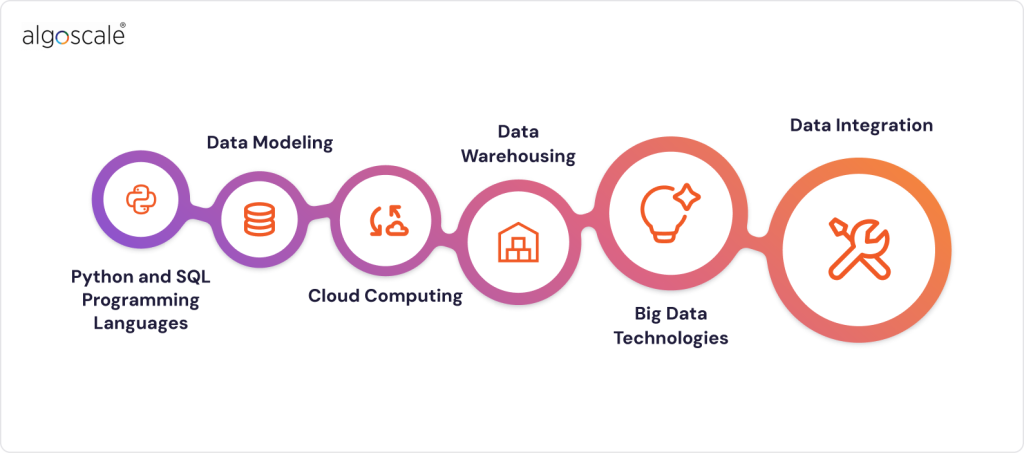
Data engineers combine technical and problem-solving skills to facilitate seamless data operations for dynamic business needs. Some of the essential data engineering skills are discussed below:
1. Python and SQL Programming Languages
Data engineering revolves around proficient programming as it helps data engineers write automation scripts, optimize large-scale systems, and build and maintain complex data pipelines. Here’s why Python and SQL matter most in this field:
- Python helps data engineers process large datasets seamlessly through its tools like PySpark and Pandas. It is the most popularly used language for data pipeline automation and data manipulation. It is necessary for use cases like ETL workflows, log processing, real-time streaming pipelines, recommendation systems, and automating data quality checks across massive datasets.
- SQL facilitates database query execution and plays a key role in data management and retrieval from relational databases. From generating business reports, tracking transactions, to enabling customer analytics, SQL powers dashboards for teams to get faster and accurate responses to their queries.
2. Data Modeling
One of the core responsibilities of data engineers is to design and structure databases to enhance data retrieval speed and storage efficiency. Data modeling is the process through which data engineers facilitate seamless access to data for analysis, defining how data is organized, stored, and interconnected across systems.
Without data modeling, your organization’s data would lack a proper structure, leading to slower queries, duplicate records, and unreliable insights across teams.
3. Cloud Computing
A cloud data developers builds and manages data pipelines and storage systems that run on cloud platforms like GCP, AWS, and Azure. Thorough knowledge of cloud computing helps them ensure that data is securely collected and processed for reliable analytics. Without cloud services, modern data systems cannot function.
Expertise in popular cloud platforms like Azure, AWS, and GCP helps businesses migrate their data operations to the cloud, whereas knowledge of AWS Lambda and Amazon S3 facilitates seamless data processing management.
4. Data Warehousing
Data warehousing is a key skill for data engineers because it ensures consistent, reliable, and scalable access to secure data. With this expertise,a data warehouse engineer facilitates quick and reliable queries by designing how clean and structured data is stored and organized for the same.
Expertise in tools like Amazon Redshift, Snowflake, and Google Big Query allows businesses to manage large volumes of unstructured and organized data, maintaining the availability of reliable data for smooth analytics.
5. Big Data Technologies
Expertise in big data technologies is essential for managing large-scale data. The reason why businesses hire engineers from big data consulting companies is that they are proficient in frameworks like Apache Spark and Hadoop, enabling seamless distributed storage and fast data processing. Additionally, expertise in tools like Apache Kafka and Flink allows engineers to control data streams in real time.
6. Data Integration
Data integration enables data engineers to connect data from multiple systems- apps, streams, databases, and APIs to deliver a unified and consistent view. As such, a data integration engineer helps you eliminate data silos for reliable analytics by connecting fragmented systems and ensuring that your teams have access to the same, unified view of information.
Data Engineer vs Data Analyst: What is the Difference?
Data engineers are the core architects allowing businesses to use data analysis capabilities. A data engineer defines how your organization gathers, organizes, and maintains data after managing messy data. They ensure that your organization’s data users can seamlessly access what they need and get outputs to their queries on time. As such, data engineers play a key role before the data is collected.
Data analysts, on the other hand, are responsible for operations after the data is collected. They explore data from various angles, clean, and transform it to identify trends from data. Data analysts help your business identify more opportunities for data collection and analysis for deeper insights and visibility. Additionally, they report their findings to others through dashboards and visualizations, effectively communicating their findings to all stakeholders for seamless collaborations.
You can explore data visualization consulting services to get a complete picture of your organization’s data, understand the story it tells, and take back actionable insights from specific performance aspects you desire.
Data Architect vs Data Engineer: What is the Difference?
While data engineers ensure that your team can access the right data at the right time after defining how data is to be organized and maintained, data architects plan the framework and architecture in which the data will be processed and stored. Data architects have a lot of overlapping skills with data engineers, including data extraction from different sources, defining the storage of clean data, and data transformation into useful forms.
A data architect primarily decides on the ways in which data is collected, stored, and made available to users. With their expertise, they can adapt to the evolving needs of data users by anticipating their demands and ensuring they always have access to data they need. Their plan will be followed by the data engineer to implement and maintain the data pipeline aligning with the same.
What Expertise To Expect By Hiring Data Engineering Teams?
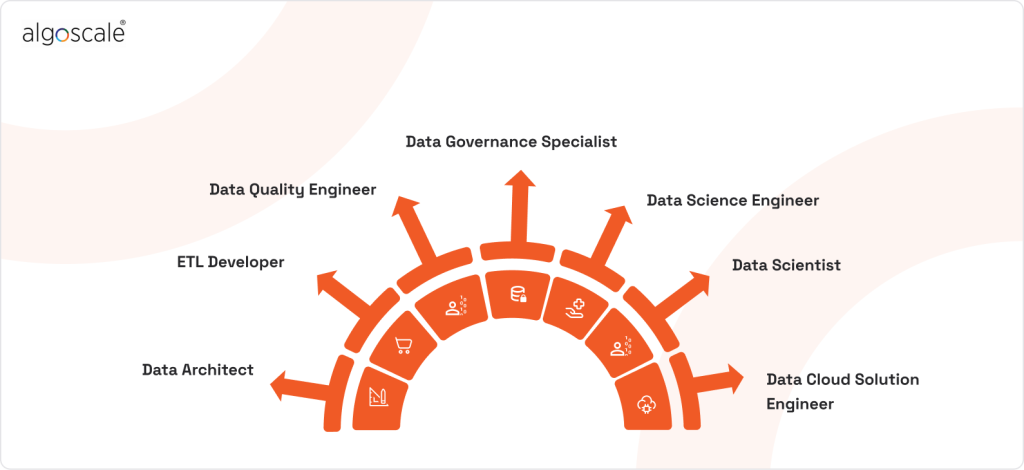
Data engineering teams offer you the following expertise through core role specializations:
1. Data Architect
These professionals define the high-level strategy for data management, including storage solutions, database designs, and data modeling.
2. ETL Developer
These specialists build and optimize processes for the Extract, Transform, and Load data functions from multiple sources.
3. Data Quality Engineer
Data quality engineers implement frameworks to check, clean, and maintain the accuracy of data for consistent availability and compliance adherence.
4. Data Governance Specialist
These professionals establish standards, frameworks, and policies for managing data, keeping it secure, and ensuring compliance at all times.
5. Data Science Engineer
A data science engineer is responsible for building the systems, pipelines, and infrastructure that make the models built by data scientists reliable and production-ready.
6. Data Scientist
Data scientists use the clean data for predictive analytics, ML models, experimentation, and deriving insights.
7. Data Cloud Solution Engineer
Data cloud solution engineers design and implement end-to-end architectures on cloud platforms, modernize legacy systems, maintain data accessibility for analytics and AI, and optimize performance and costs.
Mistakes To Avoid While Creating A Data Engineering Roadmap
Expert data engineering consulting helps you avoid irreversible mistakes that can cost your organizations millions in dollars, fail to meet your organization’s growing data complexity needs, and compromise your organizations’ capability to stay compliance ready at all time. Some of the common data engineering mistakes to avoid are discussed below:
1. Ignoring Scalable Architectures At The Outset
As your business expands to more users, its data volume and complexity naturally grows. Without designing and optimizing your systems for scalability from the outset, your organization can run into significant bottlenecks, costly re-engineering, and lose billions in revenue by failing to accommodate growing user traffic (much like LinkedIn).
The key to avoiding these issues is designing for growth and scale, enabling elastic scalability to meet growing demands, and minimizing downtime in the face of peak demand. An AWS data engineer can help you navigate these challenges to scale seamlessly and offer top-notch and consistent performances to your user base, from thousands to billions.
2. Complicating Data Architectures
Complicated data architectures can make it difficult to maintain and scale data. It can pose significant operational challenges, compromise resilience, and slow down your development cycles.
Reliable data architecture services help you simplify data architectures and implement microservices to enhance agility, ease maintenance, accelerate development, and eliminate the complexity of scale.
3. Compromising Data Quality
Much like data scalability, data quality also needs to be prioritised at the outset to avoid costly and irreversible mistakes in future. It can lead to unreliable dashboards, fragmented insights, and zero ROI from analytics with your teams spending more time on fixing consistent issues, rather than driving innovation.
Data engineering helps you establish a data quality framework early on to set standards for completeness and consistency, automate validation, continuously monitoring pipelines, and assigning ownership roles for quick issue detection.
4. Poor Data Lifecycle Management
Without efficient data management, your organization can down in volumes of messy and fragmented data and miss out on insights that matter. End-to-end data lifecycle management is important for ensuring the availability and accessibility of reliable data to all your teams.
Top data management consultants help you avoid this mistake by defining clear policies for data retention, ensuring compliance, overseeing data storage, sharing, usage, and disposal, and aligning accurate data with your business needs throughout the lifecycle.
Future Trends In Data Engineering To Consider In 2026
Emerging trends in data engineering reflect the need for structural changes that define how organizations operate their data pipelines. Some of the most popular trends for 2026 include:
- AI-driven Data Engineering: Evolving from code suggestions, AI systems will assist development, debugging, monitoring, and optimization in 2026. Businesses will be able to analyze metadata and query plans at a larger scale, going beyond human capacity.
- Platform-Owned Data Infrastructures: As opposed to teams relying on the best tools, platform-owned data infrastructures treat data systems as products. These teams operate with standardized building blocks, centralized ingestion frameworks, and transformation templates.
- Real-time Event-driven Systems: Leaving behind traditional batch processing, real-time data processing and continuous data flows will power core capabilities like personalization and fraud detection.
- Self-service Analytics: Data analytics consulting services will focus on automation, real-time processing, decentralized architectures, Agentic AI-managed pipelines, and robust data observability for faster and more accurate insights.
Algoscale: Your Go-To Data Engineering Service Provider
Algoscale is among the top data engineering service providers known for delivering robust and future-ready data pipelines. Our comprehensive expertise in data engineering covers end-to-end data lifecycle management support- from ingestion to insight. Our experts help you build high-performance, resilient, and scalable data ecosystems that adapt to your complex and rapidly evolving data complexity needs.
Be it architecting scalable and modular data systems that fuel scalability, optimizing your ETL/ELT pipelines for cost efficiency without compromising performance, or modernizing legacy data infrastructure to enable compatibility with modern analytics workloads, our experienced team of data engineers helps you enhance your business intelligence powered by data. Our experts are domain-agnostic and cater to each industry’s niche use cases for higher engineering efficacy, work with security-first architecture principles, and help your business stand out with robust data pipelines that support you at growth and scale.
Get in touch with us today to align your organization’s data engineering with the domain-specific precision it requires.
Data Engineering Services That Power Intelligent Decisions
Build scalable, reliable, and analytics-ready data foundations with cloud-native engineering expertise.
Talk to Our Data Engineering Experts
FAQs
- What is data engineering?
Data engineering is the discipline that makes reliable data easily accessible for analytics, AI, and reporting by designing, building, and maintaining the systems that collect, store, use, and organize the data. It involves transforming raw and messy data into reliable and actionable insights that drive decision-making by creating reliable pipelines and scalable architectures that grow with your business.
- What is dbt in data engineering?
With regards to data engineering, dbt (Data Build Tool) is an open-source framework widely used by data engineers and analysts to transform raw data to datasets ready for analysis within the data warehouse. It facilitates collaboration across shared data models, reduces errors with comprehensive tests and documentation, and promotes modularity with reusable code blocks that simplify pipeline management.
- What is the definition of data engineer?
A data engineer is a specialist in designing, building, and maintaining the infrastructure that makes data available for analytics and AI. Their responsibilities include creating pipelines, managing databases, and cloud systems to ensure data performance, security, and reliability in transforming raw and embassy data.
- How to build your data engineering stack?
Building a data engineering stack requires you to analyze business needs, choose tools across Storage, Ingestion, Transformation, Orchestration, BI, and Governance layers, and implement a phased approach by prioritizing iterative improvement, quality, and scalability.
- How much does a data engineer make?
The salary of a data engineer is determined primarily by their location and skillset specialization. Salaries for senior experts can range up to $200k, with average hourly rates ranging from $50 to $82. The rates naturally increase if you are seeking engineers with cloud data engineering and AI/ML expertise.
- What is big data engineering?
The discipline of designing and managing systems that collect, store, and process large and fast-growing datasets is known as big data engineering. Big data consulting services help you leverage technologies like Hadoop and Spark to maintain data scalability and reliability, delivering robust pipelines that transform massive raw data into analytics-ready datasets.
- What is databricks in data engineering?
Databricks data engineering refers to using Databricks, a cloud-based data engineering and analytics platform built on Apache Spark, helping teams process large datasets, build reliable pipelines, and collaborate for ETL, ML, and analytics. It offers a lakehouse architecture unifying data lakes and warehouses, simplifying data storage, governance, and cleaning.